
Introduction: Breathe Easy in Your Sauna Ritual
The cosy glow of a sauna invites us to unwind, breathe and reconnect. Yet that comfort depends on more than just heat. A sauna ventilation system quietly circulates fresh air, regulates humidity and prevents wood damage, making every session safe and enjoyable. At Shym Saunas & Spas, Artem and Elena build their handcrafted cabins with careful attention to airflow because fresh air is as vital as warmth.
This guide explores why ventilation is essential, how to design and size vents, the difference between passive and mechanical systems, and how to avoid common mistakes. Whether you’re planning a backyard sauna or updating an existing one, you’ll learn how to keep the air moving so you can fully enjoy those moments that matter.
Key Takeaways
- Fresh air matters. A sauna’s ventilation system ensures a constant supply of oxygen‑rich air and removes moisture and stale air. Without it, the air can become stagnant and overly humid, leading to discomfort and potential health risks.
- Balance intake and exhaust. Proper ventilation pairs a low intake vent near the heater with a high exhaust vent on the opposite wall. This natural convection keeps heat and humidity even while preserving warmth.
- Size vents to your sauna. A simple rule is about 15–25 cm² of vent opening per person and roughly 330 cm² of vent area per 1 m³ of sauna volume. Adjustable vent covers help fine-tune airflow.
- Choose passive or mechanical systems wisely. Passive fresh‑air intake and exhaust vents suit most traditional saunas. Mechanical exhaust fans are useful when ventilation is difficult or for infrared saunas installed in tight indoor spaces.
3 Reasons Why Ventilation Matters in a Sauna
1. Fresh air and comfort
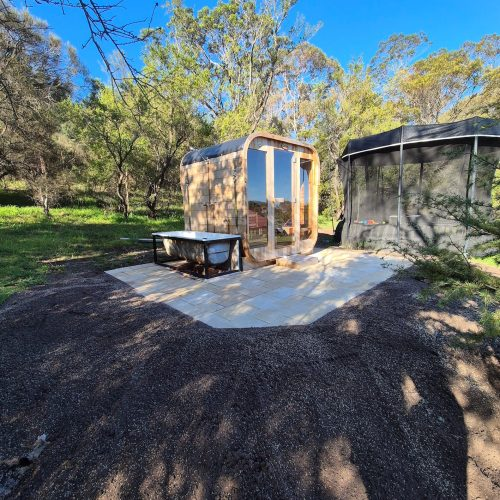
The primary purpose of sauna ventilation is to maintain a comfortable and safe environment. Fresh air enters through an intake vent near the floor, warms up, rises and exits through an exhaust vent near the ceiling. This circulation prevents air from becoming stagnant and overly humid, ensuring that your sauna session feels invigorating rather than suffocating. Without ventilation, oxygen levels drop and carbon dioxide builds up, making it difficult to breathe.
Also Read: How to Use a Sauna Like a Pro: The Ultimate Guide
2. Controlling humidity and protecting wood
Ventilation helps regulate humidity and prevents moisture damage. In an enclosed sauna, perspiration and humidity accumulate. Over time, dampness can encourage mould growth and degrade timber. Proper airflow allows moisture to escape and keeps humidity within the ideal range (5–10% for traditional saunas), prolonging the life of your cedar panels and benches.
3. Enhancing health benefits
Studies highlight that regular sauna use can lower blood pressure and reduce cardiovascular risk. These benefits are optimised in a well‑ventilated sauna because fresh, oxygen‑rich air supports circulation and detoxification. Likewise, stress reduction and relaxation depend on breathing comfortably and avoiding dizziness or heat stress.
Passive Versus Mechanical Sauna Ventilation
Passive fresh‑air intake and exhaust
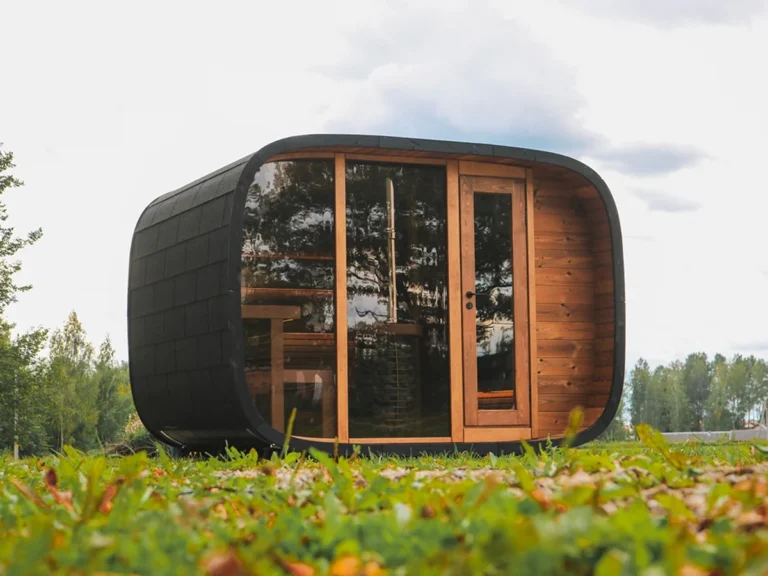
Most traditional saunas rely on passive ventilation—using natural convection to move air through fixed vents. An intake vent near the heater draws fresh air in, while an exhaust vent high on the opposite wall allows warm, moist air to escape. This “natural draught” works because warm air rises. Passive systems are simple, quiet and energy‑efficient. They do not introduce mechanical noise and maintain humidity better than fans.
Use adjustable vent covers to fine‑tune airflow. When more oxygen is needed—such as during long sessions or with many bathers—open the intake vent. Close it slightly when the sauna is heating up to retain warmth. Cedar vent covers are popular for their durability and natural look; they resist warping and blend beautifully with sauna walls.
Mechanical ventilation and exhaust fans
Mechanical ventilation systems use fans to actively exchange air. They’re useful when natural convection isn’t enough—such as in infrared saunas, indoor installations without windows or high‑occupancy public saunas. Fans can be integrated into exhaust vents or installed separately to maintain airflow.
Infrared saunas still require ventilation to manage moisture and air quality. While they operate at lower temperatures, perspiration releases up to a litre of moisture per session. Installing air intake vents near the floor and exhaust vents near the ceiling helps natural convection, but dedicated exhaust fans ensure consistent air exchange in windowless rooms. Fans should run during and after sessions to prevent condensation, and may be paired with a timer or humidity sensor.
Weighing pros and cons
| Ventilation system | Advantages | Considerations |
| Passive air vents | Quiet; energy‑free; preserves humidity; minimal maintenance | Dependent on proper placement and size; less control in small or airtight rooms |
| Mechanical exhaust fans | Effective in enclosed or humid spaces; programmable; can recover heat | Introduces noise; may dry out air; needs power and maintenance |
| Hybrid systems | Combine passive vents with low‑speed fans for balanced airflow | Requires careful design to avoid over‑ventilating; more complex installation |
3 Key Sauna Ventilation Design and Requirements
1. Sizing your vents
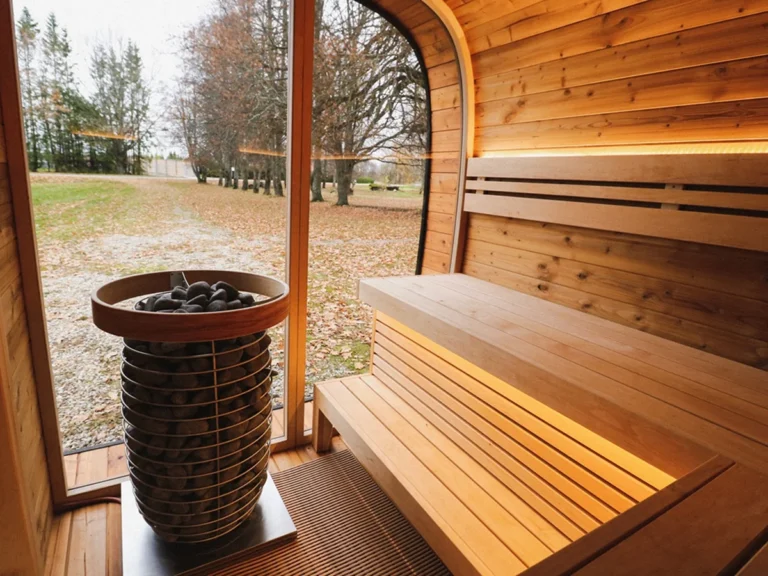
Adequate vent size ensures comfortable heat without wasting energy. As a general guide for Australian installations, allow about 15–25 cm² of vent area per person in the sauna. Alternatively, plan for roughly 330 cm² of vent space per 1 m³ of sauna volume. For smaller saunas, at least 7–15 cm² of vent opening may suffice; larger saunas may need multiple vents.
2. Vent placement
Proper placement encourages natural convection:
- Intake vent near the heater: Position the intake vent low, often below or beside the sauna heater, to draw fresh air over the heater. Some designs use the door’s bottom gap for intake.
- Exhaust vent high on opposite wall: Place the exhaust vent near the ceiling on the wall opposite the heater. Maintain about 1–2 metres between the intake and exhaust vents to create smooth airflow.
For infrared saunas, ensure at least 10–15 centimetres of clearance on all sides to allow proper airflow around the unit. When placing an indoor sauna, choose a room with an existing ventilation system or install an exhaust fan.
3. Adjustable vents and covers
To control airflow, choose vents with sliders or louvers that open and close. Cedar sauna vents are naturally resistant to heat and moisture and blend with traditional wood interiors. Metal vent covers can handle high heat but may conduct heat quickly; handle them carefully.
Commercial sauna vent kits provide pre‑sized intake and exhaust vents, ducting and covers to simplify installation. Choose kits made of durable materials like stainless steel or high‑quality cedar, and ensure they are rated for high temperatures.
Ventilation for Different Sauna Types
Traditional electric or wood‑burning saunas
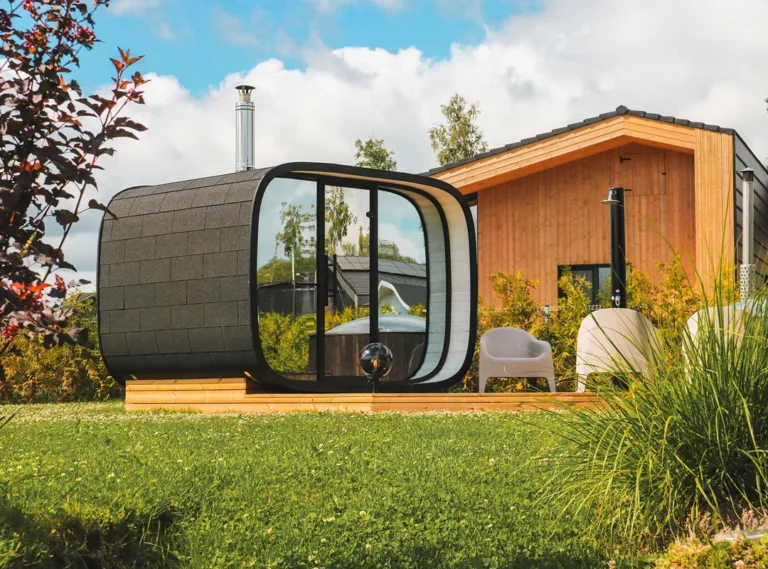
In classic saunas, high heat and low humidity demand continuous air exchange. Passive ventilation usually suffices. However, avoid blocking airflow with too many heater stones or placing vents incorrectly. Consider installing a small, low‑noise fan if your sauna is in a sealed indoor space or has high occupancy.
Infrared saunas
Infrared cabins operate at 45–65 °C and generate moisture primarily from perspiration. Though cooler, they still need ventilation to remove moisture and maintain oxygen levels. Use passive vents or mechanical fans depending on room configuration. Ensure fresh air intake near the floor and an exhaust point near the ceiling; supplement with a dehumidifier if the surrounding room is humid.
Also Read: Infrared sauna vs Traditional sauna
Hybrid saunas and combo rooms
Some modern wellness suites combine dry saunas, steam rooms and cold plunge zones. These require more robust ventilation because steam rooms produce high humidity and need stronger exhaust systems. Always separate airflows for dry and steam sections to prevent condensation and mould.
Also Read: Wet Saunas vs. Dry Saunas: What is the Best Choice for You?
How to Vent a Sauna: Step‑by‑Step
- Measure your sauna. Calculate the interior volume (length × width × height) to determine appropriate vent sizes.
- Plan vent location. Place the intake vent low, near the heater, and the exhaust vent high on the opposite wall. Ensure at least 3 feet between them.
- Choose vent sizes. Allow about 330 cm² of vent opening for every 1 m³ of sauna volume, or roughly 15–25 cm² of vent area per person using the sauna.
- Install vents and covers. Fit cedar or metal vent frames. Use adjustable covers to regulate flow. Seal edges with heat‑resistant caulk to prevent leaks.
- Consider an exhaust fan. In indoor saunas or infrared cabins, fit a low‑noise fan in the exhaust vent or wall to ensure active airflow.
- Test and adjust. Run your sauna and adjust vent openings until you achieve comfortable heat and airflow. Use a hygrometer to monitor humidity (aim for 5–10 % for traditional saunas).
- Maintain. Clean vent covers, remove dust or debris, and inspect fans regularly. Replace filters or components as needed.
Common Sauna Ventilation Mistakes to Avoid
- Poor fresh‑air flow: Relying on a cracked door is not sufficient. Always install both intake and exhaust vents of adequate size.
- Blocked vents: Do not cover vents with towels, benches or heater stones. Blockages reduce airflow and lead to stuffy air.
- Bad vent placement: Placing intake and exhaust vents too close together or both at the same height prevents convection. Follow the low‑in/high‑out placement.
- Over‑reliance on fans: Excessive fan use can dry out the sauna and strain the heater. Use fans only as needed.
- Wrong duct materials: Avoid plastic or low‑heat materials that can melt. Use heat‑resistant metal ducts.
- Skipping maintenance: Dirty vents and ducts harbour mould. Clean and inspect regularly.
Maintaining Your Sauna Ventilation System
Regular care keeps your sauna safe and efficient:
- Clean vent covers: Wipe cedar or metal vent covers after each session to remove sweat and dust.
- Vacuum ducts: Periodically vacuum or brush inside ducts to prevent dust buildup.
- Check fans: Inspect mechanical fans for noise or reduced flow. Clean filters and lubricate moving parts.
- Monitor humidity: Use a hygrometer to track humidity. Too high means vents are undersized or blocked; too low indicates over‑ventilation or dryness.
- Inspect wood: Look for signs of mould or darkening wood around vents. Improve airflow or reduce humidity if needed.
Shym Saunas Products and Practical Solutions
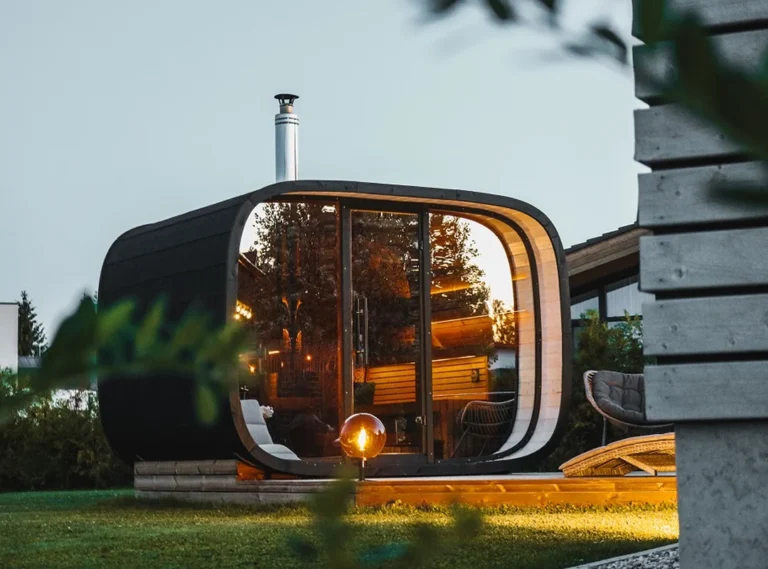
Shym Saunas & Spas designs cabins with balanced ventilation in mind. Some examples:
- Union 125 & Union 160 – These compact indoor models feature integrated cedar intake and exhaust vents that can be adjusted from inside, ensuring the right balance of heat and fresh air in small spaces.
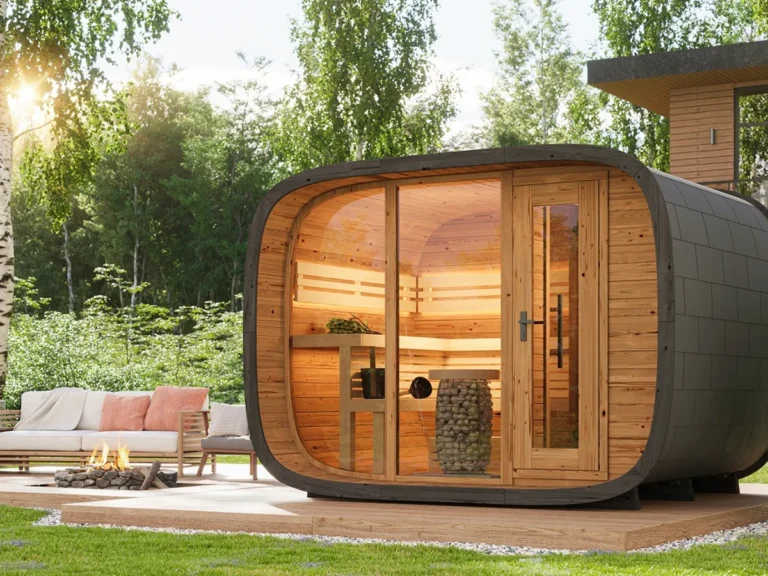
- Serenity Round Cube Mini – Built for modern backyards, this steam‑sauna hybrid includes separate vent paths for dry and steam sections, preventing condensation and mould. It can be equipped with a quiet exhaust fan for rooms without windows.
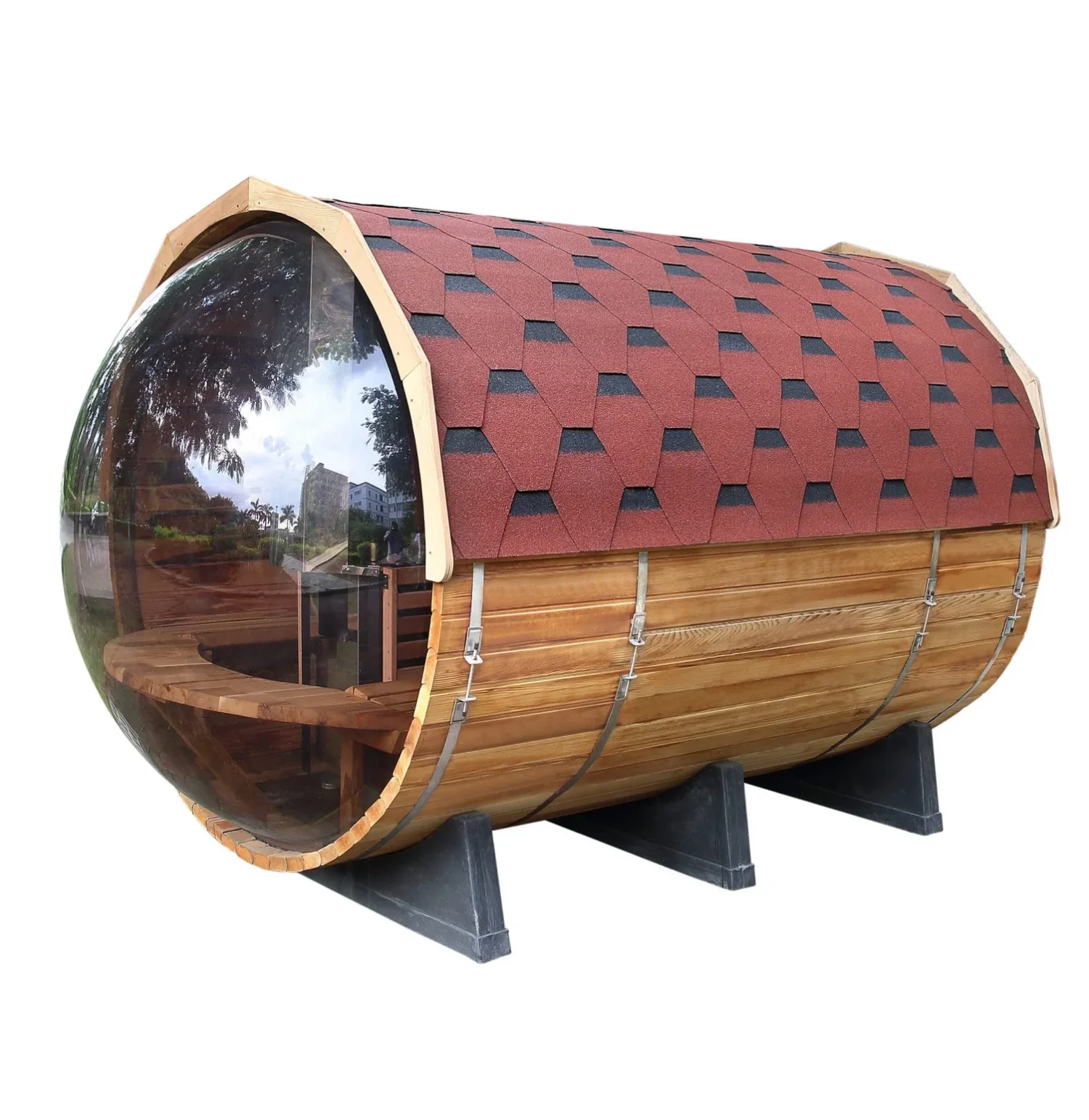
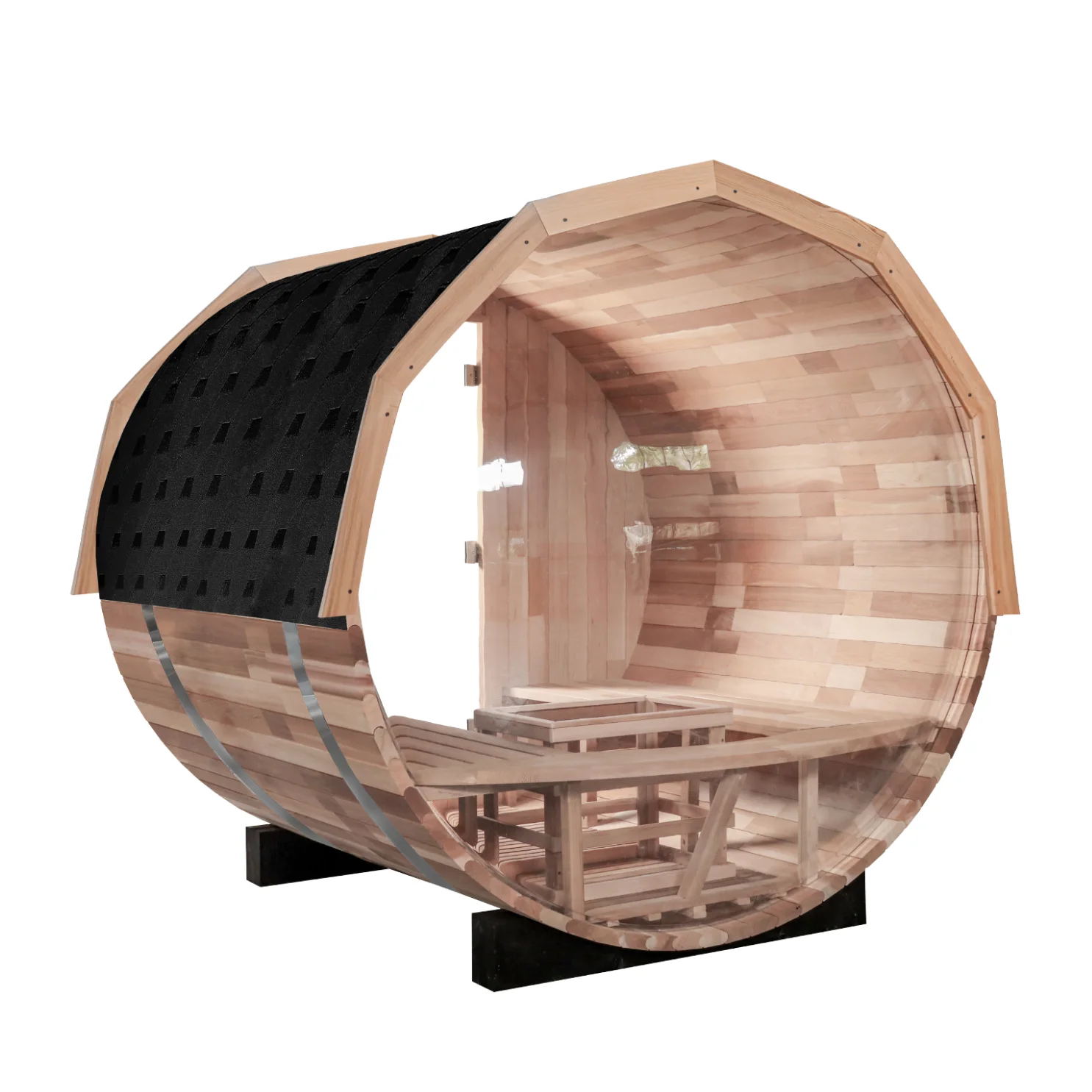
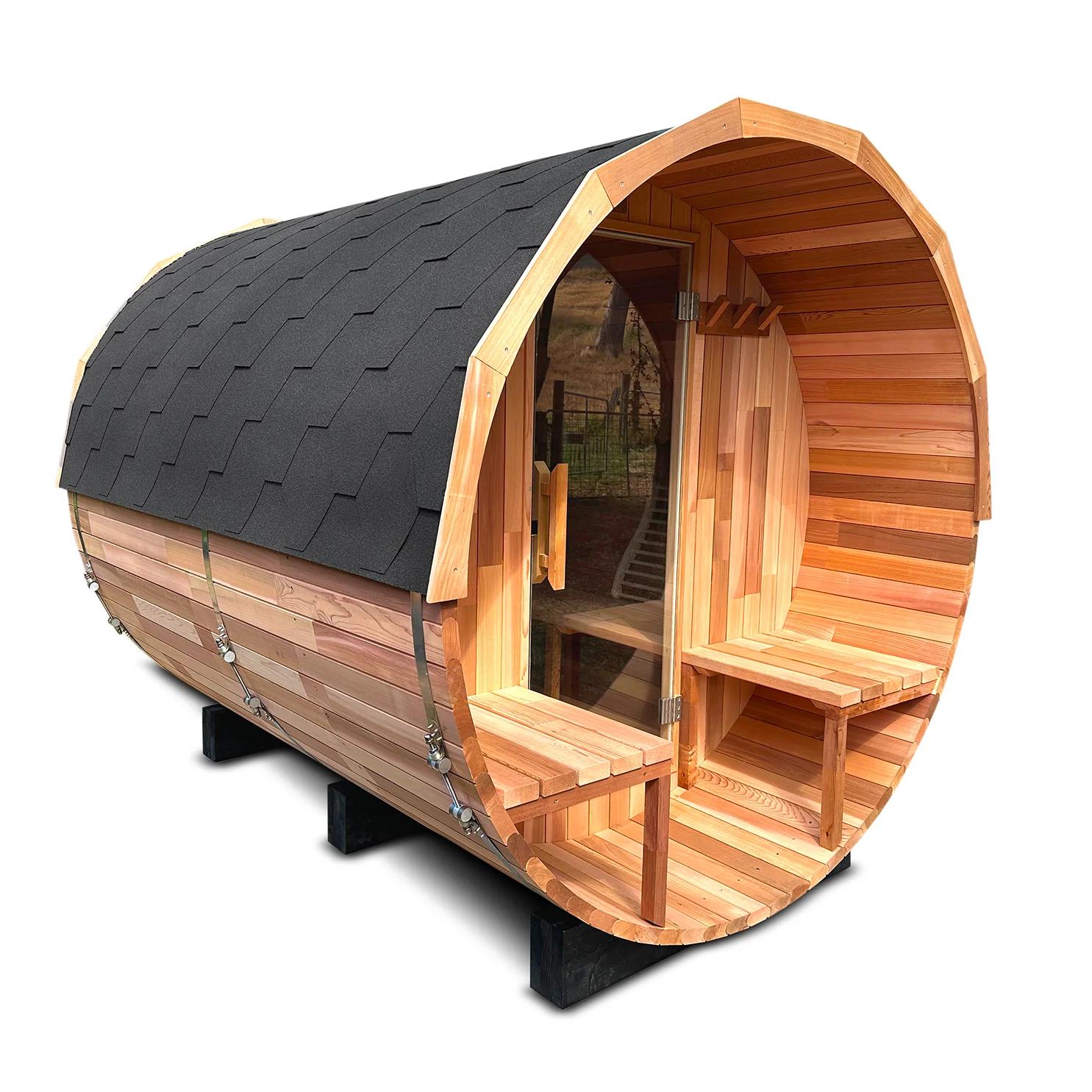
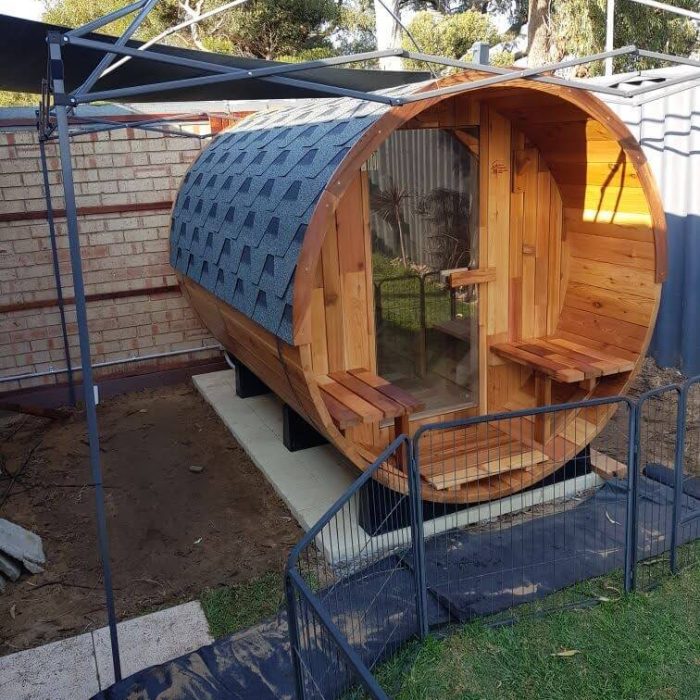
- Western Red Cedar Barrel Saunas – Shym’s classic barrel designs incorporate natural draught ventilation using cedar vent covers that match the rounded profile. Optional vent kits are available for DIY enhancements.
When installing your own sauna, consider purchasing a sauna vent kit with cedar vent frames, stainless steel covers and heat‑resistant ducting. These kits simplify installation and ensure proper airflow. If you need a more advanced solution, Shym offers consultation services to design custom ventilation systems tailored to your space.
Frequently Asked Questions
The best ventilation for a sauna is a balanced, passive fresh-air system that pairs a low intake vent near the heater with a high exhaust vent on the opposite wall. This setup uses natural convection—warm air rising and cooler air flowing in—to keep oxygen levels high, humidity stable and heat distribution even.
Most traditional Finnish saunas rely on this simple arrangement because it’s quiet, energy-free and preserves the sauna’s natural warmth. For indoor saunas or tightly sealed spaces, a hybrid approach—passive vents supported by a low-noise mechanical fan—can help maintain steady airflow without over-ventilating.
Ultimately, the best system is one that supplies fresh air continuously while protecting heat and maintaining comfort.
Yes—every sauna needs proper air vents to operate safely and comfortably. Without an intake and exhaust vent, the air becomes stale, carbon dioxide accumulates and humidity rises beyond healthy levels. This can lead to discomfort, dizziness, headaches and even wood damage over time.
A correctly placed intake vent brings fresh oxygen into the sauna, while the exhaust vent removes warm, moist air. Even infrared saunas, which run at cooler temperatures, require venting to manage moisture from perspiration and maintain good air quality.
Proper ventilation isn’t optional; it’s a core part of a healthy, breathable sauna environment.
When ventilated correctly, sauna air can be gentle and supportive for respiratory comfort. The warm, oxygen-rich environment encourages deeper breathing, relaxes airways and improves circulation. Some people report temporary relief from mild congestion because warm air helps loosen mucus.
However, this benefit depends entirely on fresh air flow. A poorly ventilated sauna, where carbon dioxide rises and air becomes stagnant, can make breathing uncomfortable. Those with chronic respiratory conditions should always consult a healthcare professional before using a sauna.
In a well-ventilated space, the air is clean, warm and invigorating—supporting the relaxation and comfort that make sauna rituals restorative.
Improper ventilation can lead to several issues that affect both comfort and safety:
– Stuffy, oxygen-poor air that makes breathing difficult and may cause dizziness or fatigue.
– Excess humidity, which prevents sweat from evaporating and leaves the space feeling heavy or suffocating.
– Wood damage, including mould growth, warping or darkening of cedar panels due to trapped moisture.
– Uneven heat distribution, with hot and cold pockets that reduce the quality of the sauna experience.
– Condensation buildup, especially in indoor saunas, which may lead to long-term structural problems.
A well-designed ventilation system prevents these issues by continuously refreshing the air and maintaining stable humidity—allowing the sauna to remain a true sanctuary of warmth, breathability and wellbeing.
Conclusion
The warmth and ritual of a sauna are deeply comforting, but they rely on a well‑designed sauna ventilation system. By balancing intake and exhaust, sizing vents correctly and choosing the right mix of passive and mechanical solutions, you’ll create a breathable sanctuary that’s both safe and indulgent. Fresh air, controlled humidity and mindful maintenance protect your investment and elevate your wellness routine.
At Shym Saunas & Spas, we believe that investing in a sauna isn’t just about heat—it’s about creating a space where people can unwind, breathe and reconnect. Thoughtful ventilation is part of that commitment to craftsmanship, comfort and community.