

Choosing a home sauna in Australia is about more than finding a design you like. The right sauna needs to suit your available space, who will use it, the experience you want, your heating and power requirements, the local environment, installation plan and long-term maintenance. This guide walks through the key decisions so you can compare options confidently before you buy.
Key Takeaways
- Start with how you will use the sauna, then work backwards to size, type and design.
- Indoor and outdoor saunas have different space, access, ventilation and weather considerations.
- Traditional and infrared saunas provide different heating experiences. The right choice depends on your preferences, space and product specifications.
- Timber, wall construction, insulation, glass, ventilation and heater selection all influence the sauna experience.
- Plan the base, delivery access and electrical requirements before ordering.
- Look beyond the advertised price. Installation, site preparation, electrical work and delivery may affect the total investment.
1. What should you consider before buying a home sauna?
The easiest way to choose a sauna is to start with intended use rather than the product catalogue. Think about where it will go, who will use it, how often you expect to use it and what matters most.
- Where will it go, indoors, on a patio, or in the backyard?
- Who will use it, one person, a couple, family members or guests?
- What experience do you want, traditional heat or infrared?
- What matters most, size, design, timber, heating, features, installation or budget?
- What must be prepared before delivery, base, access, ventilation and electrical work?
2. Which type of sauna is right for your home?
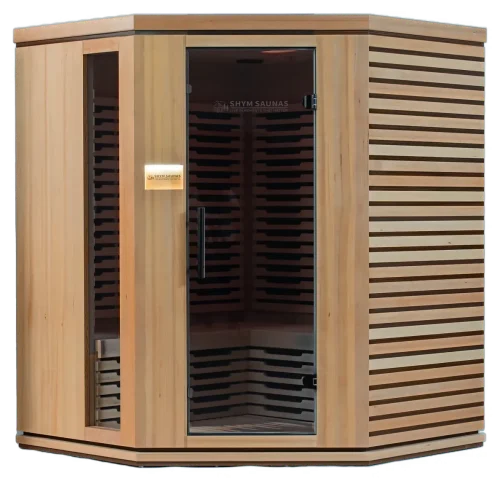
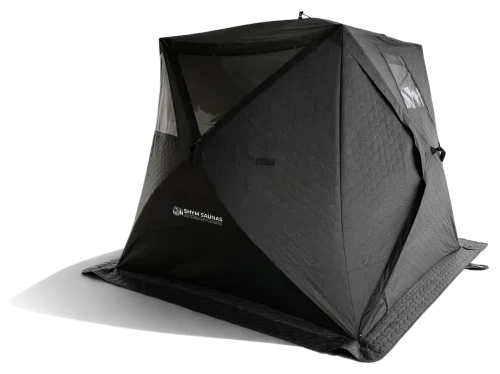
For a home sauna in Australia, one of the first major choices is between traditional and infrared. Traditional saunas heat the room through a sauna heater, while infrared models use infrared heating elements. The better option depends on the experience you want, the space available and the specific product.
| Consideration | Traditional sauna | Infrared sauna |
|---|---|---|
| Heating experience | Heats the sauna room, classic sauna environment | Uses infrared heating elements |
| Temperature | Typically associated with higher room temperatures | Typically operates at lower room temperatures |
| Water on stones | Applicable where the heater is designed for it | Follow the specific model instructions |
| Installation | Heater, ventilation and electrical requirements vary by model | Requirements vary by model |
| Best fit | Classic sauna experience | Infrared experience and routine |
3. Indoor vs outdoor sauna: where should you put it?
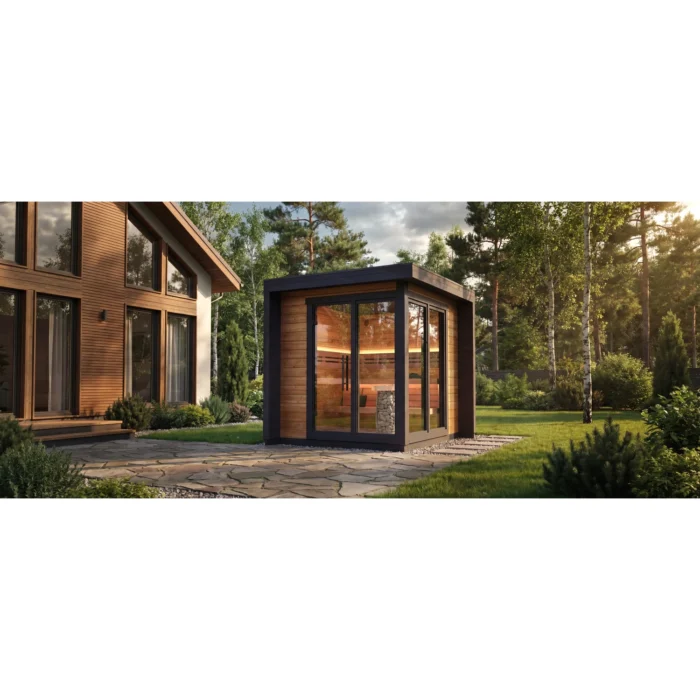
Outdoor saunas are a strong option for Australian backyards, while indoor placement can be convenient where suitable space is available. In either case, plan the location before choosing the model.
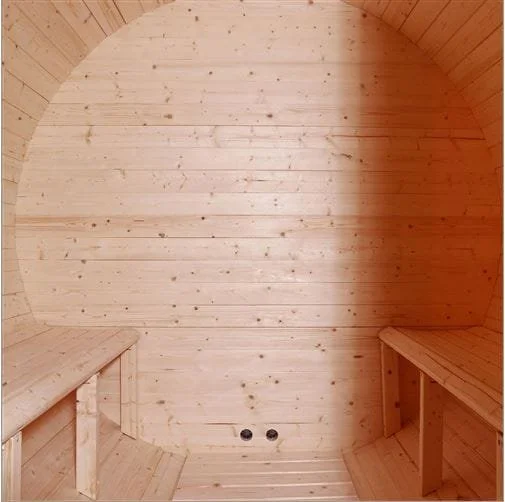
- Indoor: consider room dimensions, ventilation, flooring, access and integration with the home.
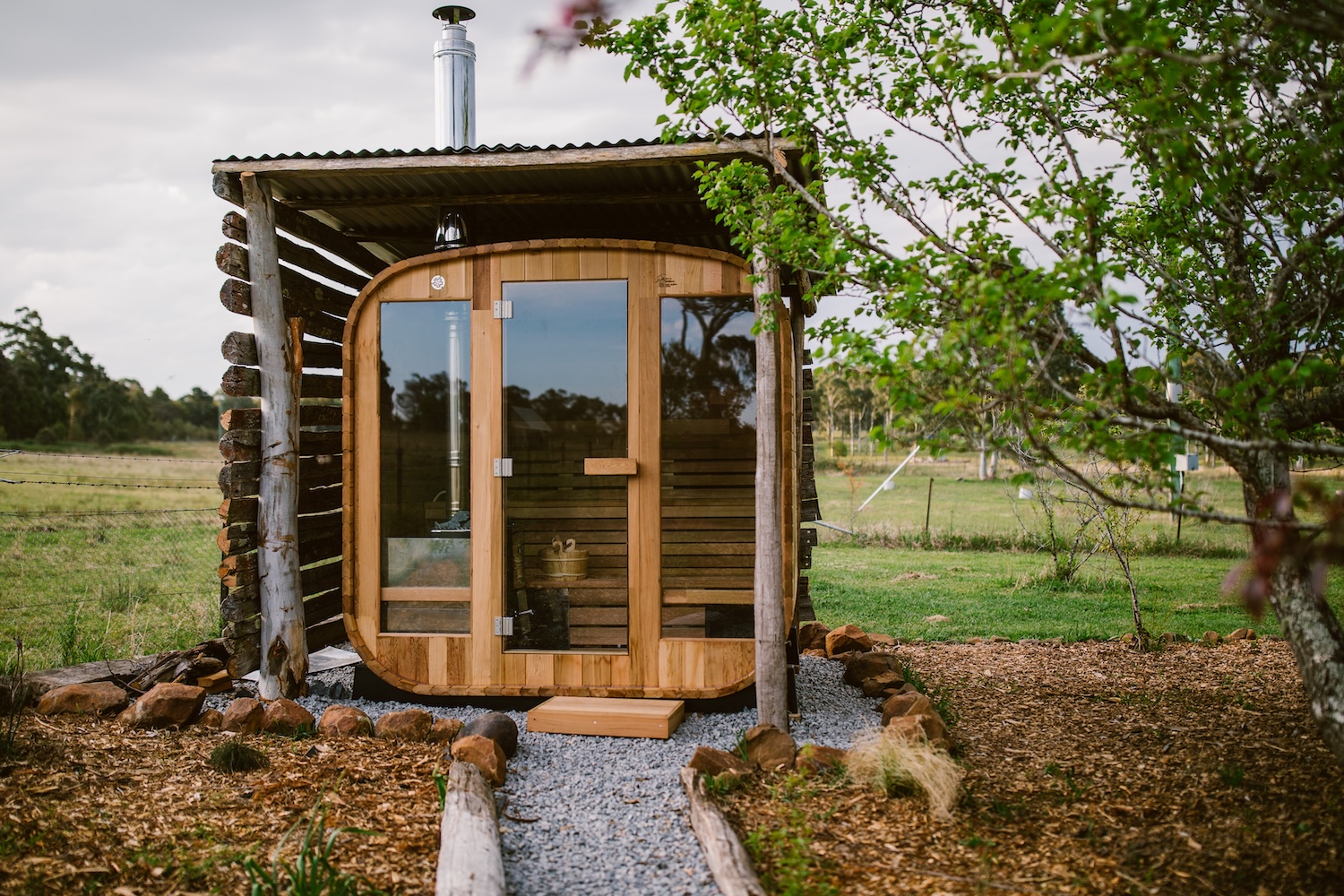
- Outdoor: consider weather exposure, drainage, base, delivery access, ventilation and timber care.
- Patio or deck: confirm the surface and structure are suitable for the sauna and installation requirements.
- Coastal locations: account for salt-air exposure and appropriate maintenance.
Measure gates, pathways, stairs and other access points before ordering. A sauna can fit the final position but still be difficult to deliver there.
4. What sauna size do you need?
Capacity should reflect how you actually expect to use the sauna, not simply the maximum number listed. A 2 person sauna may suit a couple, while families may benefit from additional bench space.
| Use case | Starting point | Consider |
|---|---|---|
| Solo | 1 to 2 person | Comfort and efficient footprint |
| Couple | 2 to 4 person | Usable bench space and comfort |
| Family | 4 person and above | Bench space and shared use |
| Guests | Larger capacity | Movement and surrounding space |
Check external dimensions, internal bench layout, door swing, heater position and the space needed around the sauna.
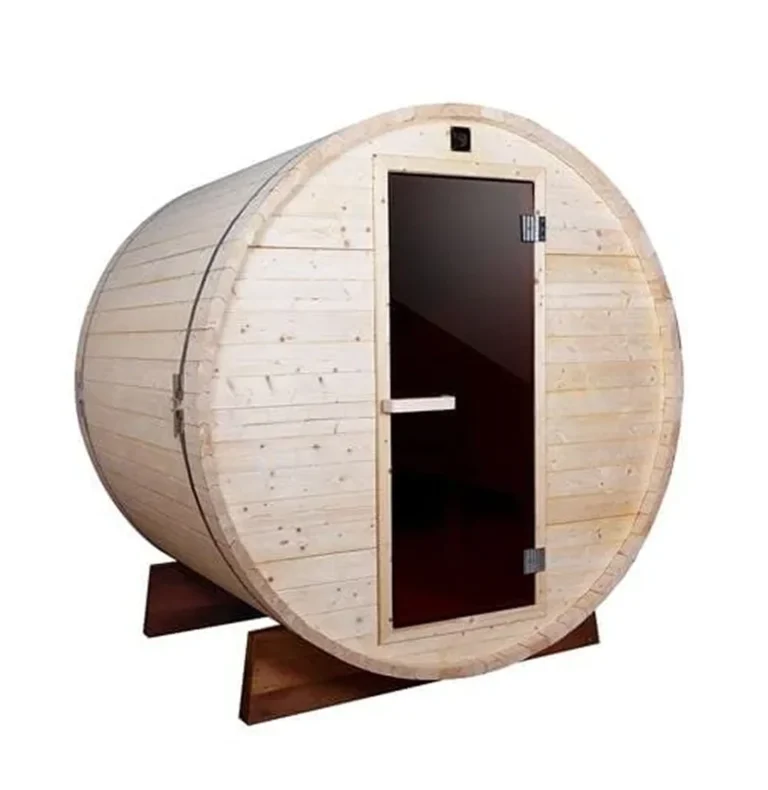
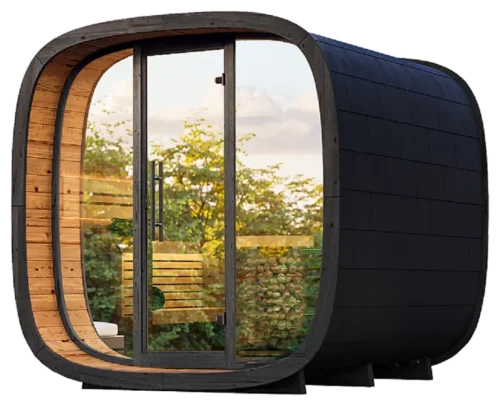
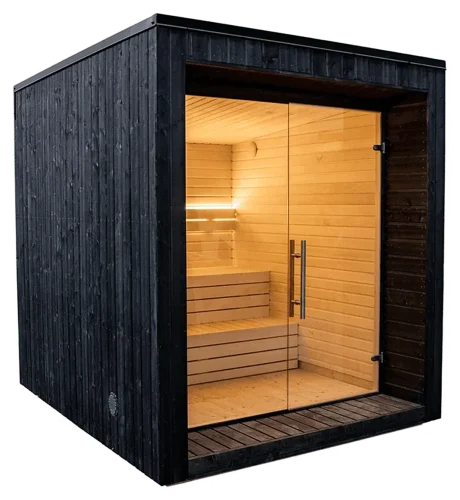
5. Barrel, cabin, cube or patio: which design is right?
The shape affects appearance, internal layout, bench space and how the sauna works within your property. There is no single best sauna design for every Australian home.
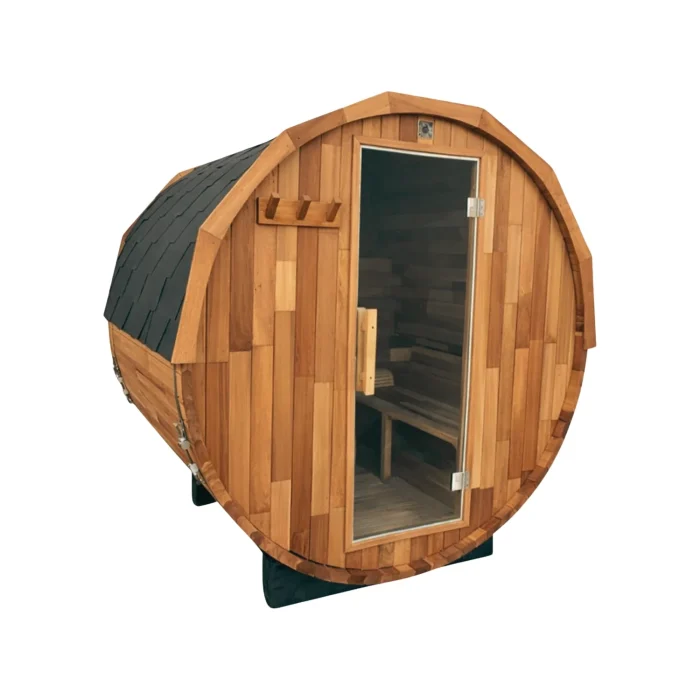
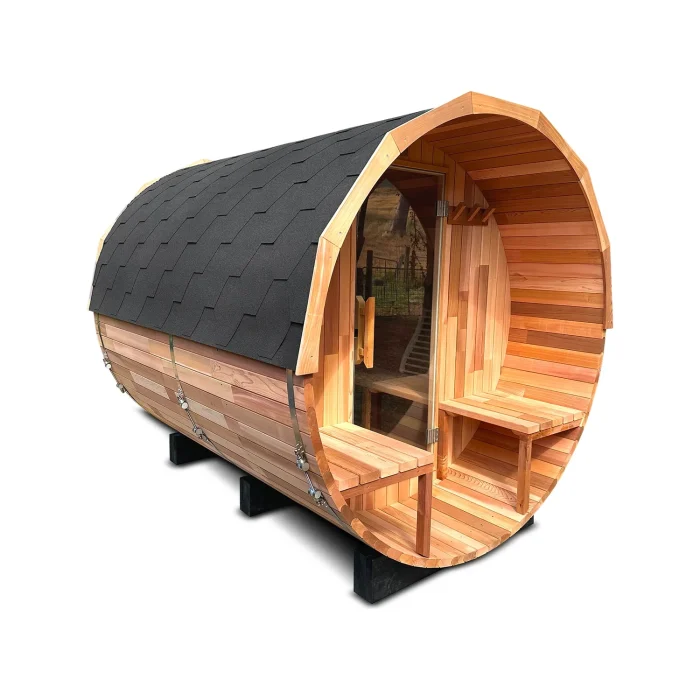
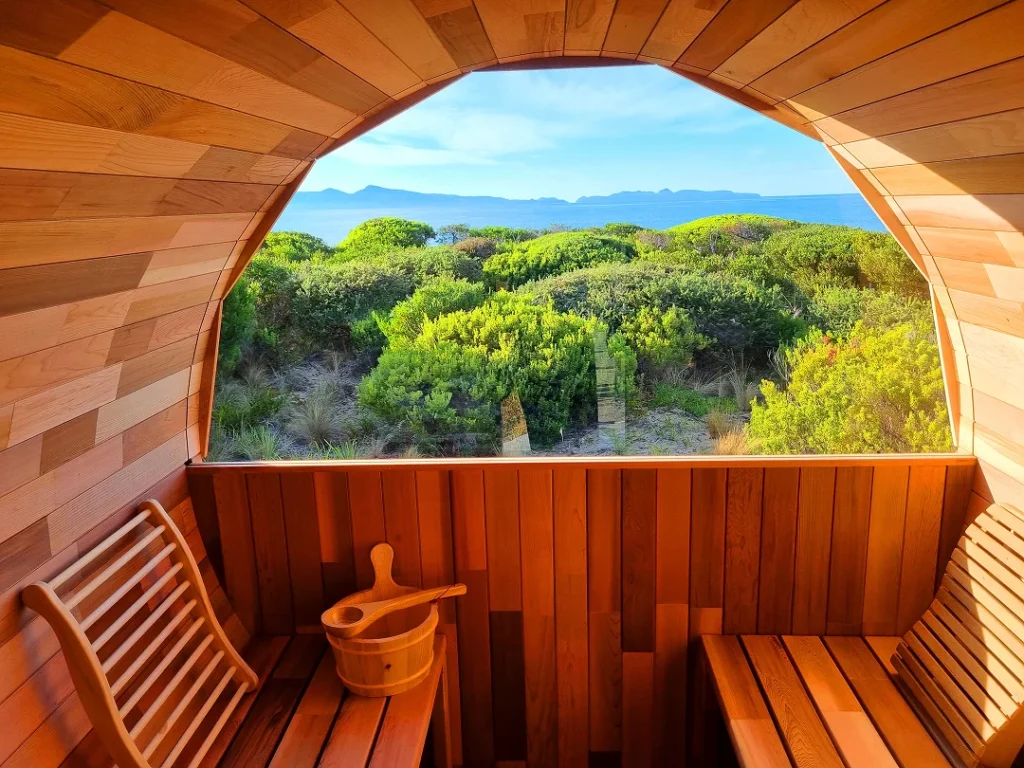
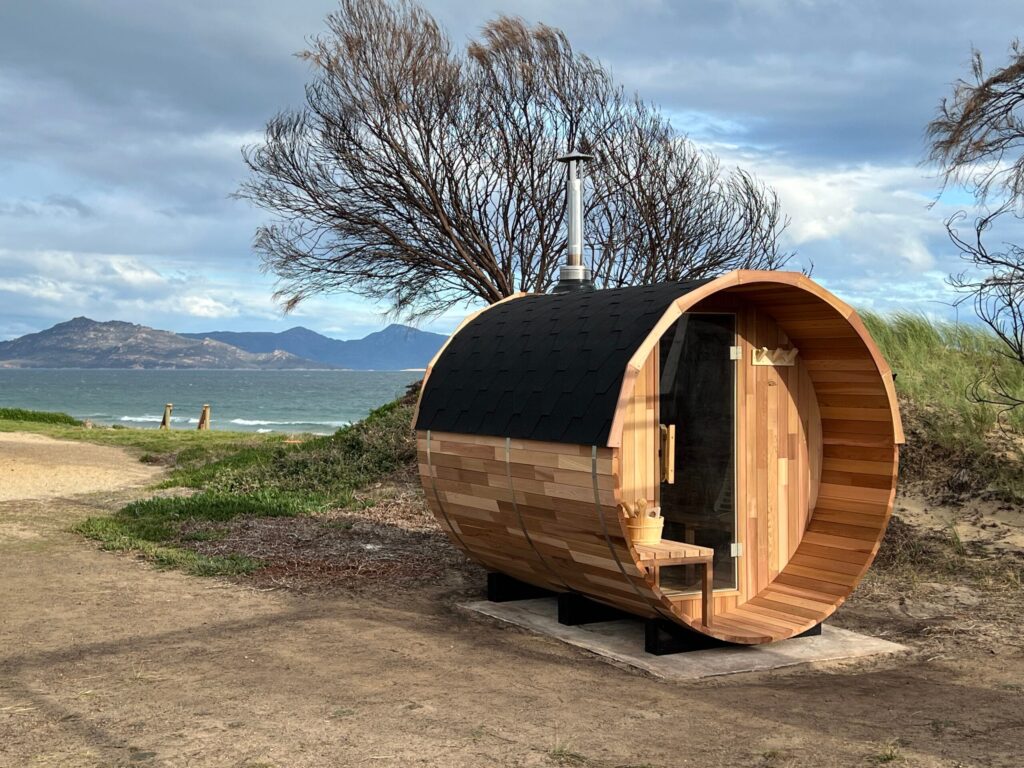
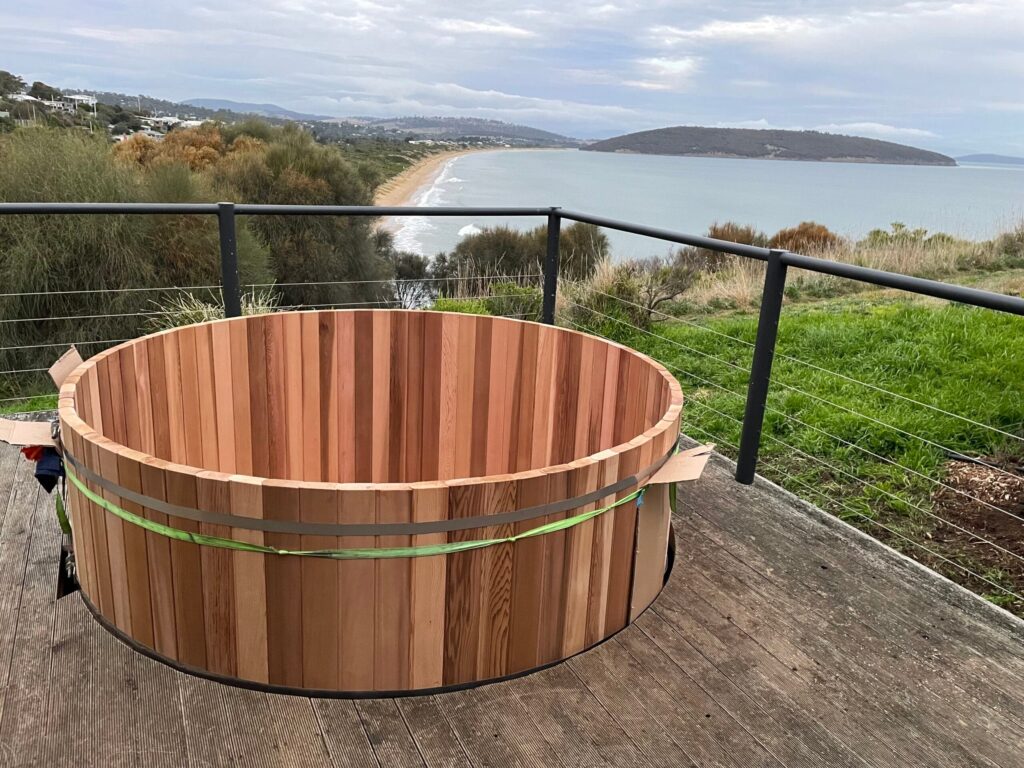
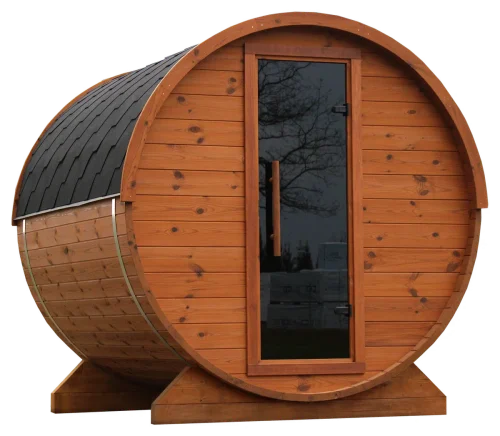
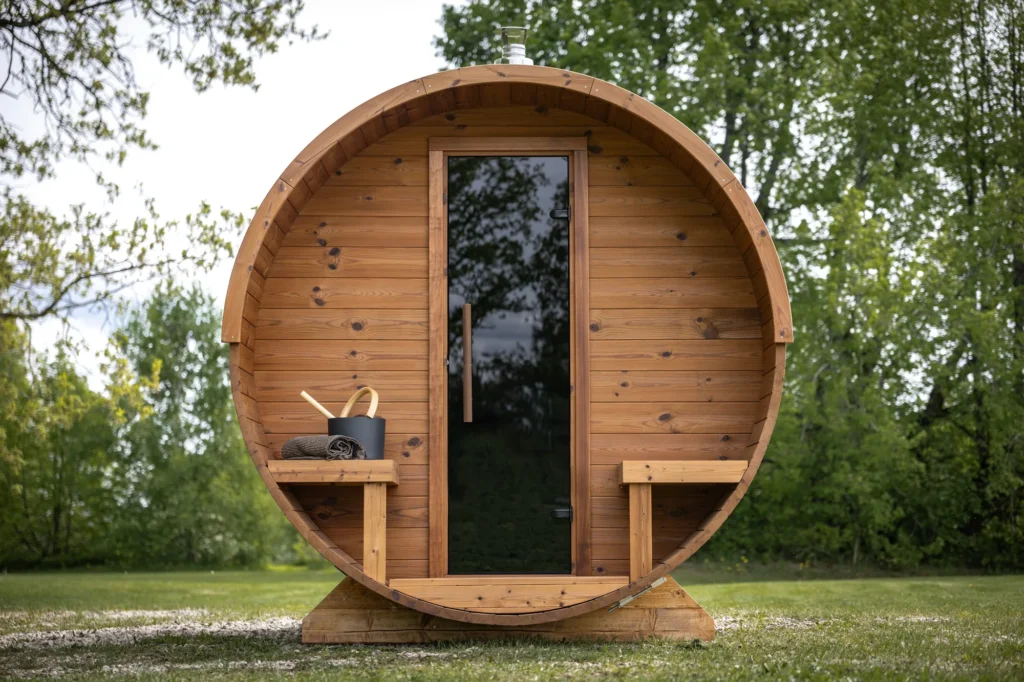
- Barrel: distinctive rounded profile suited to many gardens, decks and outdoor settings.
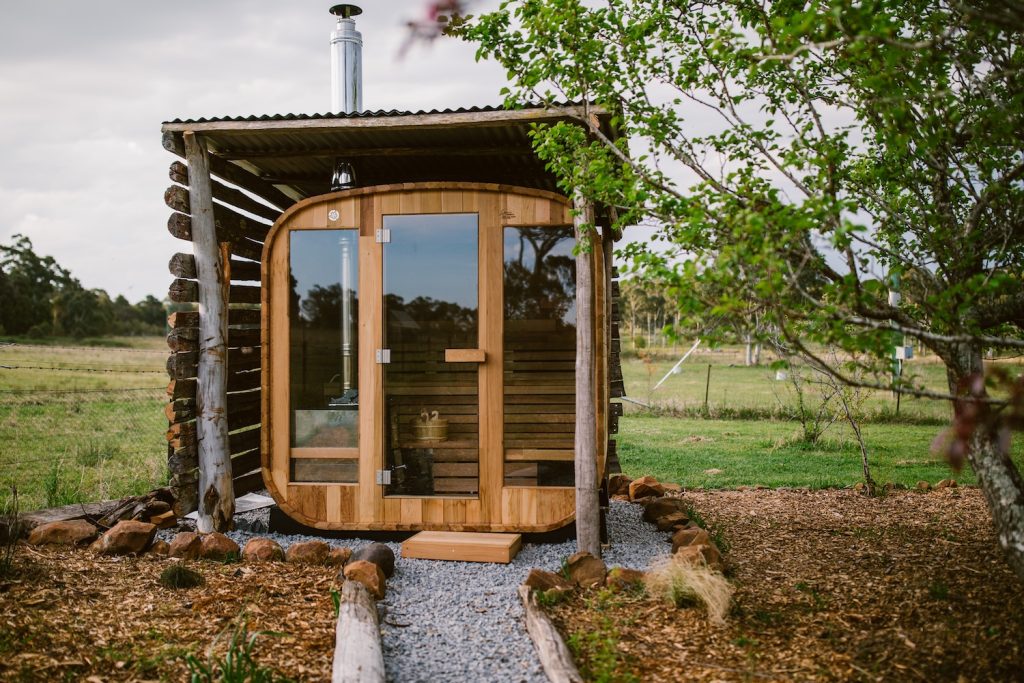
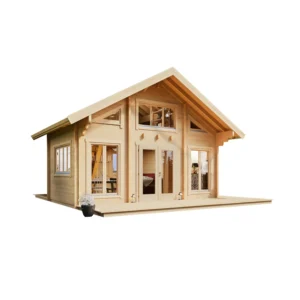
- Cabin: conventional architectural form with flexible layouts.
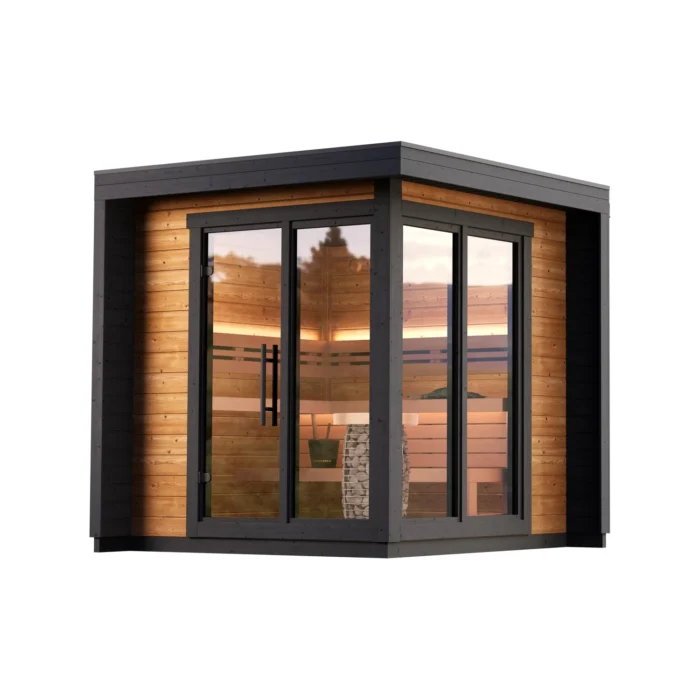
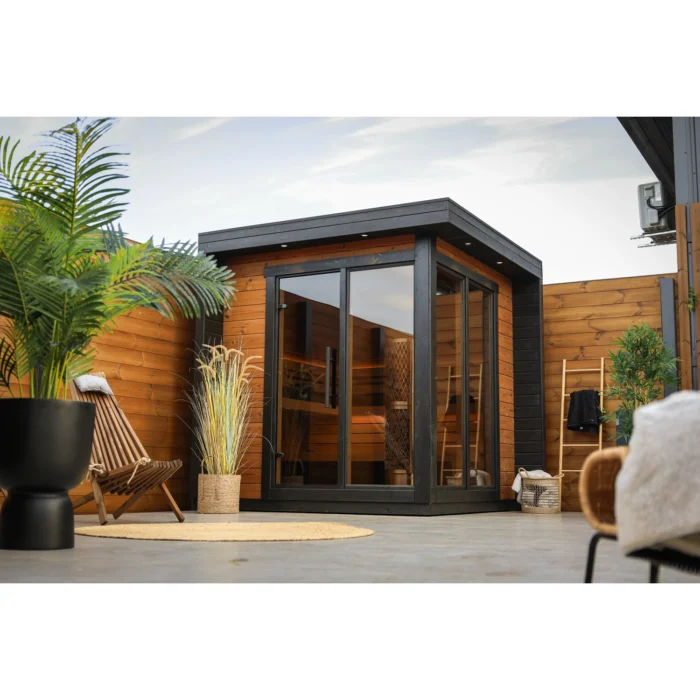
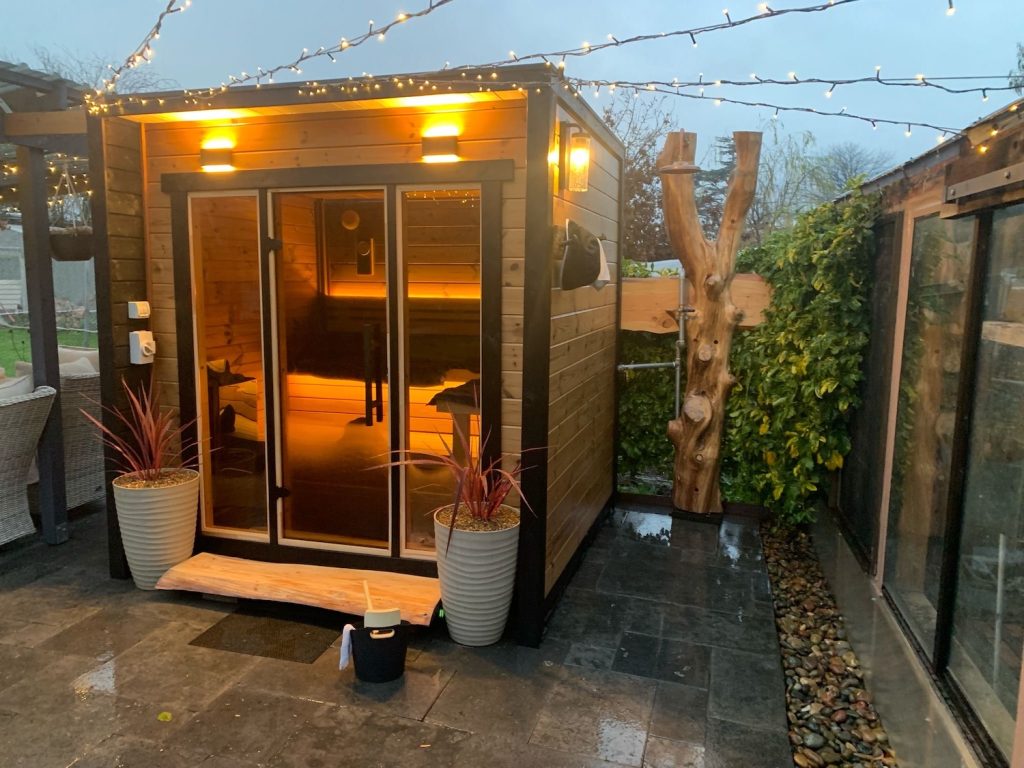
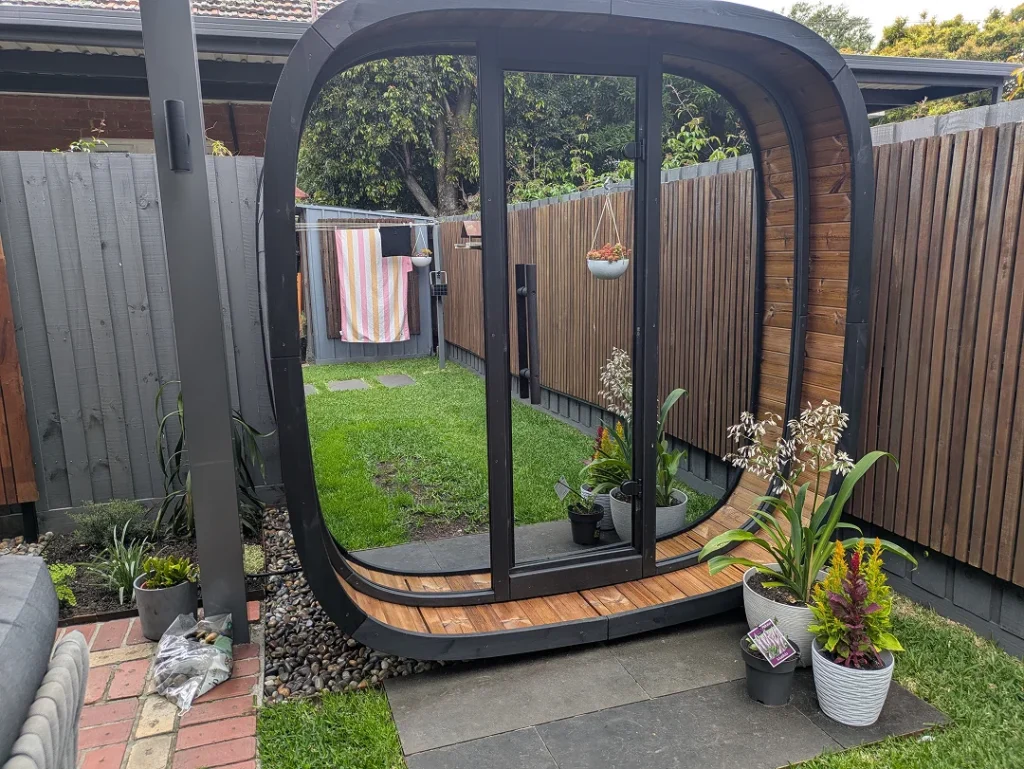
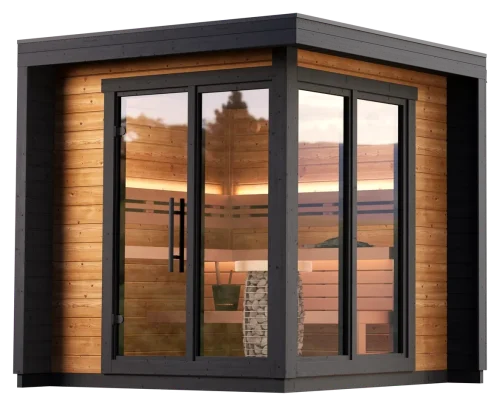
- Cube: contemporary geometry and strong glazed fronts for modern spaces.
- Patio: larger outdoor wellness spaces with more room and visual presence.
Compare usable internal space, construction, glazing, heater options, ventilation, assembly and installation, not just exterior appearance.
6. What timber and construction should you look for?
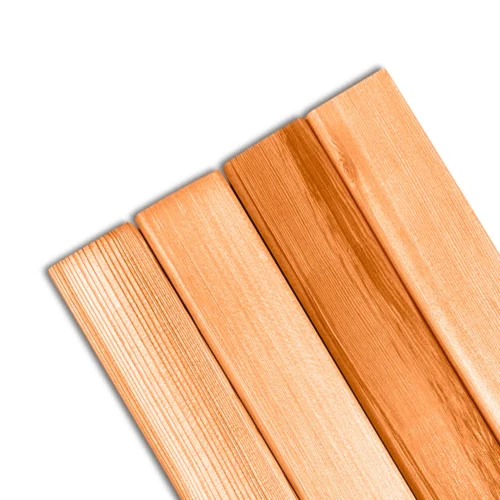
Timber affects appearance, feel, durability and the long-term ownership experience. Shym models use different timber specifications, including thermo-treated Nordic Spruce on selected models.
- Ask what timber is used and whether it suits the intended environment.
- Check stated timber and wall thickness, and the construction method.
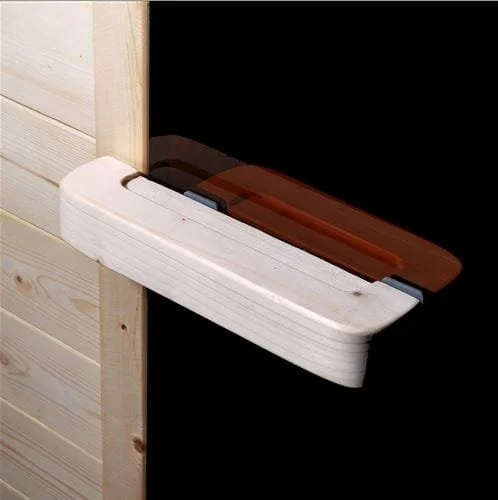
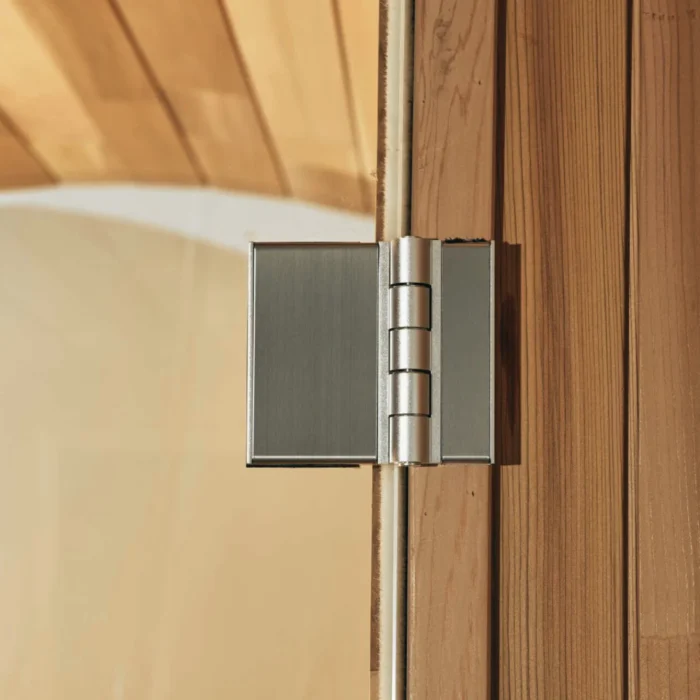
- Compare benches, doors, glass and hardware as well as the main shell.
- For outdoor use, consider roof, drainage, timber treatment and weather protection.
- Use genuine product specifications rather than judging quality from appearance alone.
7. How important are insulation and wall thickness?
Insulation and wall construction influence heat retention and the overall sauna experience. They should be part of the comparison, particularly for exposed outdoor installations.
- Check the wall construction and stated timber thickness.
- Ask where insulation is used, particularly in roofs and exposed areas.
- Consider the local climate and weather exposure.
- Compare the complete construction rather than relying on one thickness figure.
Avoid applying one universal thickness or insulation rule to every model. Requirements depend on the design and environment.
8. How does temperature control affect the sauna experience?
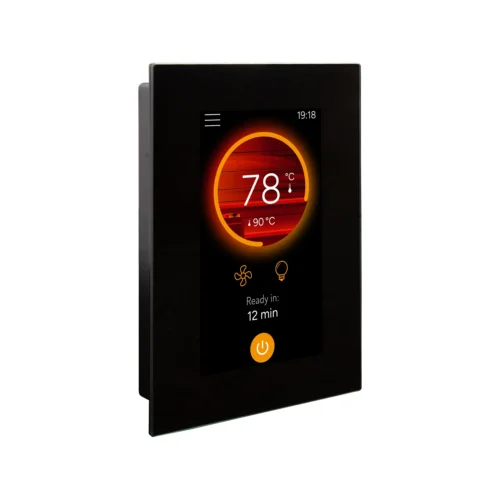
Temperature control affects how the sauna feels and how easily you can create your preferred routine. Traditional and infrared systems operate differently, and controls vary by product.
- Check the heater's control system and operating range.
- Understand where controls are located.
- Ask how the sauna is expected to heat and what conditions the stated heat-up time assumes.
- Follow the manufacturer's operating instructions.
Temperature, insulation, ventilation, room volume and heater selection should be considered together rather than judged by one number.
9. What heater and electrical requirements should you consider?
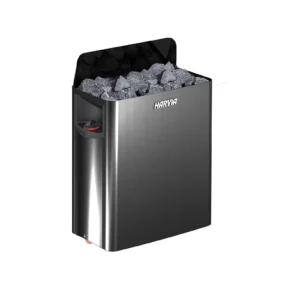
Heating is a major technical decision when buying a sauna in Australia. Requirements depend on sauna volume, heater type, manufacturer specifications and installation conditions.
- Confirm the supplied or compatible heater.
- Check the required electrical supply before ordering.
- Ask whether a dedicated circuit is required.
- Have electrical work assessed and completed by a qualified, licensed electrician.
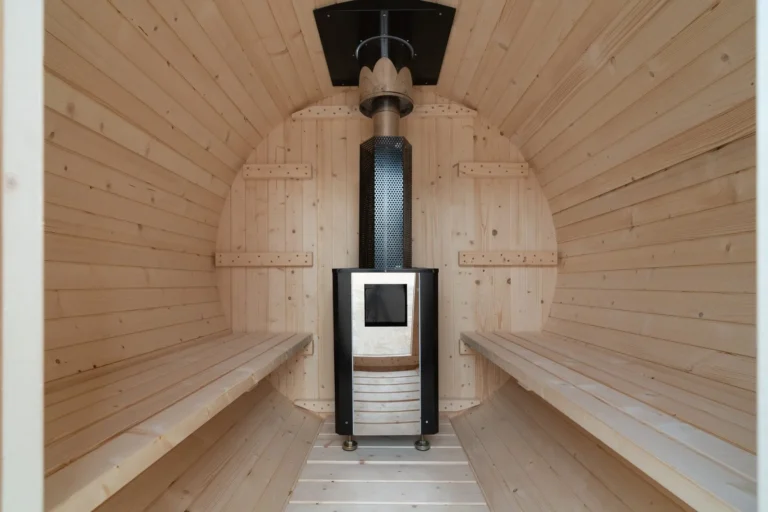
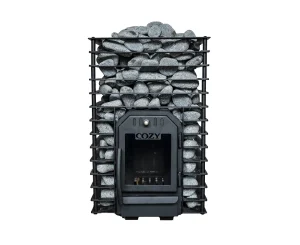
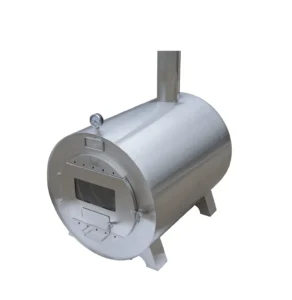
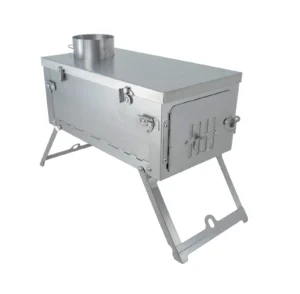
- For wood-fired options, confirm suitability, ventilation, clearances and local requirements.
Do not apply a generic kW recommendation to every sauna. Confirm requirements for the specific sauna and heater combination.
10. What about ventilation, flooring and safety?
Ventilation, flooring and site preparation are important to usability and longevity.
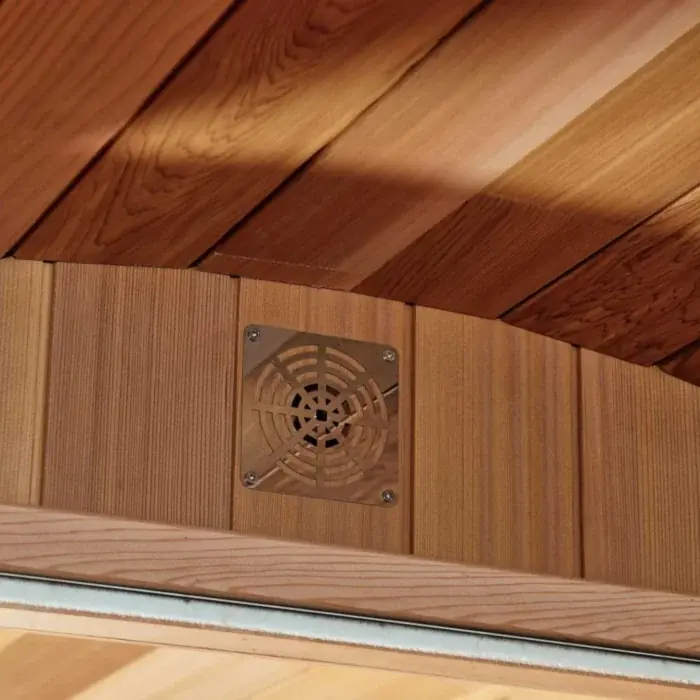
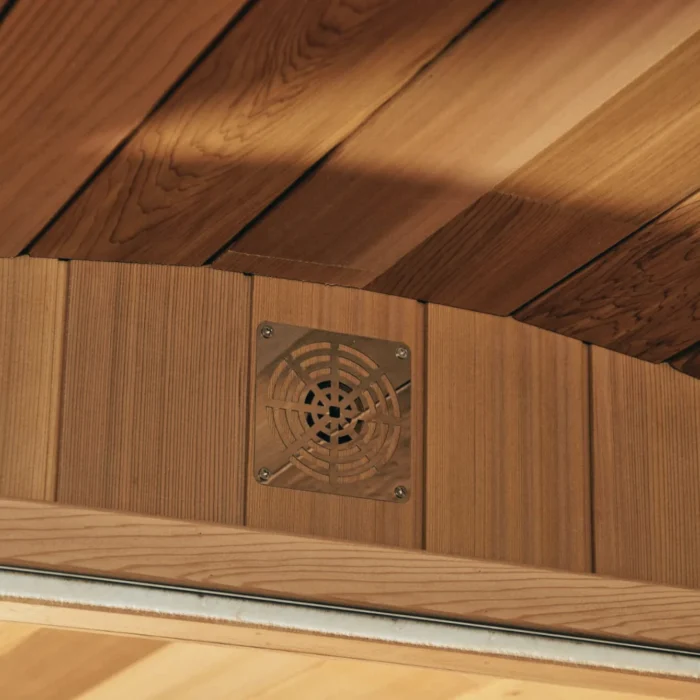
- Follow the manufacturer's ventilation and installation instructions.
- Consider drainage and moisture exposure for outdoor installations.
- Use a suitable, stable and level base.
- Maintain heater clearances according to manufacturer instructions.
- Do not improvise electrical, heating or structural changes without professional advice.
11. Do accessories and lighting matter?
Accessories and lighting can improve comfort and ambience, but they should come after the fundamentals: size, construction, heating, ventilation and installation.
- Lighting: functional illumination or softer ambience.
- Accessories: confirm what is included and what is optional.
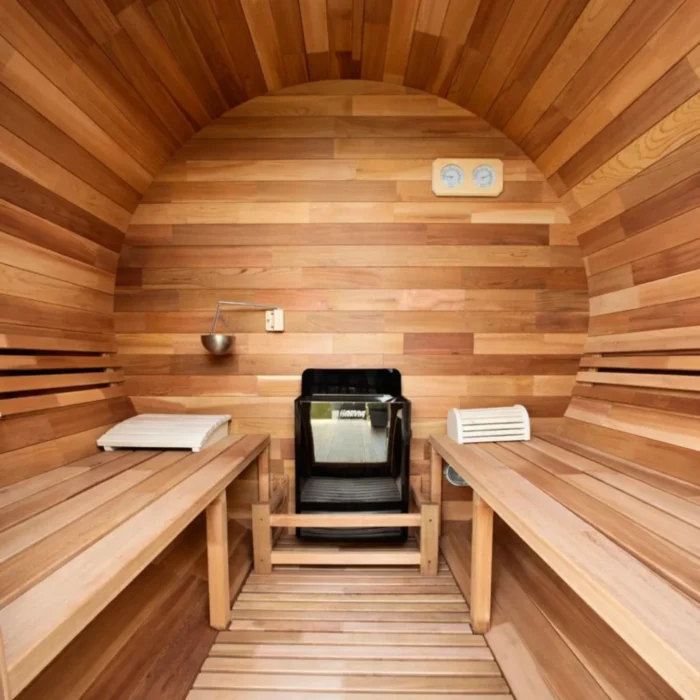
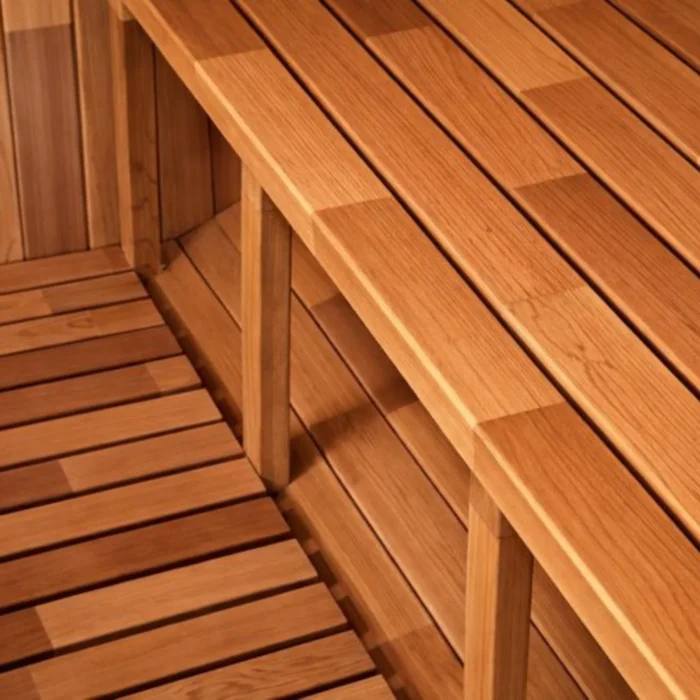
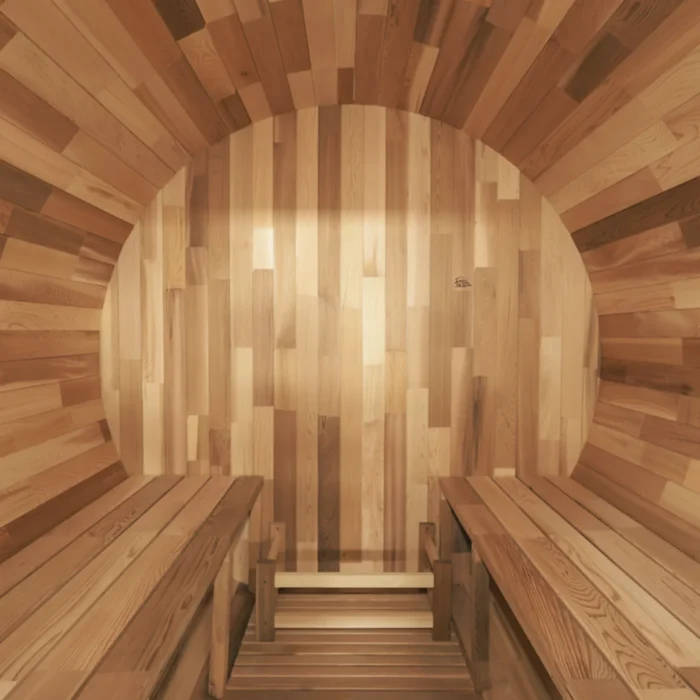
- Benches: compare material, height, layout and usable seating.
- Glass: consider privacy, visibility and the feel of the room.
- Controls: choose a system that is easy to use.
12. What should you know about installation and delivery?
Installation should be considered before purchase. Site preparation, access, the base, electrical work and assembly can all affect the project.
- Measure the proposed location and working space.
- Measure delivery access from the street to the final position.
- Confirm base requirements for the selected model.
- Confirm electrical requirements with the supplier and a qualified electrician.
- Understand what assembly and installation is included and excluded.
- Confirm delivery arrangements and site readiness.
13. How should you think about maintenance and ownership?
A sauna is a long-term ownership decision. Maintenance varies according to sauna type, timber, location, climate and exposure.
- Keep the sauna clean and dry according to manufacturer guidance.
- Inspect outdoor timber and exterior surfaces periodically.
- Allow the sauna to dry properly after use.
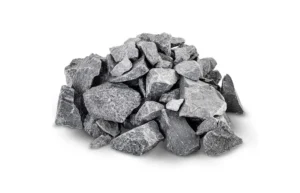
- Follow guidance for timber treatment, cleaning and sauna stones.
- Keep warranty and after-sales information accessible.
14. How do you choose a reliable sauna company?
The supplier matters as much as the product specification. Delivery, assembly, electrical coordination, support and after-sales service can affect the ownership experience.
- Look for clear product specifications.
- Ask where products are manufactured and what materials are used.
- Check warranty terms and after-sales support.
- Look for genuine customer reviews and real project examples.
- Ask what happens after placing an order.
- Confirm delivery, installation and support arrangements before paying a deposit.
Our Real Shym Projects library shows completed Australian installations, so you can see how different models work in real homes before you decide.
15. Home Sauna Buying Checklist
- I know where the sauna will be installed.
- I have measured the footprint and delivery access.
- I have chosen capacity based on real household use.
- I understand traditional vs infrared options.
- I have checked timber, construction and insulation.
- I understand heating and temperature controls.
- I have confirmed electrical requirements.
- I understand base, ventilation and site requirements.
- I know what is included and what is additional.
- I have reviewed installation, delivery and warranty terms.
- I have looked at real projects and customer reviews.
- I know who will provide after-sales support.
16. Frequently Asked Questions
What is the best home sauna in Australia?
There is no single best home sauna. The right choice depends on space, capacity, sauna type, construction, heating, installation, budget and intended use.
How much does a home sauna cost in Australia?
Prices vary by type, size, timber, construction, heater, glazing and installation. Delivery, site preparation and electrical work may also affect the total project cost.
Is an outdoor sauna suitable for Australian weather?
It can be, when the model is designed for outdoor use and the site is prepared correctly. Timber, roof protection, drainage, ventilation, positioning and maintenance all matter.
What size sauna should I buy?
Choose based on the people who will actually use it and the comfort you want. A 2 person sauna may suit a couple, while families may prefer more bench space.
What is the difference between traditional and infrared sauna?
Traditional saunas heat the room through a sauna heater, while infrared models use infrared heating elements. They provide different experiences.
Does a sauna need a dedicated electrical circuit?
It depends on the sauna and heater. Check the specific manufacturer's requirements and use a qualified, licensed electrician.
How important is sauna insulation?
Insulation can affect heat retention and performance. Compare the complete wall and roof construction rather than one specification.
Do sauna accessories and lighting matter?
They can improve comfort and ambience, but should be secondary to size, construction, heating, ventilation and installation.
Can I install a sauna myself?
Some kits are designed for customer assembly, while larger or complex installations may benefit from professional installation. Electrical work should be completed by a qualified, licensed electrician.
What should I check before ordering a sauna?
Check footprint, delivery access, base, electrical requirements, heating, timber, construction, ventilation, installation, delivery, warranty and after-sales support.
How do I know if a sauna company is reliable?
Look for transparent specifications, clear warranty terms, genuine reviews, real projects, defined delivery and installation processes, and accessible after-sales support.
Can a sauna go on a deck or concrete?
Potentially, depending on the sauna, structure and site. Confirm that the surface is suitable for the load and installation requirements before proceeding.
17. Final Thoughts: Choose the Sauna That Fits Your Home and Your Life
The best home sauna is not necessarily the biggest, most expensive or most feature-heavy model. It is the one that fits your space, household, preferred sauna experience and practical requirements.
Start with decisions that are difficult to change later: location, capacity, sauna type, access, base and electrical requirements. Then compare timber, insulation, temperature control, glass, benches, lighting, accessories and ventilation. A good buying decision should leave you confident about both the product and how it will fit into your home and routine.
Browse the full Shym Saunas range or speak with our team for advice on your specific situation.