


Traditional vs Infrared Sauna: Quick Answer
Traditional and infrared saunas create heat in different ways, so the experience is noticeably different. A traditional sauna heats the cabin air using an electric or wood-fired heater and hot stones; water can be added to the stones to create löyly. An infrared sauna uses radiant infrared panels to warm the person more directly and normally operates at a lower ambient temperature. For an Australian home, the practical choice often comes down to whether you want the classic high-heat sauna ritual or a lower-temperature, plug-in indoor cabin that is quick to use.
Key Takeaways
- Traditional saunas heat the cabin; infrared saunas use radiant panels to warm the body more directly.
- Traditional models suit people who value high heat, hot stones, löyly and a classic sauna ritual.
- Infrared models can suit people who prefer lower ambient temperatures, compact indoor installation and a simpler plug-in setup.
- Traditional outdoor saunas generally offer more options for family and social use, while infrared cabins are often designed around one to four people indoors.
- Current research on sauna bathing is stronger for traditional Finnish-style sauna exposure than for many specific health claims made about infrared saunas.
- The right choice depends on the experience, location, size and installation requirements you will actually use.
Traditional vs Infrared: Side-by-Side
| Factor | Traditional Sauna | Infrared Sauna |
|---|---|---|
| Heat method | Heater warms air and sauna stones | Infrared panels emit radiant heat |
| Typical ambient temperature | Often around 70–100°C for Finnish-style use | Often around 45–65°C |
| Humidity | Normally dry; water can be added to stones for löyly | Low humidity; no stone/steam ritual |
| Warm-up | Preheats cabin and stones | Generally quicker |
| Heat sensation | Hot surrounding air and strong heat exposure | Lower air temperature with radiant warmth |
| Heater | Electric or wood-fired | Electric infrared panels |
| Typical setting | Indoor or outdoor, depending on construction | Primarily indoor |
| Social use | Strong fit for family/group sessions | Commonly compact, 1–4 people |
| Ritual | Heat, stones, water, löyly and cooling | Simple heat-and-relax routine |
Electrical note: The Shym Aura infrared range uses a standard 10A power connection, which can be useful to consider when planning an indoor installation.
How Does a Traditional Sauna Work?
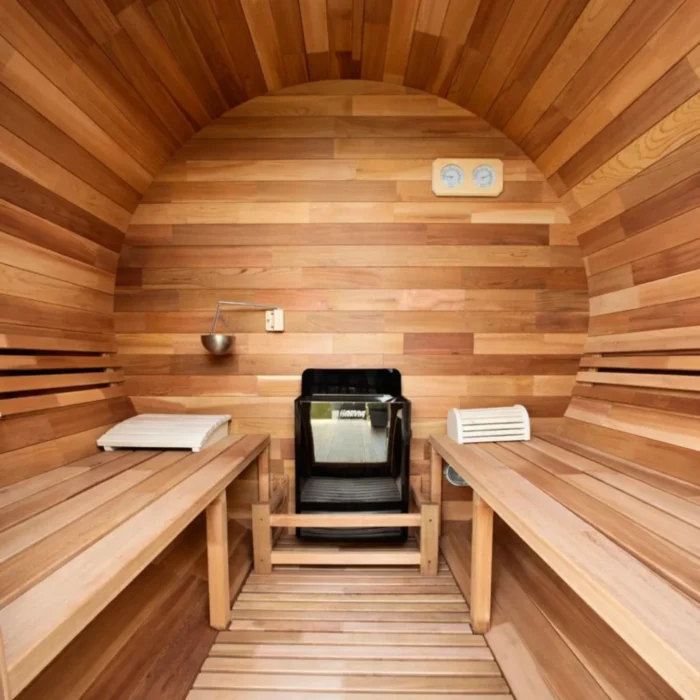
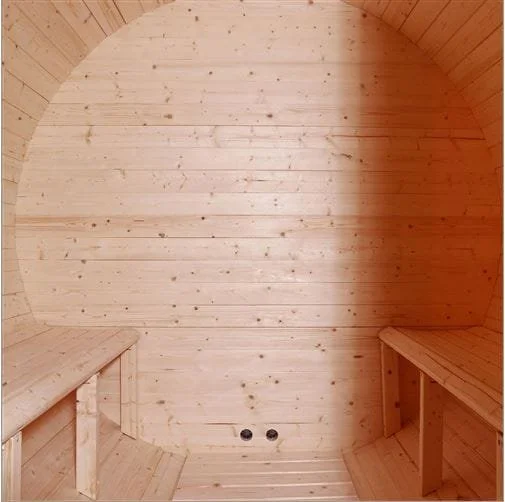
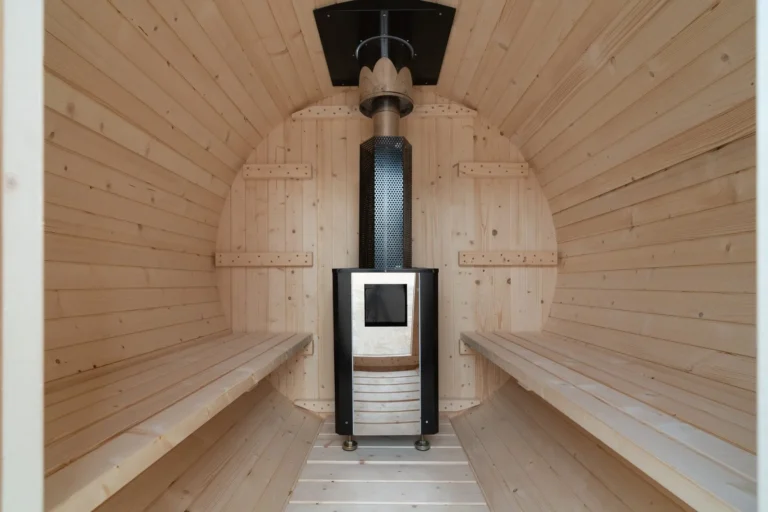
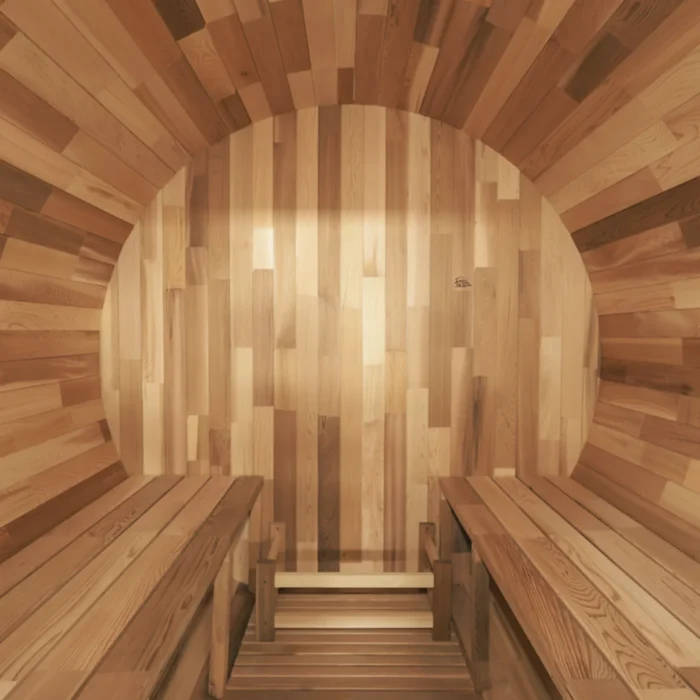
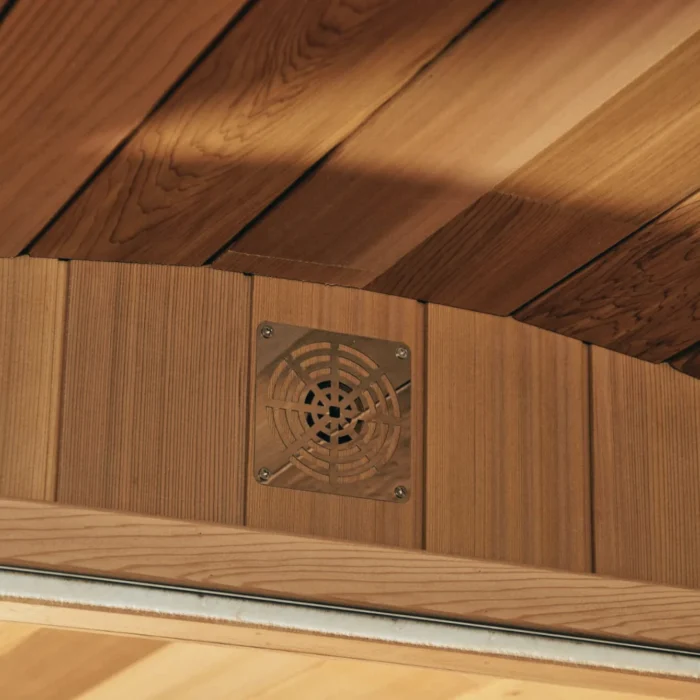
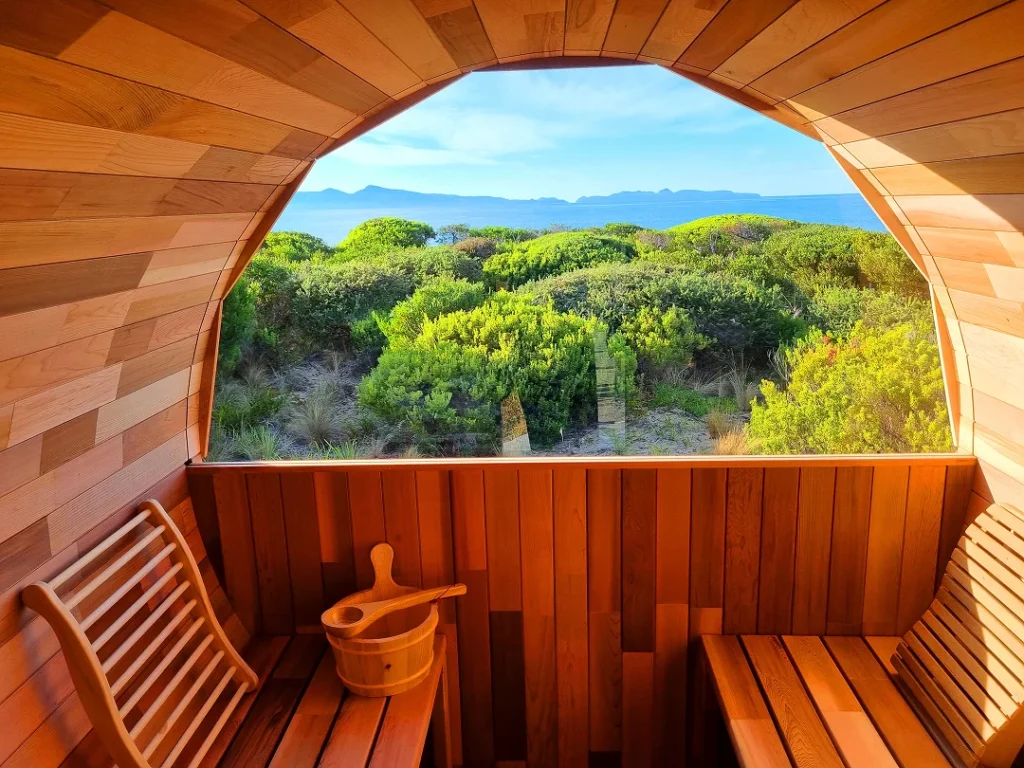
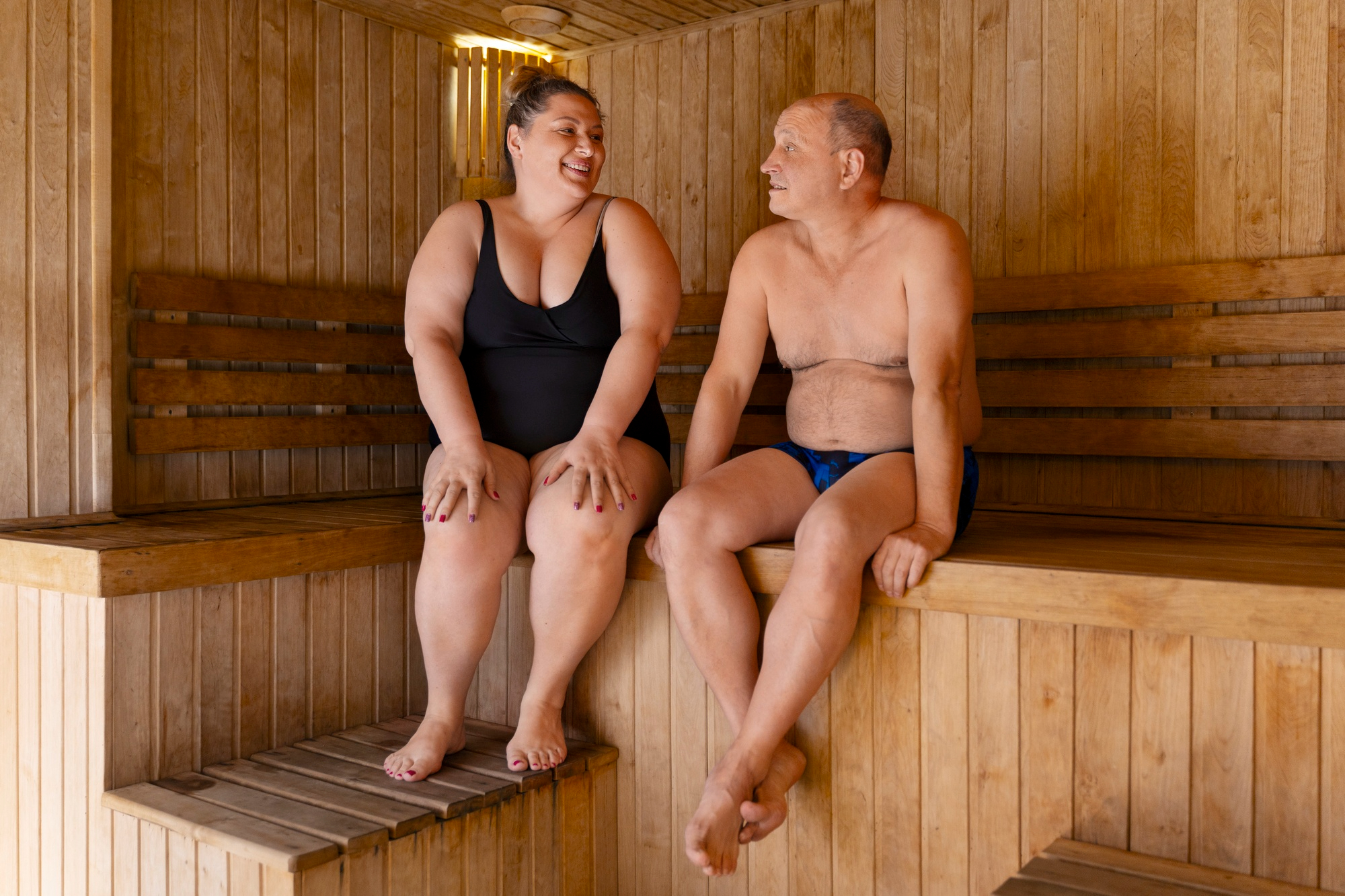
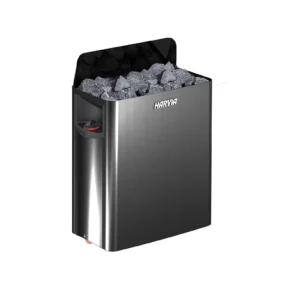
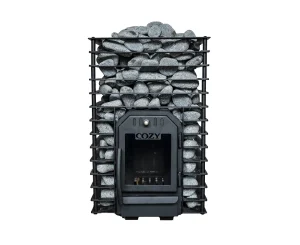
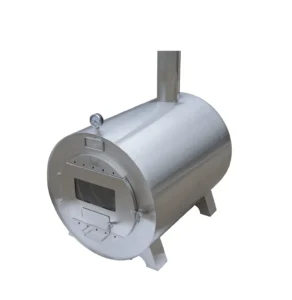
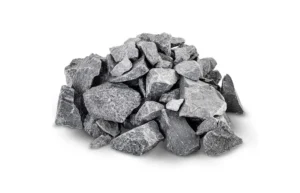
A traditional sauna uses a heater to raise the temperature of the sauna room. Electric and wood-fired heaters are common in residential saunas. In a Finnish-style setup, stones sit on the heater and can be sprinkled with a small amount of water to create löyly, a brief increase in humidity and a distinctive wave of heat. Traditional sauna design is therefore about more than the thermometer reading: the cabin, heater, stones, ventilation, bench height and timber all contribute to the experience.
How Does an Infrared Sauna Work?
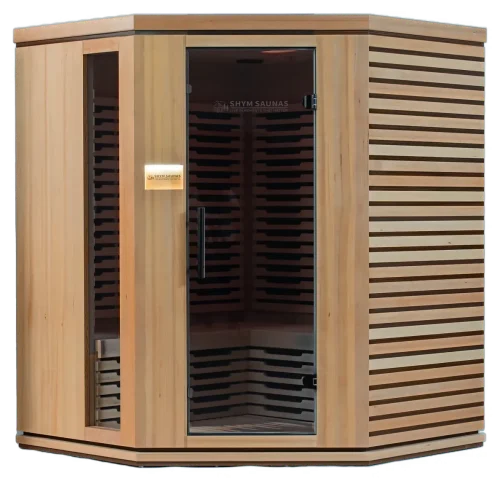
Infrared saunas use electrical infrared panels rather than a conventional sauna stove and stone heater. Instead of first heating a large volume of cabin air, the panels emit infrared radiation that warms the body more directly. This allows the cabin to operate at a lower ambient temperature. Shym’s Aura Infrared Sauna Series is designed for indoor use, with one- to four-person cabins, Canadian hemlock construction and carbon far-infrared panels. (Aura specifications)
Which Sauna Gets Hotter?
Traditional Finnish-style saunas generally operate at substantially higher air temperatures. Shym’s current temperature guide gives a typical range of about 70 to 100°C, while infrared saunas are commonly described in the 45 to 65°C range. The lower air temperature of infrared does not mean the session feels cold; the heating mechanism is simply different (Source: Shym Temperature Guide).
The lower air temperature of an infrared sauna reflects its different heating method: infrared emitters use radiant heat to warm the body directly, rather than relying primarily on heating the surrounding air.
What About Steam and Löyly?
If the ritual of throwing water onto hot sauna stones is important to you, traditional is the category to look at. Löyly changes the humidity and creates a characteristic burst of heat. Infrared cabins do not use a stone heater and are not designed around this ritual.
Which Is Easier to Install at Home?
Installation depends heavily on the model. A large outdoor traditional sauna can require a prepared base, delivery access, electrical work and heater-specific requirements. A compact indoor infrared cabin can be considerably simpler. Shym’s Aura range is designed to sit on a flat indoor floor and run from a standard 10A household power point; its panels are designed to clip together with hand tools. (Aura installation details)
Which Is Better for an Outdoor Sauna?
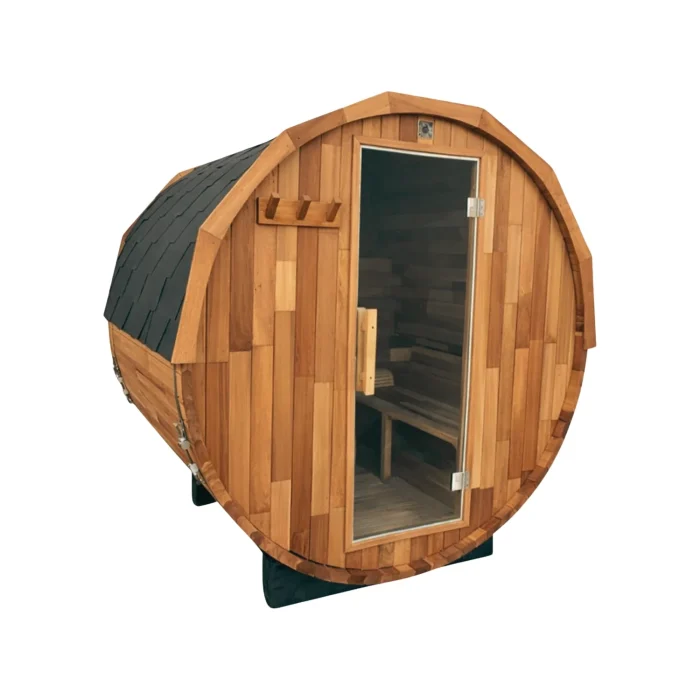
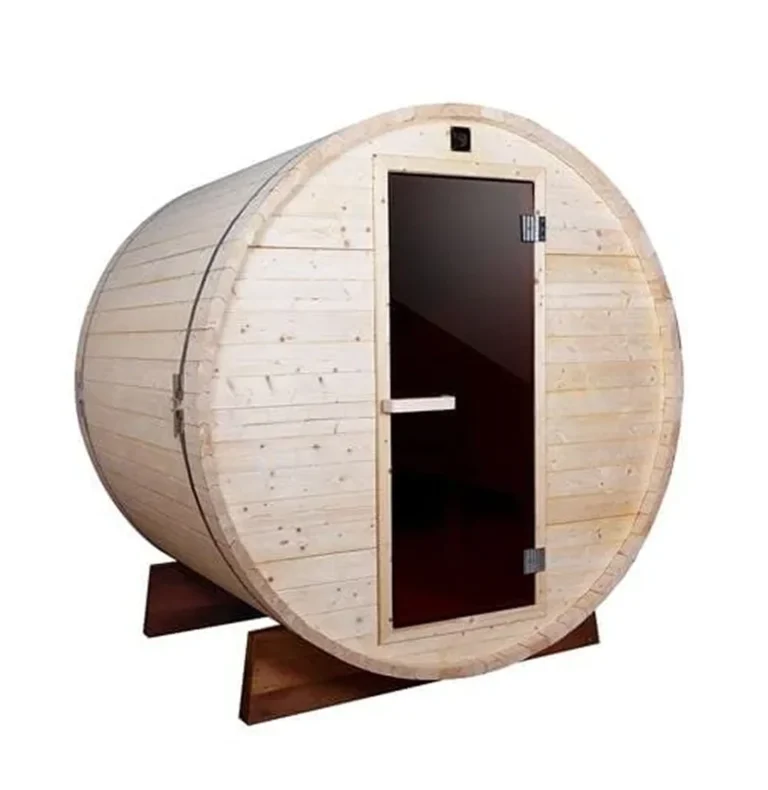
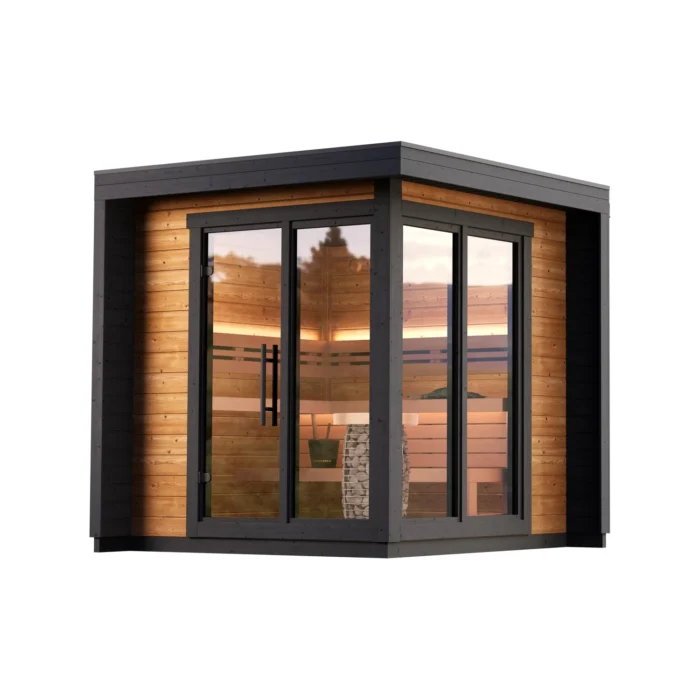
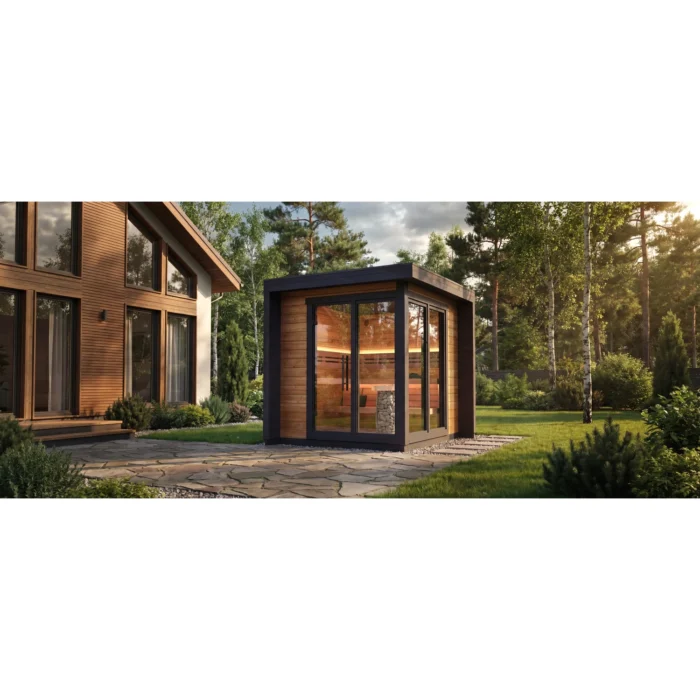
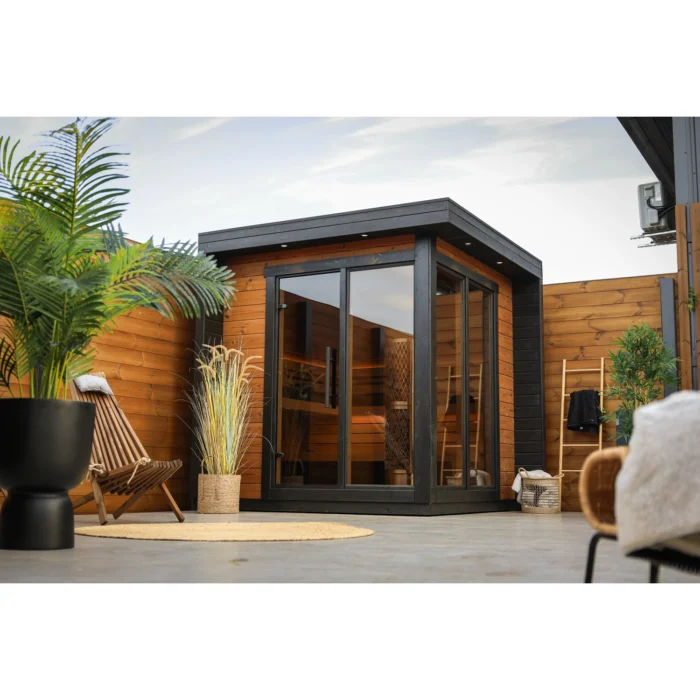
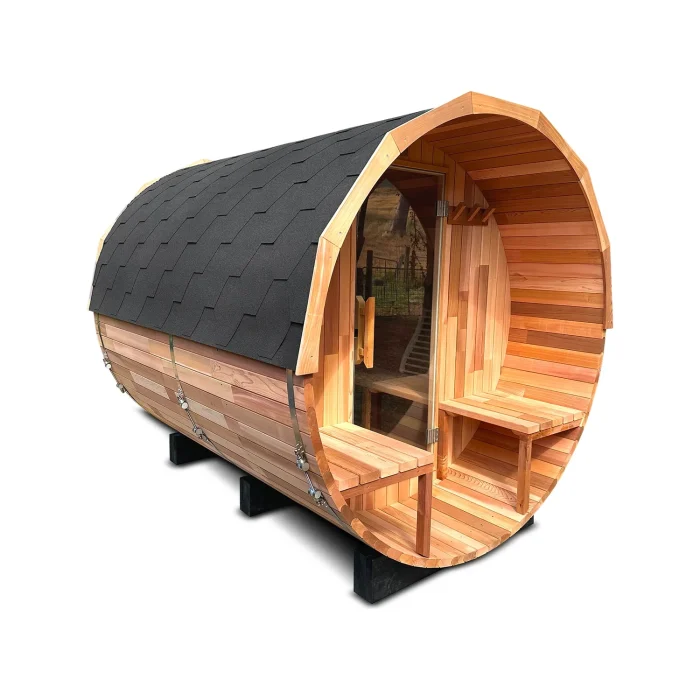
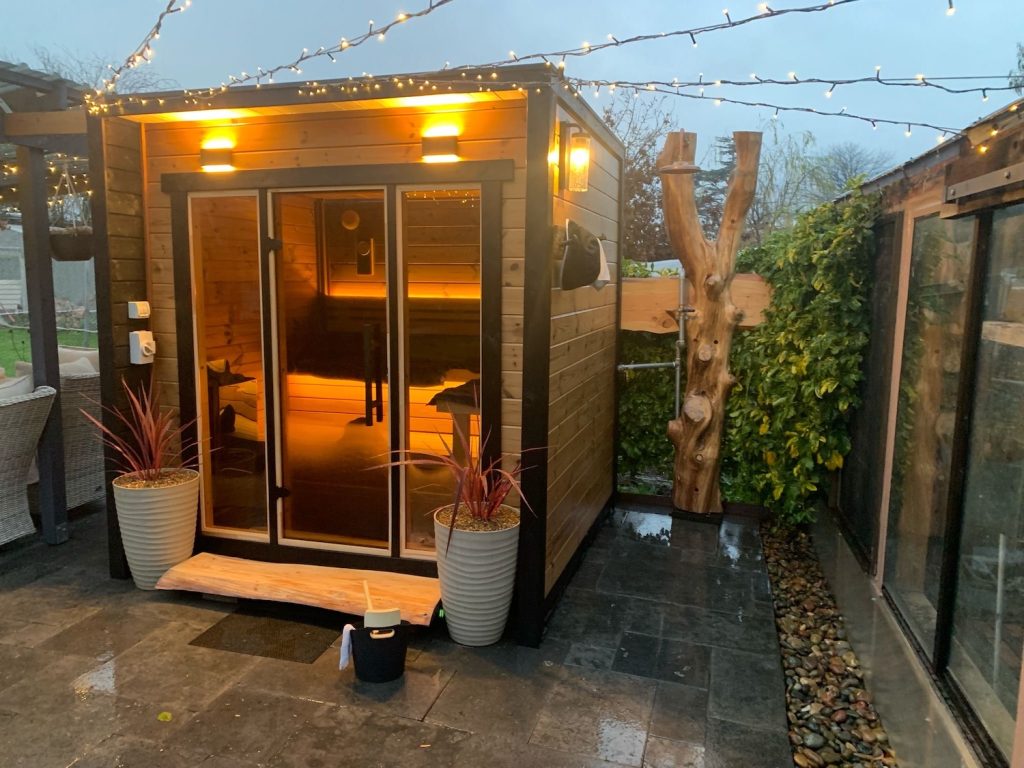
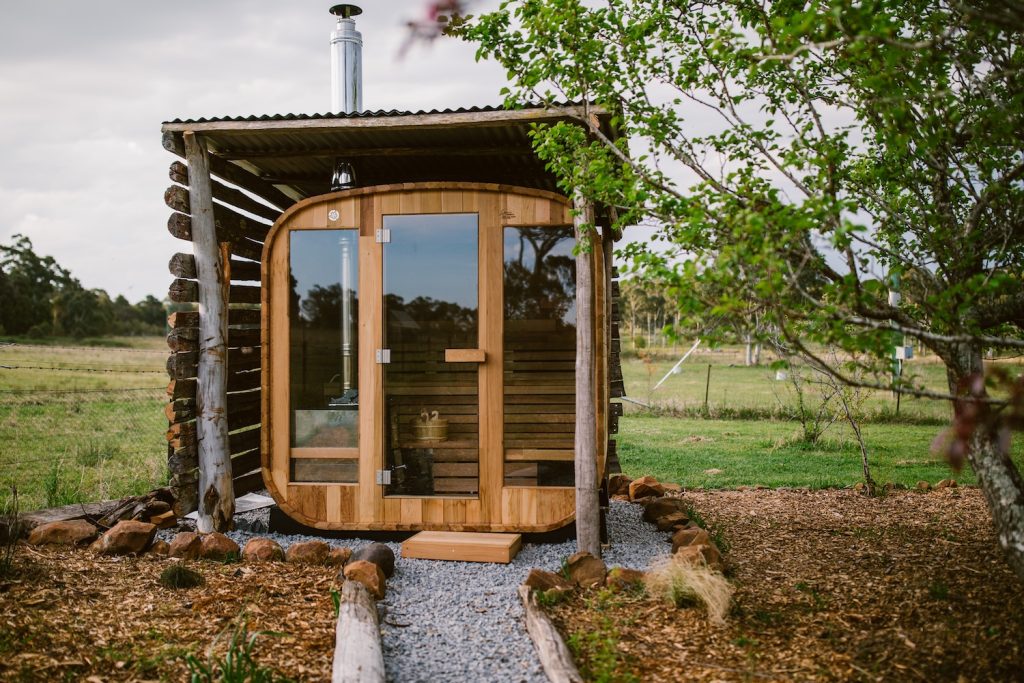
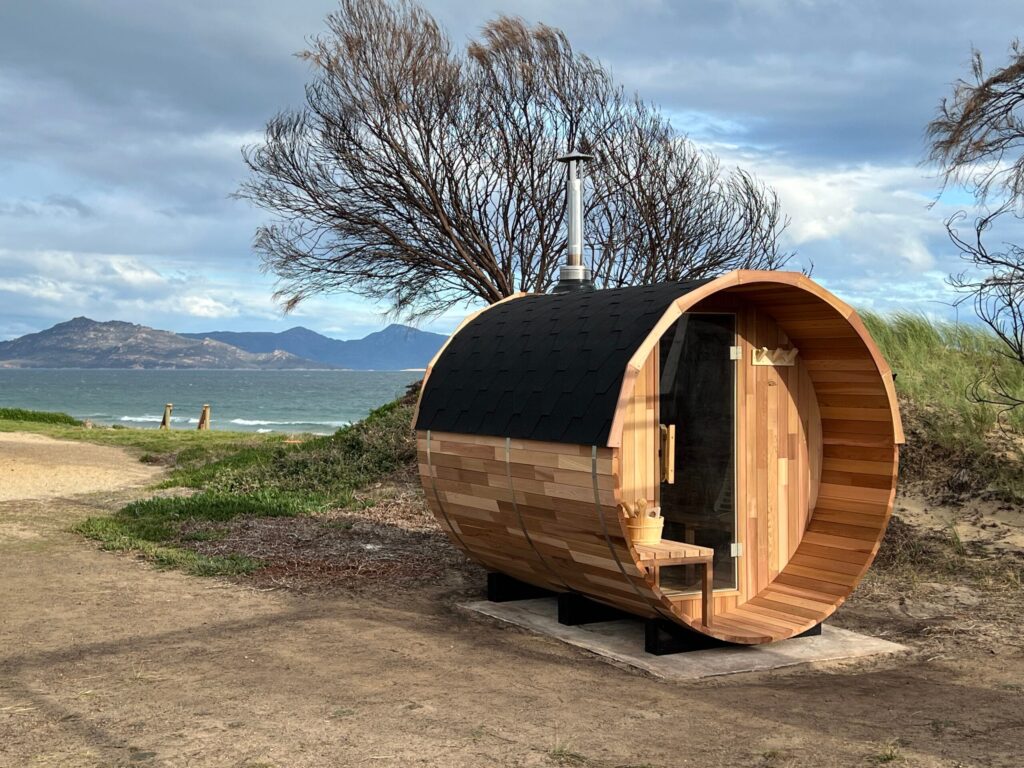
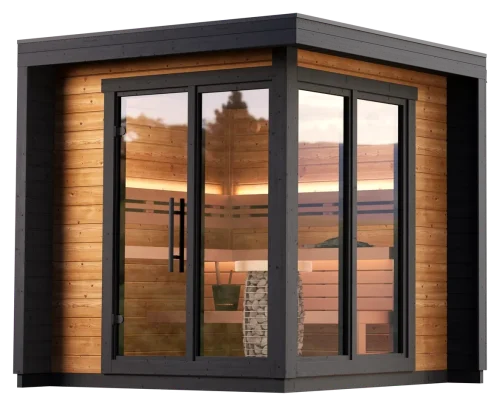
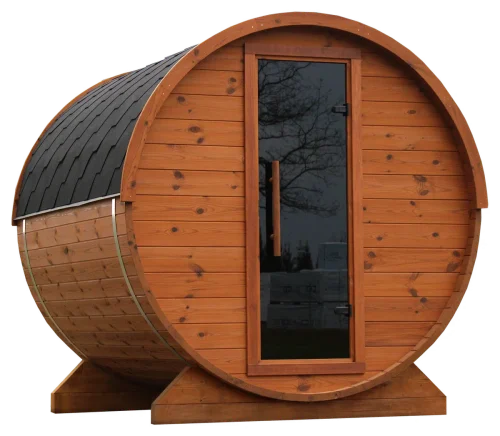
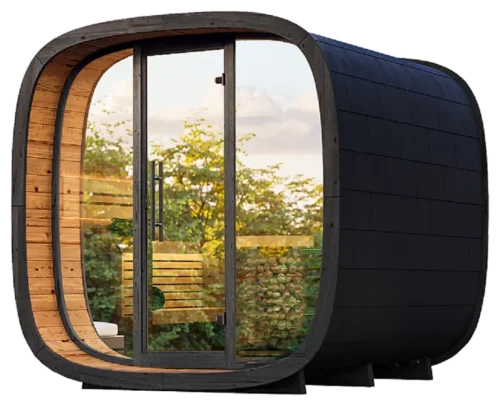
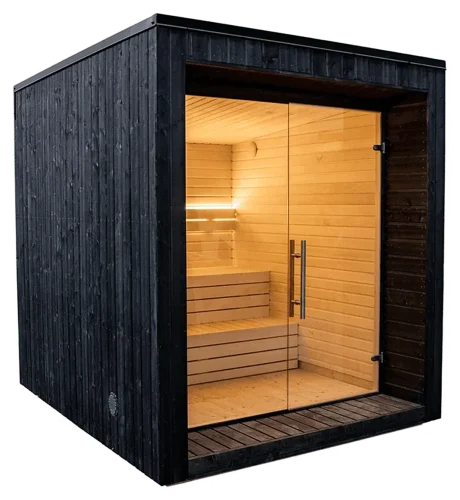
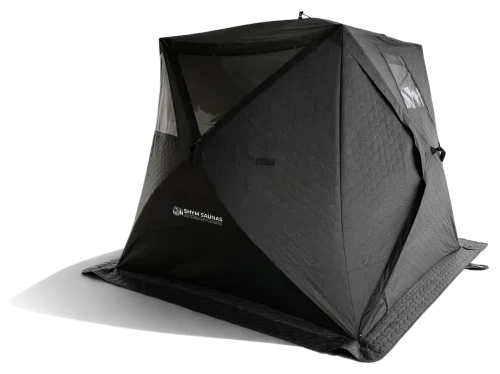
For a permanent backyard sauna, traditional sauna construction offers the widest choice of outdoor formats. Shym’s current outdoor range includes Patio, Viva, Union, Round Barrel and Round Cube models. Aura infrared cabins are positioned as indoor products, so the practical question is where you want the sauna to live.
Which Sauna Is Better for Families?
Capacity and layout matter more than the heater label. Traditional outdoor models often provide larger benches and more flexible layouts for family or social sessions. Shym’s Patio range currently spans compact 3 to 4 person models through larger 4 to 8 person options. Aura currently spans one to four people.
What About Running Costs?
Energy use depends on heater power, sauna size, insulation, target temperature, warm-up time, session length and frequency of use. Infrared cabins can use less electricity than larger traditional electric saunas because they operate at lower ambient temperatures and often have lower power ratings. Shym’s Aura 2-person Standard is rated at 1.9kW and plugs into a standard 230V supply. For a meaningful estimate, use the actual heater wattage and your electricity tariff: kW × hours used × electricity rate per kWh.
Which Has Stronger Health Research?
There is a substantial research literature on sauna bathing, particularly traditional Finnish sauna exposure. Reviews report associations between regular sauna bathing and cardiovascular and other health outcomes, but much of the evidence is observational and does not prove that sauna prevents or treats a specific disease. Research specific to infrared sauna is smaller and protocols vary. A 2025 study comparing traditional and far-infrared exposure found different acute physiological responses in healthy adults, but it was a small study and does not establish a long-term health winner. The fairest reading of the evidence is that both are forms of passive heat exposure with different thermal environments. (PubMed systematic review) (Mayo Clinic Proceedings review)
Which Should You Choose?
| If your priority is… | Consider… |
|---|---|
| High heat and the classic sauna ritual | Traditional sauna |
| Water on stones and löyly | Traditional sauna |
| A permanent outdoor backyard sauna | Traditional outdoor sauna |
| Family or social sauna sessions | A larger traditional model sized to your household |
| Lower ambient temperature | Infrared sauna |
| Compact indoor installation | Infrared sauna |
| Standard plug-in setup | Shym Aura infrared range |
| Simple heat-and-relax routine | Infrared sauna |
Shym Saunas You Can Compare
Aura Infrared Sauna Series: Indoor far-infrared cabins from 1 to 4 people. View range
Patio Series: Outdoor ThermoWood traditional sauna range from compact to large family models. View range
Viva Outdoor Series: Modern outdoor traditional sauna range with 40mm ThermoWood construction. View range
Union Series: Outdoor traditional saunas in 2 to 4, 3 to 5 and 3 to 6 person formats. View range
Round Barrel Series: Traditional barrel formats with several timber and size options. View range
Round Cube Series: Modern outdoor traditional saunas in 3 to 7, 4-10, and 3 to 10 person configurations, depending on model. View range
Practical Buying Checklist
- Decide whether you want high-temperature traditional heat or lower-temperature infrared warmth.
- Choose indoor or outdoor before comparing specific models.
- Measure the footprint, ceiling height and delivery/access route.
- Decide how many people will normally use the sauna together.
- Check heater power and electrical requirements for the exact model.
- For traditional models, decide whether you want electric or wood-fired heating.
- For outdoor models, check the base, drainage, weather exposure and delivery access.
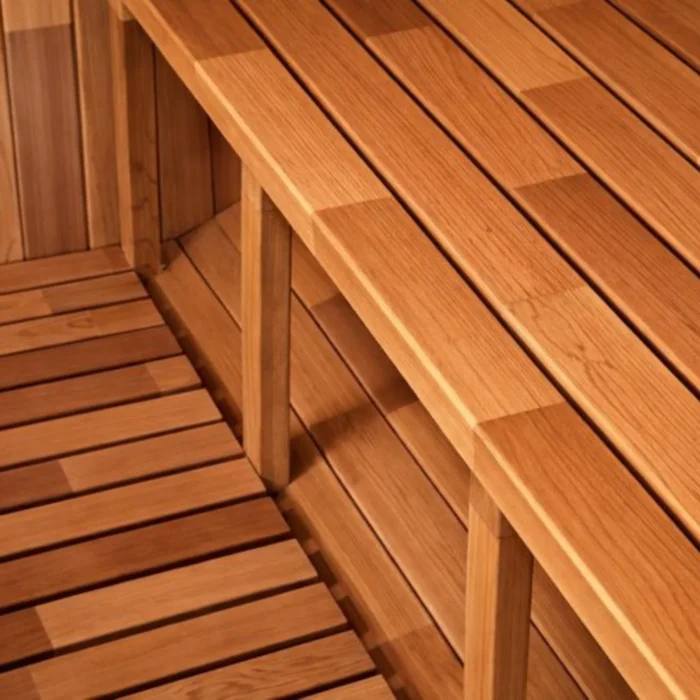
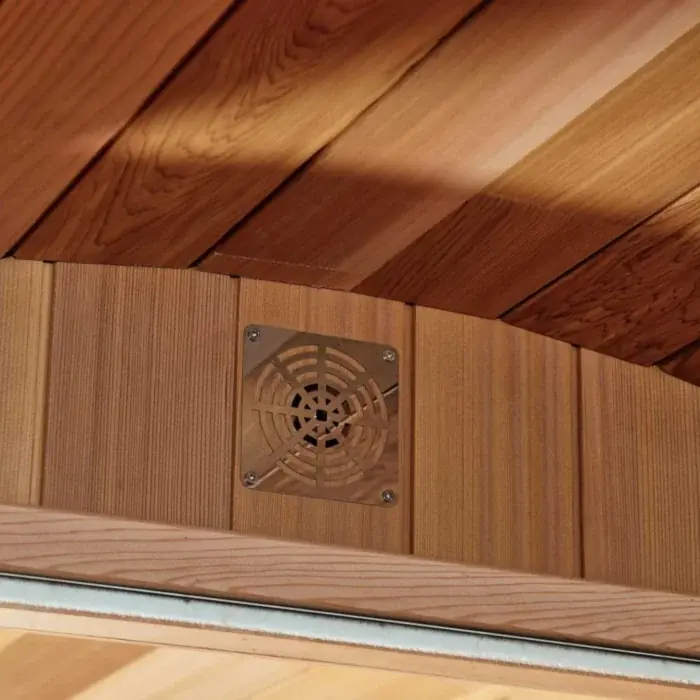
- Compare ventilation, timber, insulation and bench layout, not just headline price.
- Consider how often you will realistically use the sauna.
- Treat health claims carefully and choose a sauna for the experience and routine you want to maintain.
Frequently Asked Questions
Is infrared or traditional sauna better?
Neither is universally better. Traditional suits people seeking high heat, stones and löyly; infrared suits people seeking lower ambient heat and a compact indoor setup.
Is an infrared sauna a real sauna?
Infrared saunas are a distinct sauna type that uses radiant infrared heating rather than a conventional hot-stone heater.
Which sauna gets hotter?
Traditional Finnish-style saunas generally operate at much higher air temperatures than infrared saunas. (Source: Shym Temperature Guide)
Can you put water on an infrared sauna?
Infrared cabins are not designed around hot sauna stones or löyly. Follow the manufacturer’s instructions and do not add water to infrared heating panels.
Is an infrared sauna cheaper to run?
It can use less electricity than a larger traditional electric sauna, but actual cost depends on wattage, use, warm-up time and electricity rates.
Can I install an infrared sauna indoors?
Yes. Shym’s Aura range is designed for indoor use and a standard 10A household power point.
Can a traditional sauna be installed outdoors?
Yes. Many traditional sauna designs are specifically built for outdoor use. Base, weather protection, delivery access, ventilation and heater installation all need consideration.
Which is better for a family?
Choose based on the number of users and space available. Larger traditional models can offer more social seating, while infrared models are often more compact.
Does infrared sauna heat the air?
Infrared panels primarily deliver radiant heat to the body rather than relying on cabin air as the main heat-transfer mechanism.
Does traditional sauna have more research behind it?
Traditional Finnish sauna bathing has a larger research literature, particularly observational and epidemiological research. Infrared research exists but is smaller and more varied.
How long should I use a sauna?
Follow the manufacturer’s guidance and your own tolerance. Leave if you feel dizzy, faint, unwell or excessively uncomfortable, and stay hydrated.
Can I use sauna for a medical condition?
Do not use sauna as a substitute for medical care. If you have a medical condition, take medication that affects blood pressure or fluid balance, or have been advised to limit heat exposure, discuss sauna use with an appropriate health professional.
Final Thoughts
The traditional-versus-infrared decision is really a decision about the kind of sauna life you want to create. Traditional saunas bring the high-heat cabin, hot stones and löyly ritual that defines the classic Finnish experience. Infrared saunas take a different approach: lower ambient heat, radiant panels and a compact indoor format. For an Australian homeowner, start with where the sauna will go, who will use it, how much space you have, what installation is possible and what kind of heat you enjoy. Once those are clear, the choice becomes much easier.
Ready to Find the Right Sauna for Your Home?
Whether you are considering a traditional outdoor sauna for the backyard or a compact infrared cabin for an indoor space, Shym Saunas can help you compare the options based on your space, household size, preferred heat experience and installation requirements.
Explore the Aura Infrared Sauna Series, browse the full sauna range or read our home sauna buying guide.
Prefer personalised advice? Speak with a Shym Sauna Specialist or call 1300 908 132.
Research Sources
- Clinical Effects of Regular Dry Sauna Bathing: A Systematic Review (PubMed)
- Cardiovascular and Other Health Benefits of Sauna Bathing: A Review of the Evidence (PubMed)
- Comparison of thermoregulatory, cardiovascular, and immune responses to different passive heat therapy modalities (PubMed)
- Aura Infrared Sauna Collection (Shym Saunas)
- Sauna Temperature Guide (Shym Saunas)