

What Size Sauna Do I Need? Quick Answer
The right sauna size depends on how many people will normally use it, whether you want to sit or lie down, and how much space you have for installation. For many Australian homes, a 2 to 4 person sauna is a practical starting point for a couple or small household. If you regularly sauna with family or friends, look at 4 to 8 person models or larger. Capacity is only a starting point. Bench length, room width, height, heater position and door layout can make two saunas with the same person rating feel very different.
Key Takeaways
- Choose around your normal number of users, not occasional maximum occupancy.
- A 2 to 4 person sauna can suit a couple or small household, but layout matters as much as the capacity label.
- If you want to lie down, prioritise bench length and depth.
- Measure the complete external footprint, not just the internal room.
- Outdoor planning also requires a suitable base, delivery access, door clearance and practical space around the sauna.
- Heater sizing depends on sauna volume and construction, not simply the number of people.
Start With How You Will Actually Use the Sauna
Before measuring your backyard or spare room, think about your routine. Will one person use it after training? Will two people use it together? Is it a family space or a weekend social space? The best size matches your normal use without making the sauna unnecessarily difficult or expensive to install.
Sauna Size by Number of People
| Typical use | Starting capacity | What to look for | Best suited to |
|---|---|---|---|
| Solo use | 1 to 2 people | Compact footprint and comfortable seating | Individual routines and smaller indoor spaces |
| Couples or small households | 2 to 4 people | Enough bench width for two to four users, and extra length if lying down | Couples and small families |
| Families or regular guests | 4 to 6 people | More bench length and width, and multiple seating positions | Families and shared sessions |
| Larger social use | 6 to 10 people | Generous internal volume and more installation planning | Large families, entertaining and dedicated wellness spaces |
Why Person Capacity Is Not the Whole Story
A sauna advertised for four people does not tell you whether four people will be comfortable, whether the layout supports lying down, or how much clear floor space remains. Bench length, depth, room width, heater location and door position all affect usable space.
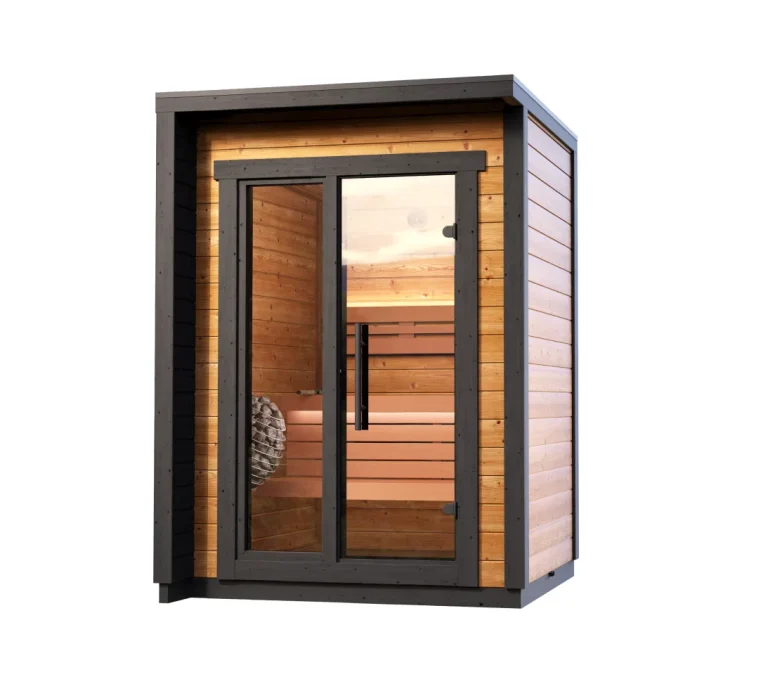
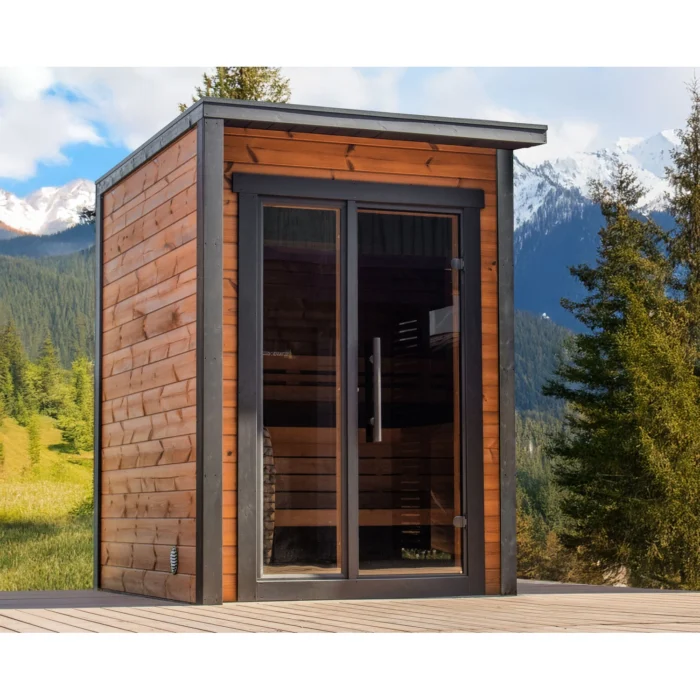
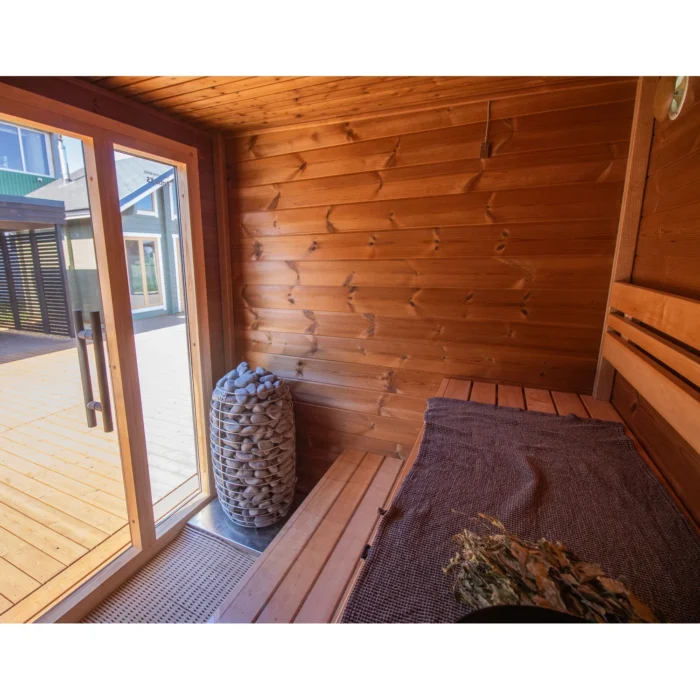
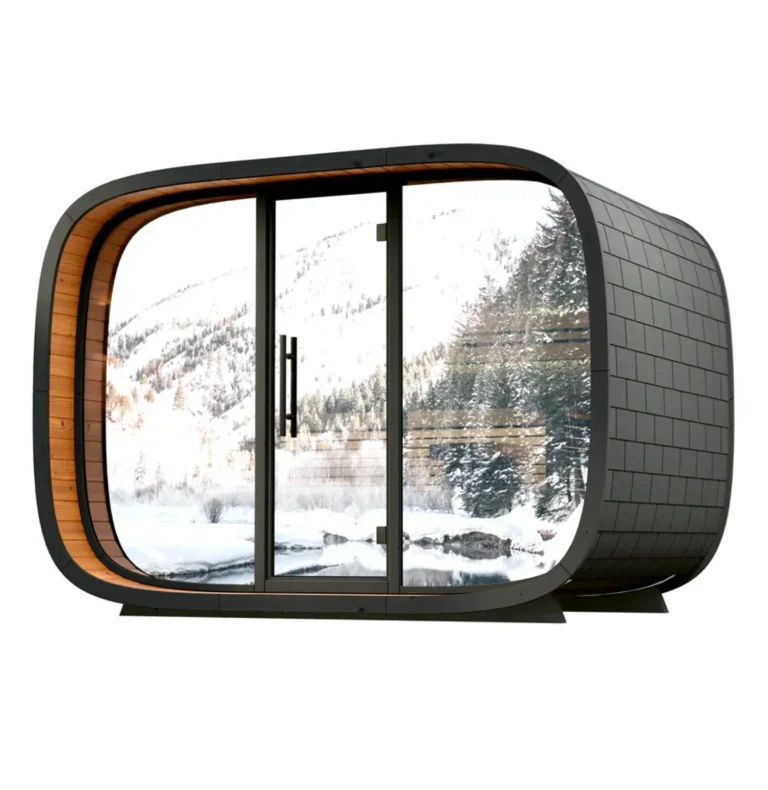
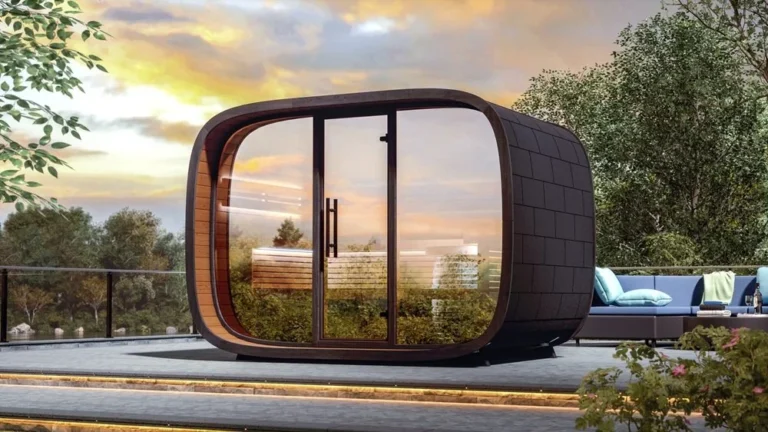
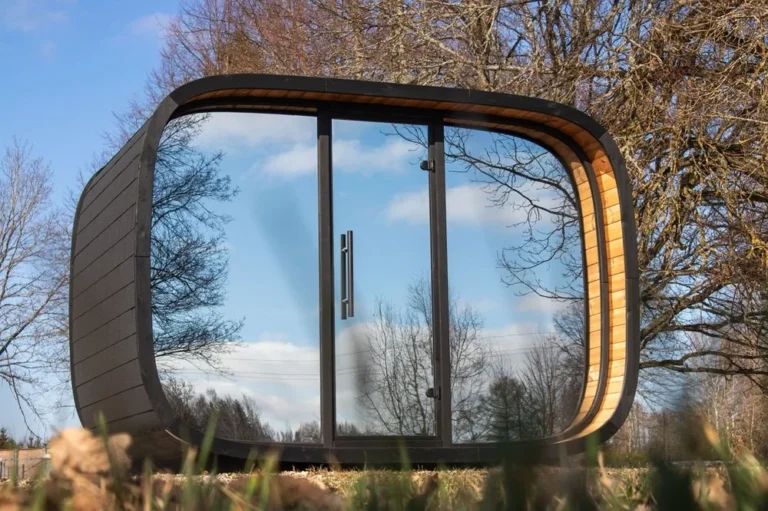
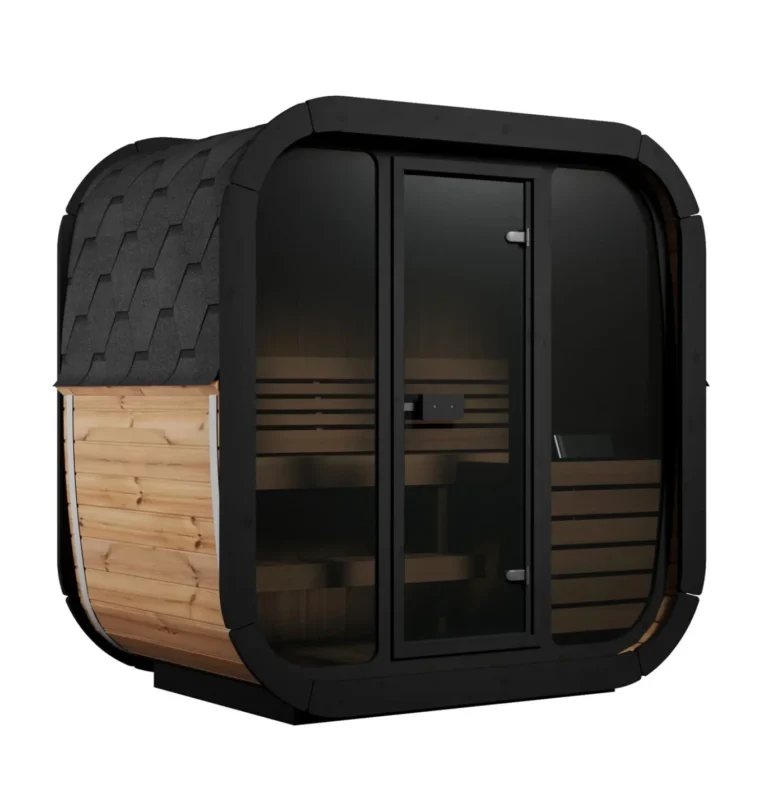
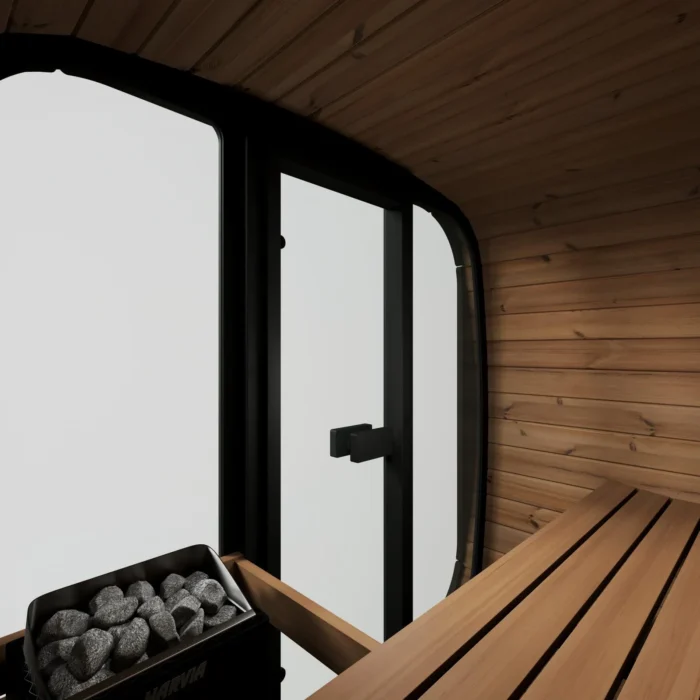
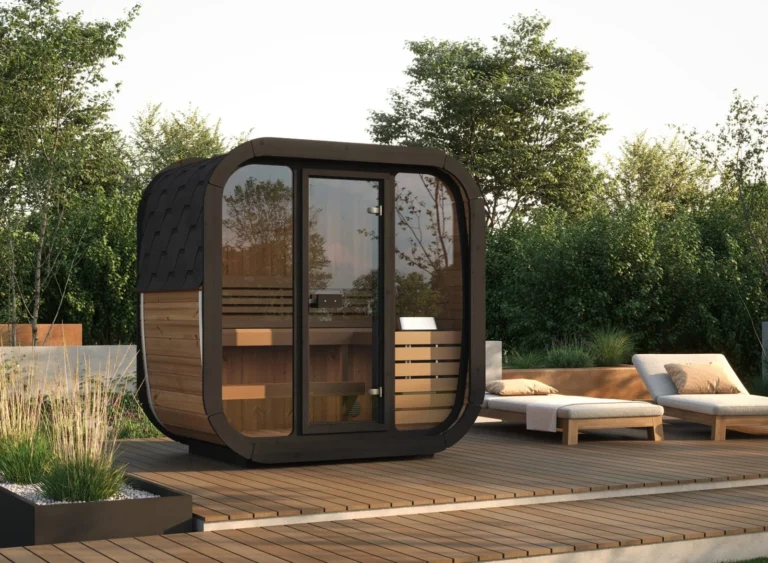
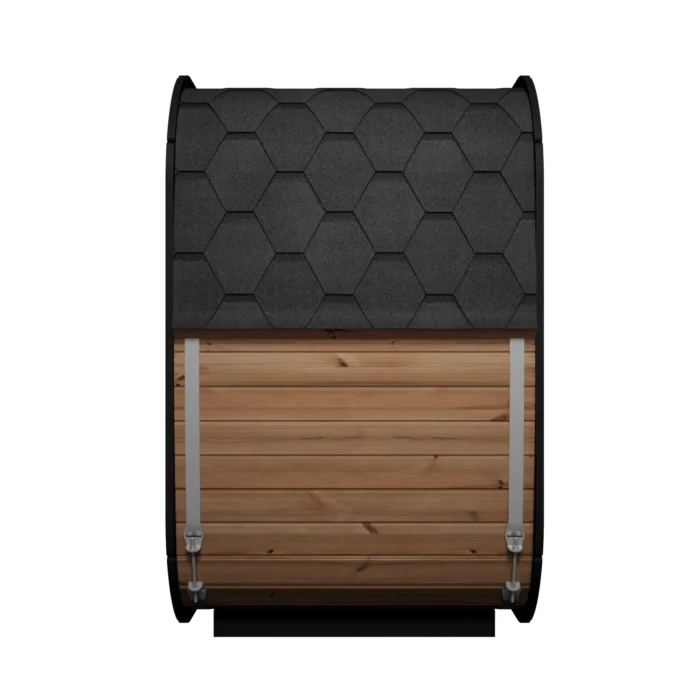
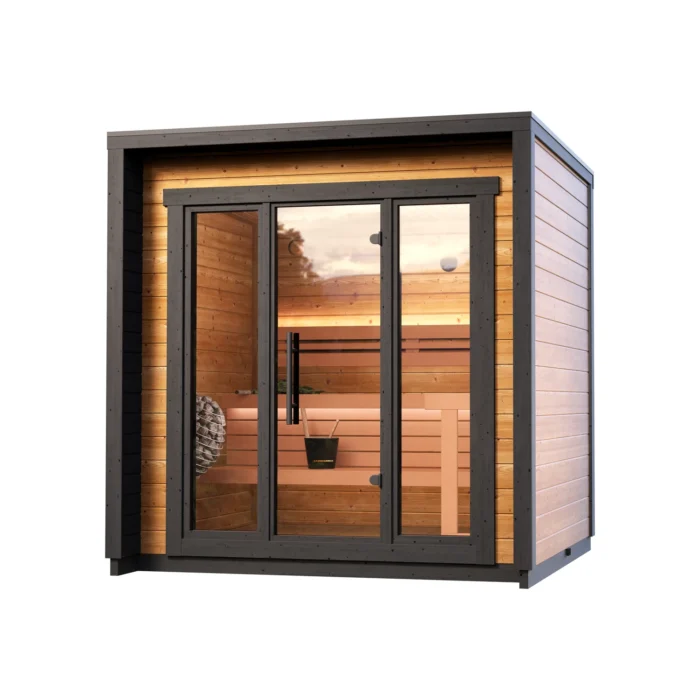
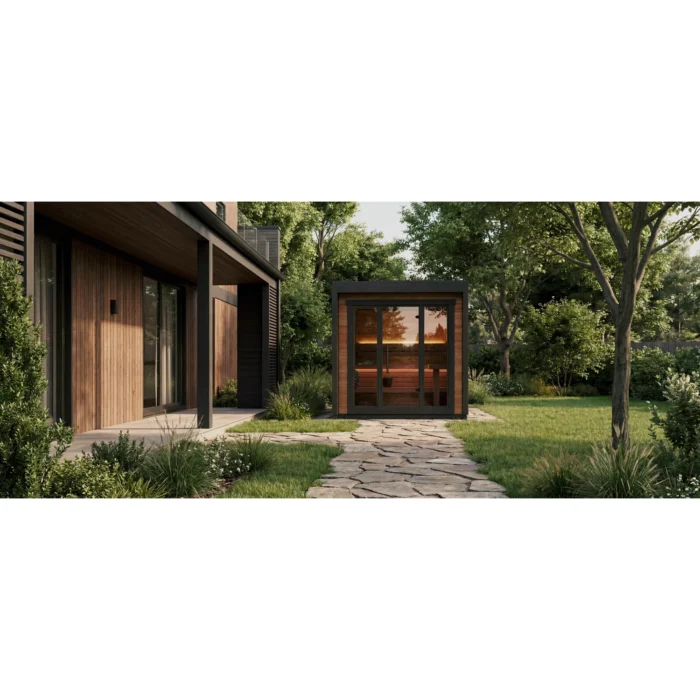
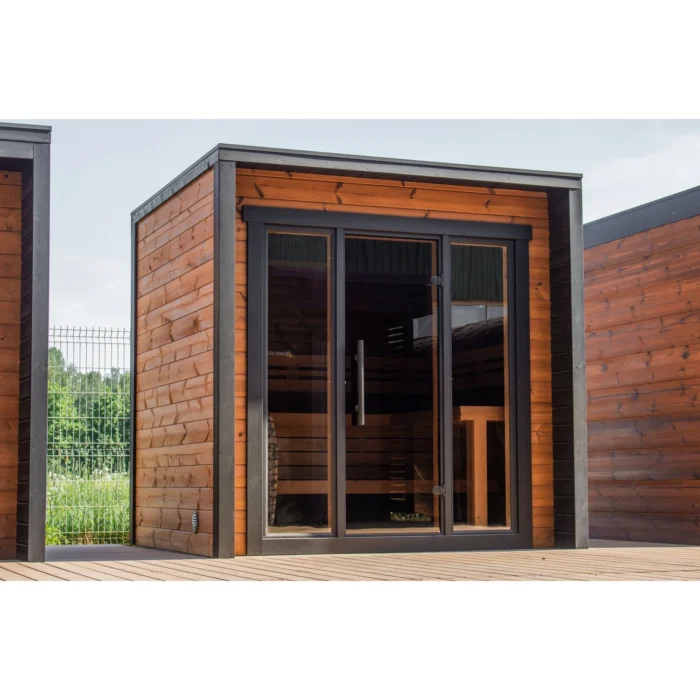
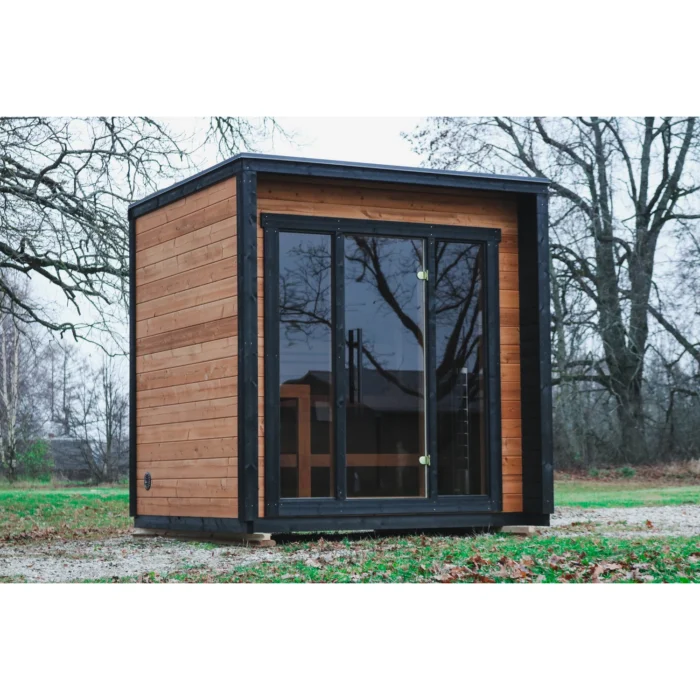
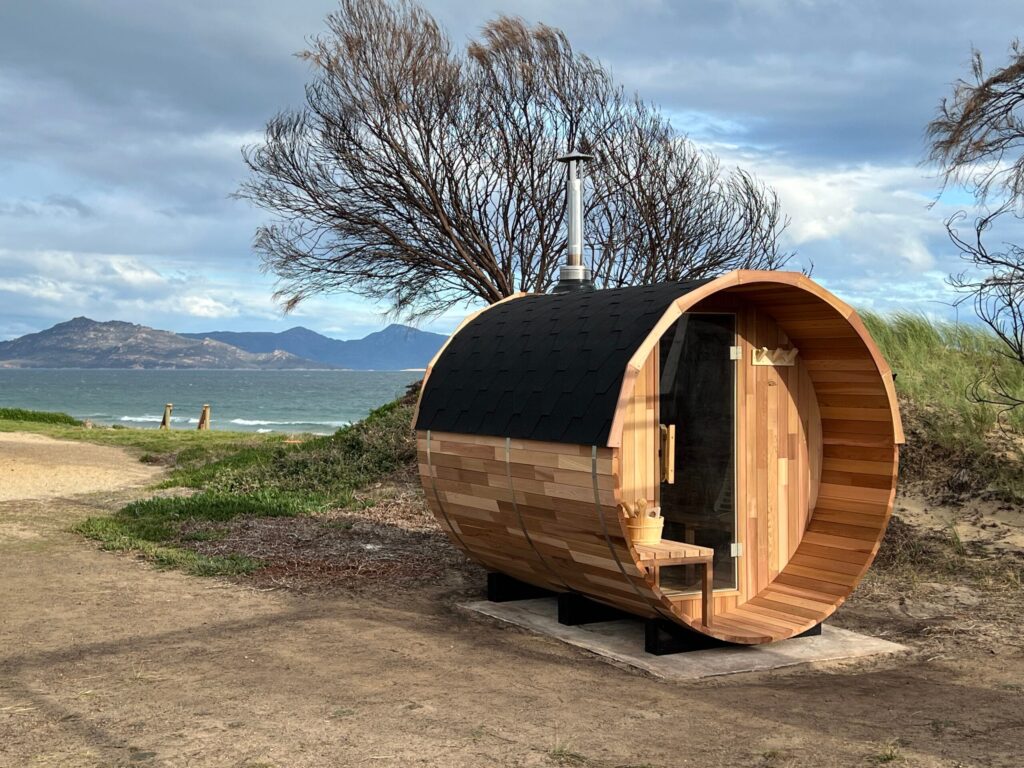
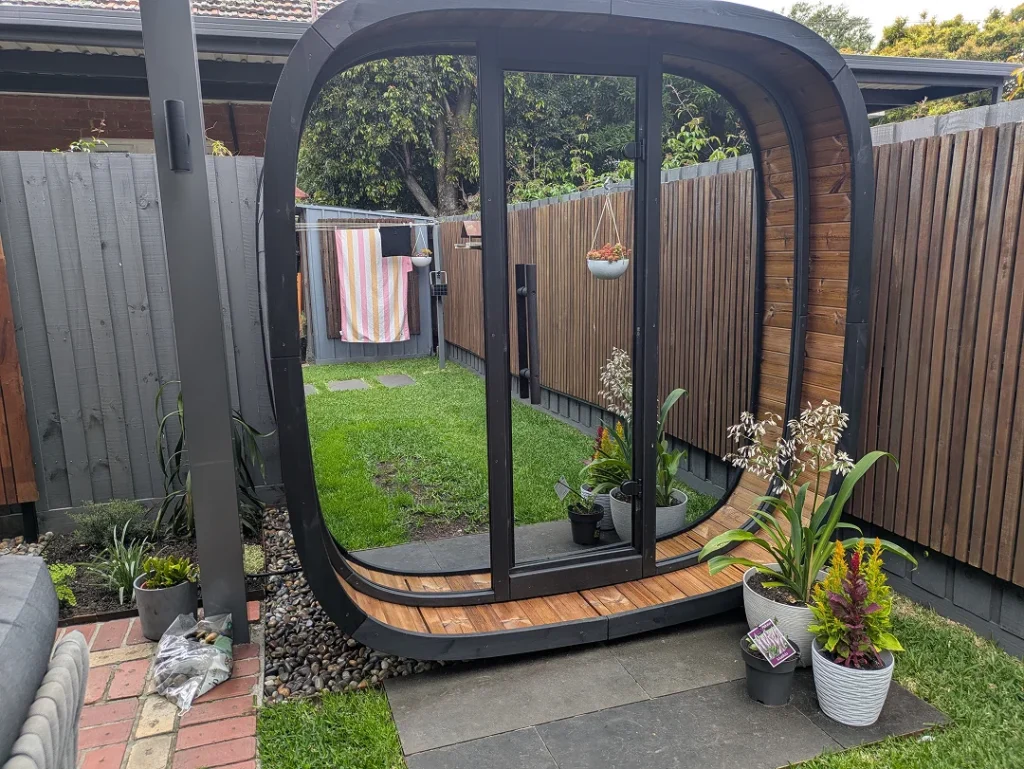
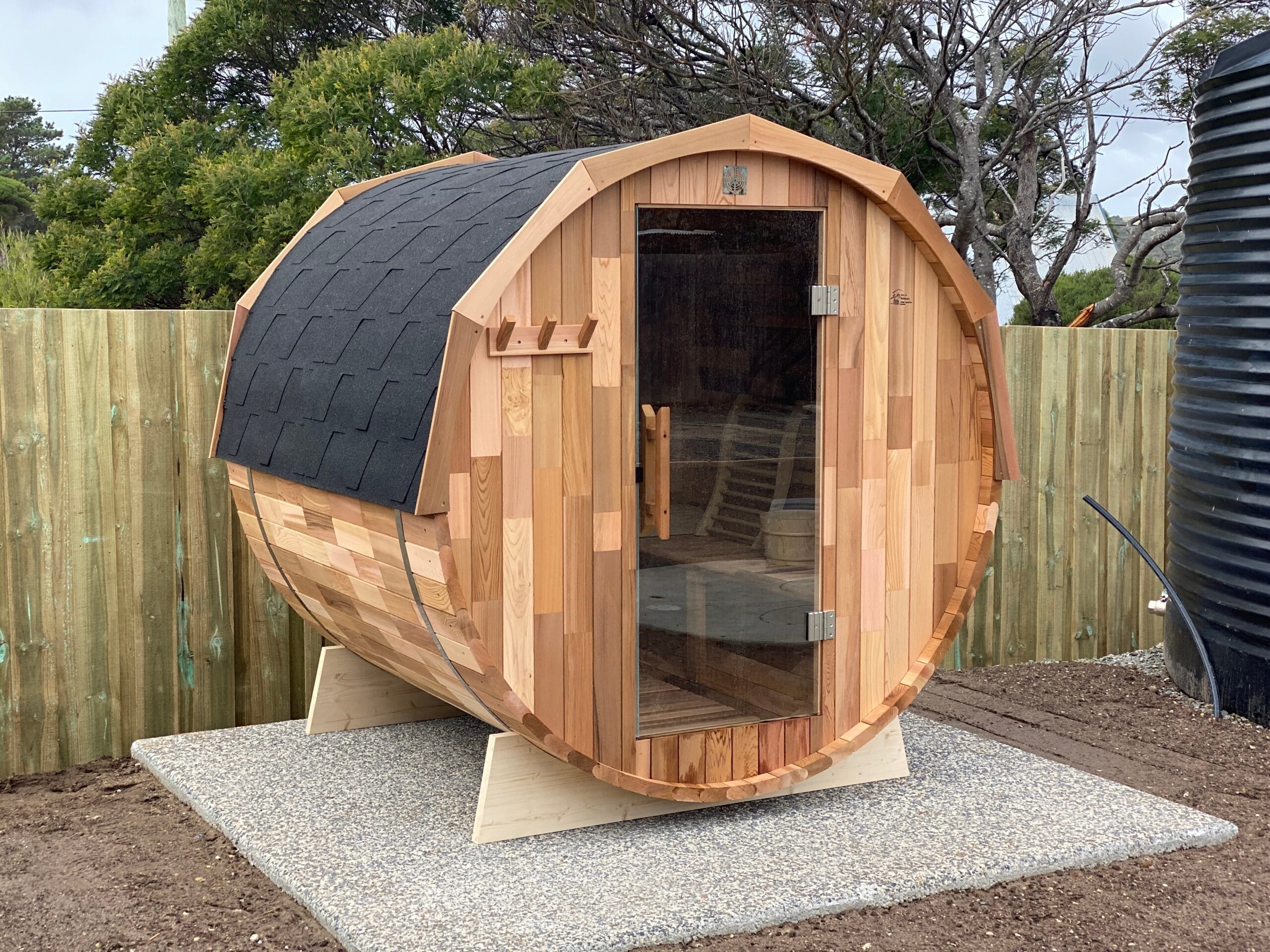
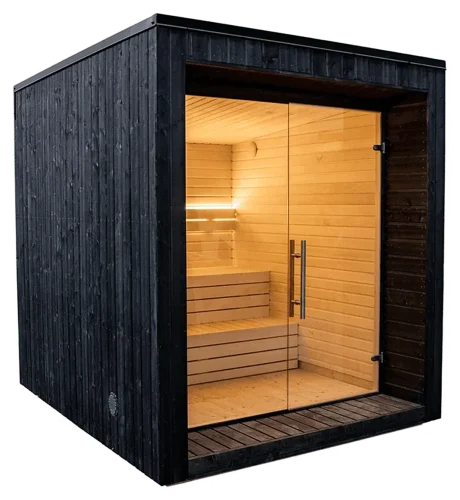
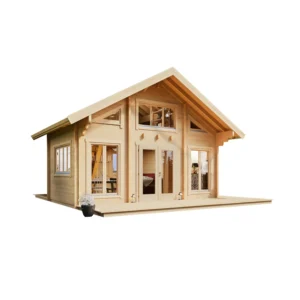
Shym’s current PATIO 3XS is rated for 3 to 4 people. Its external dimensions are 162 × 187 × 241 cm and its internal dimensions are 150 × 150 × approximately 199 cm. It is a useful example of a compact multi-person outdoor cabin.
How Much Bench Space Do You Need?
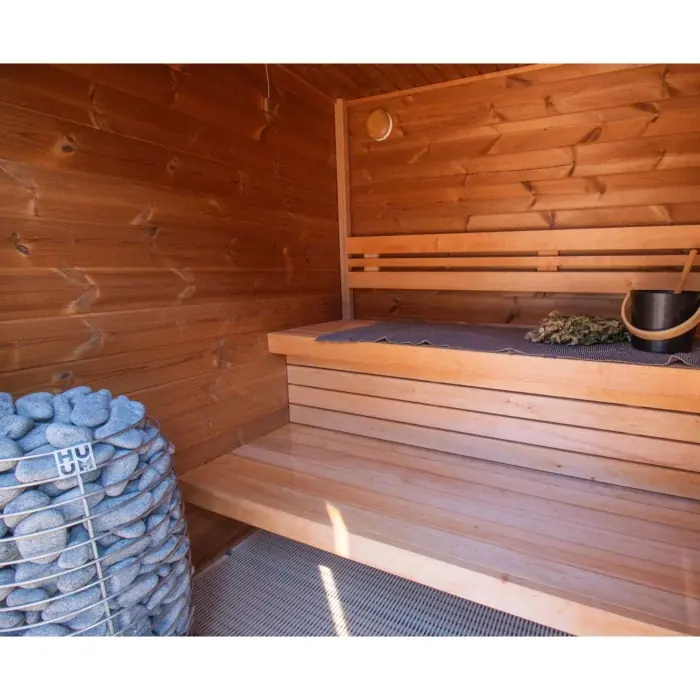
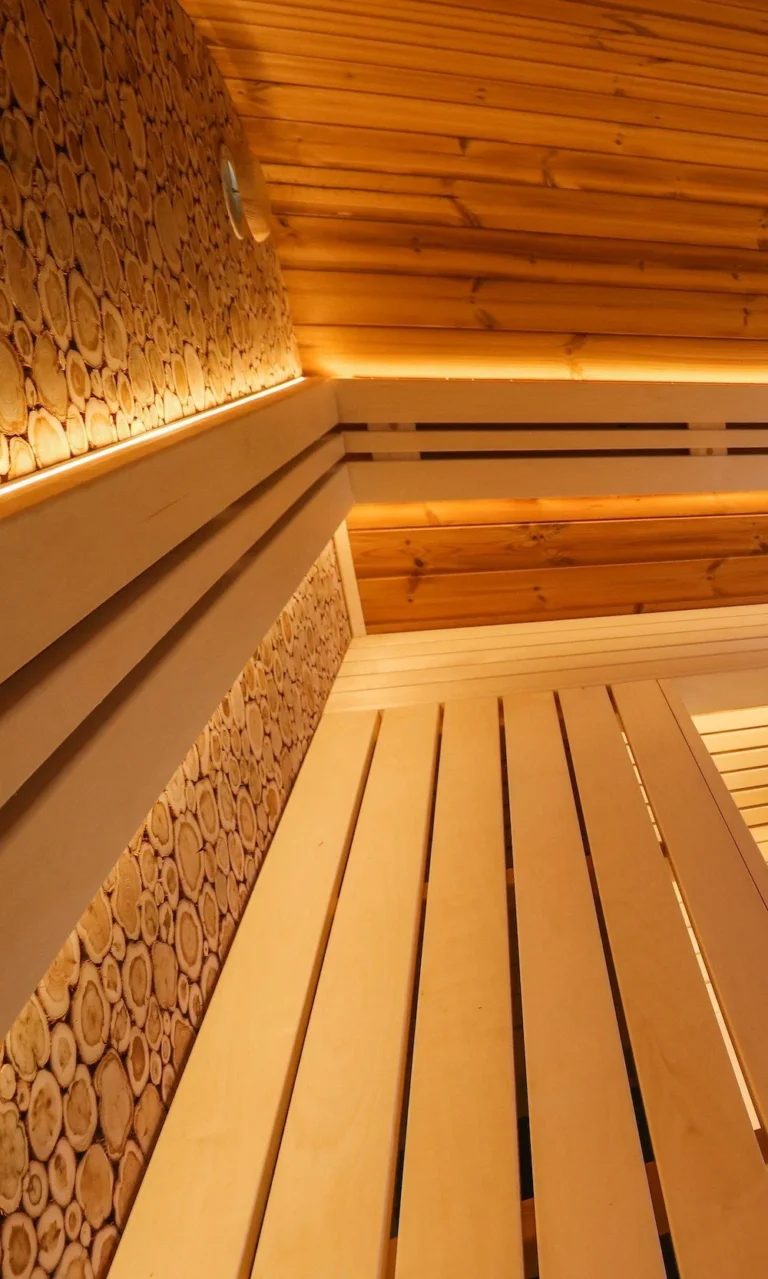
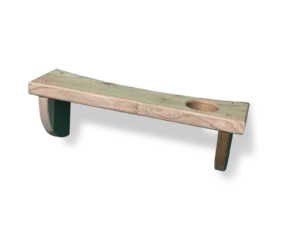
Bench layout is one of the most important sizing decisions. If everyone sits upright, a compact layout may work. If you want to stretch out, you need substantially more bench length.
Harvia recommends at least 500 mm of bench depth for an upper sauna bench, and 600 mm or more if you want to lie down or sit with your feet on the bench. Harvia also uses approximately 600 mm as a useful guide for one sitting place, although actual designs vary.
Source: Harvia, Choosing sauna benches
If You Want to Lie Down, Size Up
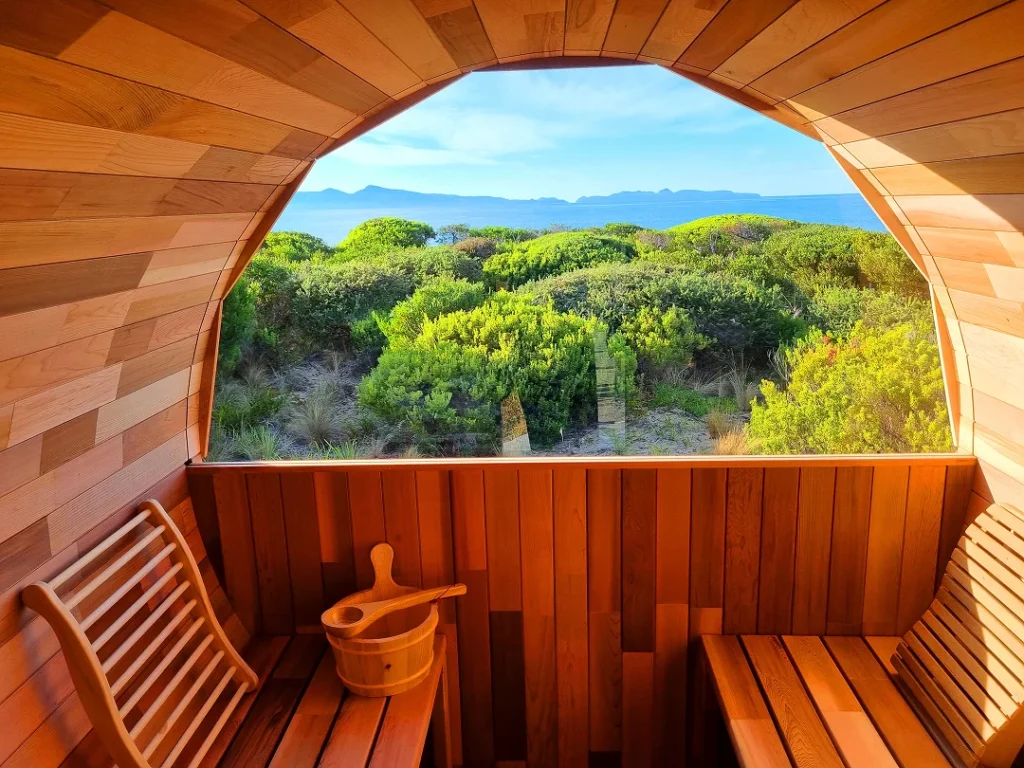
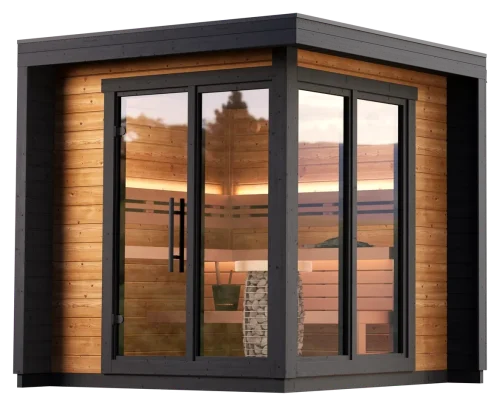
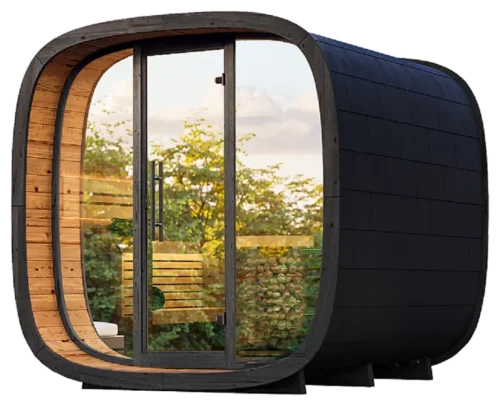
If lying down is part of your preferred sauna routine, compare the actual internal bench dimensions rather than relying on the advertised person count. Shym’s Round Cube Relax is rated for up to 10 people sitting and up to 3 people lying down, with an internal size of approximately 293 × 160 × 205 cm and a U-shaped bench layout.
View Round Cube Relax specifications
Compare Real Shym Sauna Sizes
| Model | Capacity | Useful for |
|---|---|---|
| UNION 125 | 2 to 4 people | Compact outdoor sauna for couples or small households |
| PATIO 3XS | 3 to 4 people | Compact outdoor space with several seated users |
| PATIO XS | 4 to 7 people | Families wanting more capacity |
| PATIO S | 4 to 8 people | Family and social use |
| ROUND CUBE RELAX | 4 to 10 people | Large social use and users who want to lie down |
Small Sauna vs Larger Sauna
| Consideration | Smaller sauna | Larger sauna |
|---|---|---|
| Space required | Easier to fit into compact locations | Requires more footprint and planning |
| Typical users | Solo users, couples or small households | Families, groups and social use |
| Lying down | May be limited by bench length | More likely to provide comfortable lying space |
| Heating | Generally lower internal volume | Higher volume may require a larger heater |
| Budget | Usually lower purchase and installation requirements | Usually higher product and installation requirements |
| Future flexibility | Less room to grow into | More flexible if household use expands |
Measure the External Footprint, Not Just the Sauna Room
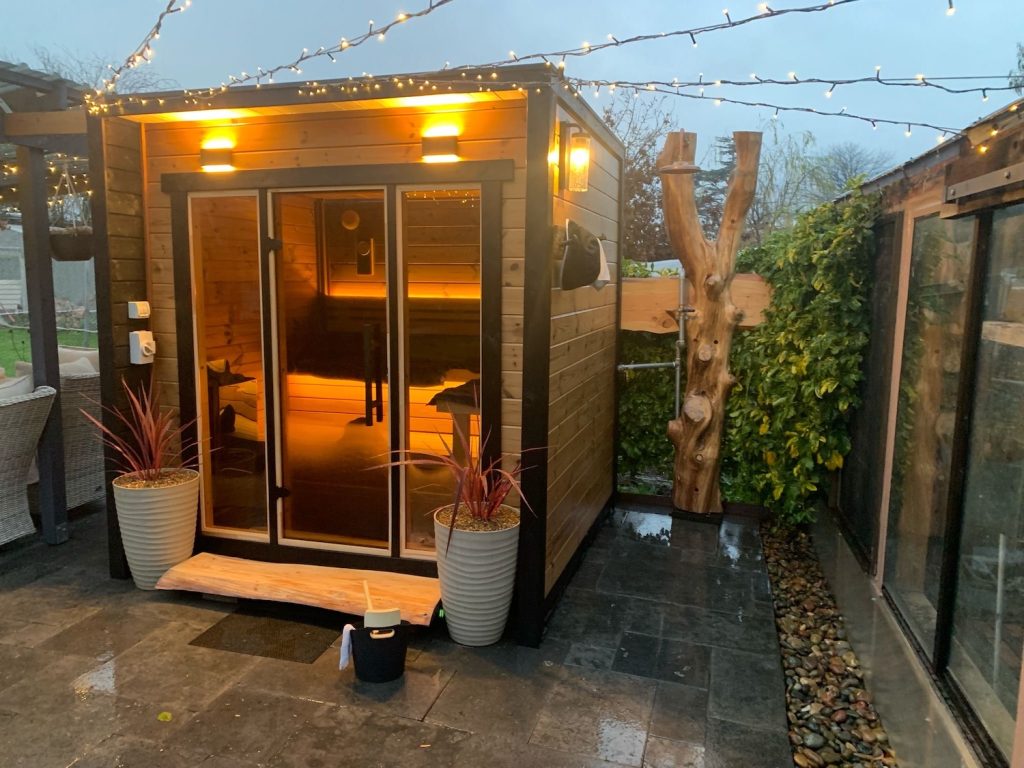
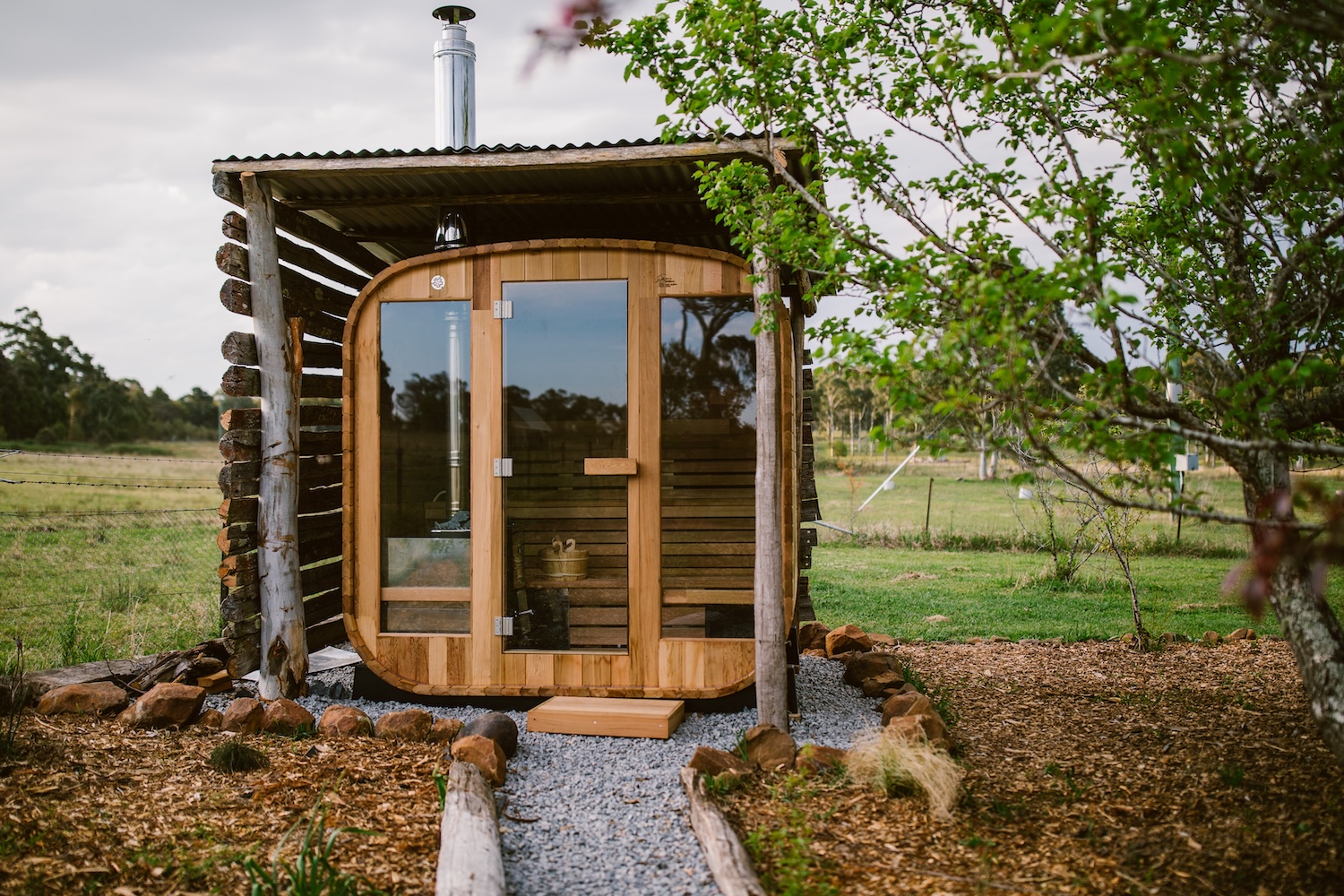
For an outdoor sauna, start with the complete external footprint, including the roof, frame and any changing-room or porch area. Then consider the approach to the door, heater connections, delivery route, maintenance access and drainage.
- Measure the available length and width.
- Check the ground is level and suitable for the sauna’s weight.
- Check the door opening clearance.
- Plan the delivery route from the vehicle to the final position.
- Allow practical access for maintenance.
- Check the structural capacity of a deck or elevated structure before installation.
How Much Clearance Do You Need Around a Sauna?
There is no single clearance figure that applies to every sauna. Requirements depend on the exact model, heater, ventilation design, installation method and local requirements. Follow the manufacturer’s installation instructions for the specific sauna and heater. Beyond minimum safety clearances, allow practical room to walk around the sauna, open doors and maintain the exterior.
Heater Size Depends on Sauna Volume
Heater output should be matched to the calculated sauna volume and construction, not simply to the number of people. Harvia states that sauna volume and construction affect heater power, with windows and heat-storing or non-insulated surfaces increasing the calculated requirement.
Harvia gives an average starting principle of approximately 1 kW of heater power per cubic metre of sauna volume, with adjustments for factors such as glass, stone and non-insulated log surfaces. This is a sizing principle, not a substitute for the specific heater manufacturer’s requirements.
Source: Harvia, Selecting the correct heater power. For help choosing a heater, read our Sauna Heater Buying Guide.
Ceiling Height Matters Too
Sauna height affects heat stratification, bench positioning and heater requirements. Harvia’s guidance notes that sauna height is commonly around 2.1 to 2.3 metres, and that the distance between the upper bench and the ceiling needs to be considered. Always follow the requirements for the exact heater and sauna design.
Source: Harvia sauna room guidance
Indoor vs Outdoor Sauna Sizing
Indoor saunas are constrained by the room, ceiling height and access into the building. Outdoor saunas provide more flexibility but require planning for the base, weather, drainage, delivery route and surrounding space. Our indoor vs outdoor sauna guide compares the two in more detail.
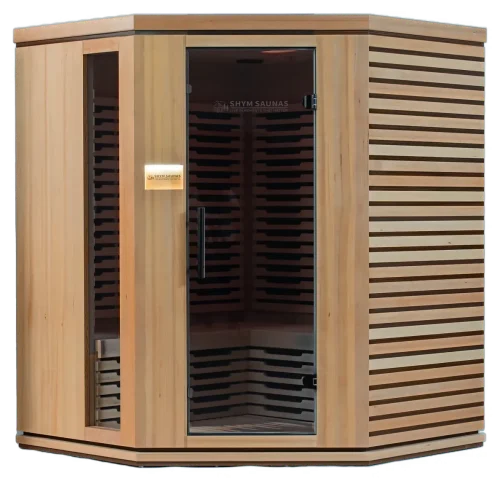
For an indoor infrared sauna, the calculation can be simpler. Shym’s Aura range currently runs from a one-person cabin to a four-person corner cabin. The Aura 4-person corner cabin measures 153 × 153 × 192 cm.
View the Aura Infrared Sauna Series
What Size Sauna Is Best for a Small Australian Backyard?
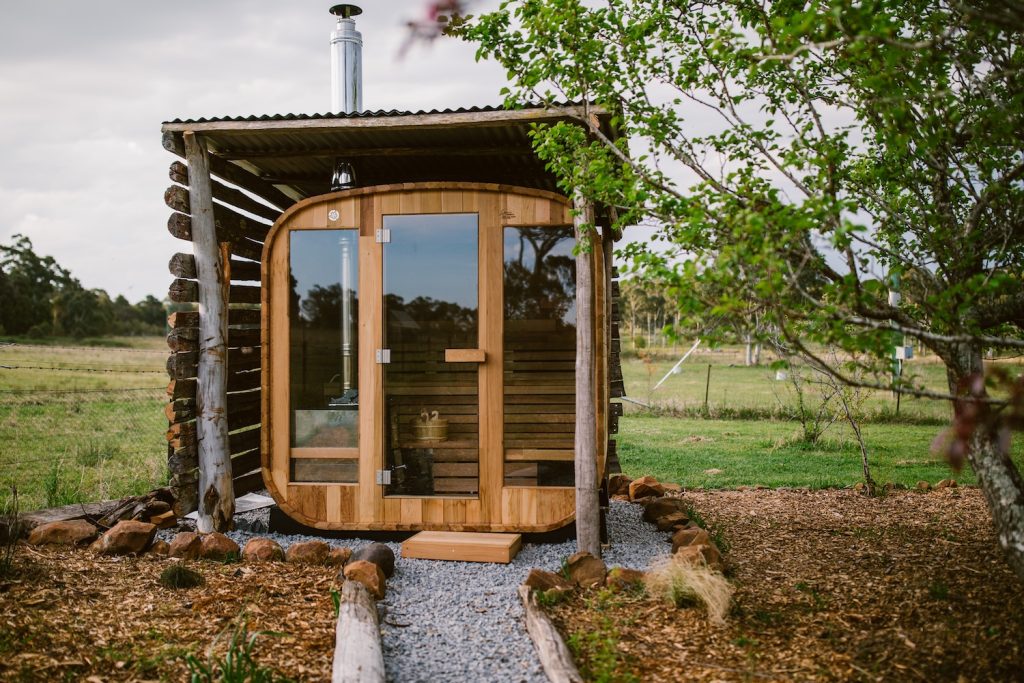
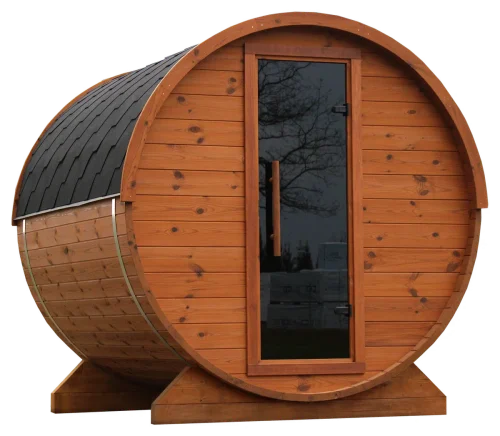
Measure the usable area before choosing a model. Compact options such as the PATIO 3XS, or smaller 2 to 4 person barrel and cabin formats, can suit tighter backyards. The PATIO 3XS shows how a 3 to 4 person sauna can have an external footprint of 162 × 187 cm.
Explore the Patio Series | Explore Round Barrel Saunas | Explore Square Barrel Saunas
What Size Sauna Is Best for a Family?
Consider both the number of people who will use the sauna at once and how you want to use it. A 4 to 8 person model provides more flexibility than a compact 2 to 4 person cabin, particularly if family members or guests regularly join sessions. But do not choose a large sauna purely because the capacity sounds impressive. A well-designed smaller model can be a better fit for a two-person household. Our guide to the best home saunas in Australia compares popular options.
Simple Sauna Sizing Checklist
- How many people will normally use it at the same time?
- Do you want everyone seated, or space to lie down?
- How much bench length and depth do you need?
- What is the complete external footprint?
- Can it fit through the delivery and installation route?
- Does the door open freely?
- Is the base level and strong enough?
- What heater volume and electrical requirements apply?
- Is there practical space around the sauna for access and maintenance?
- Are you sizing for your normal routine rather than occasional maximum occupancy?
Frequently Asked Questions
What size sauna is best for two people?
A 2 to 4 person sauna is a practical starting point, but check the internal bench layout if you want to lie down or have extra room.
What size sauna is best for four people?
A sauna rated for 3 to 4 or 4 to 5 people can work for four seated users, while a 4 to 8 person model provides more space and flexibility.
Is a 4-person sauna big enough for a family?
It can be, particularly for seated use, but families who regularly sauna together may prefer a larger model.
How much space do I need for an outdoor sauna?
Start with the complete external dimensions, then add practical space for access, door operation, maintenance and installation requirements.
How deep should a sauna bench be?
Harvia recommends at least 500 mm for an upper bench, and 600 mm or more if you want to lie down or sit with your feet on the bench.
Does a bigger sauna cost more to heat?
A larger sauna generally has a larger internal volume, which can increase heater requirements and the energy used per heating cycle. Construction, insulation, glass area and heater efficiency also matter. Our guide to how much it costs to run a sauna shows how to work it out.
How do I choose the right sauna heater size?
Heater selection is based on the calculated sauna volume and construction. Follow the specific heater manufacturer’s sizing guidance.
Can I put a sauna on a deck?
It may be possible, but the deck must be structurally suitable for the sauna’s total weight and installation requirements. Consult a qualified professional if unsure.
What is the smallest sauna in the Shym Patio range?
The PATIO 3XS, rated for 3 to 4 people, with an external footprint of 162 × 187 cm.
Can an infrared sauna be smaller than a traditional sauna?
Yes. Infrared cabins can be compact and are commonly designed for indoor use. Shym’s Aura range starts with a one-person cabin.
Final Thoughts
Choosing the right sauna size is less about finding the biggest model you can fit and more about matching the cabin to your real routine. Start with users, decide whether you want seated or lying-down use, then work through bench layout, internal dimensions, external footprint, heater requirements and installation access. For everything else to check before you buy, see our Home Sauna Buying Guide.
Ready to Choose the Right Sauna Size?
Not sure which size will work best for your home? Explore the Shym Saunas range or speak with a sauna specialist. We can help you compare capacity, dimensions, layout, heater requirements and installation considerations before you order.
Browse the Shym Sauna Range | Explore the Patio Series | Contact Shym Saunas