
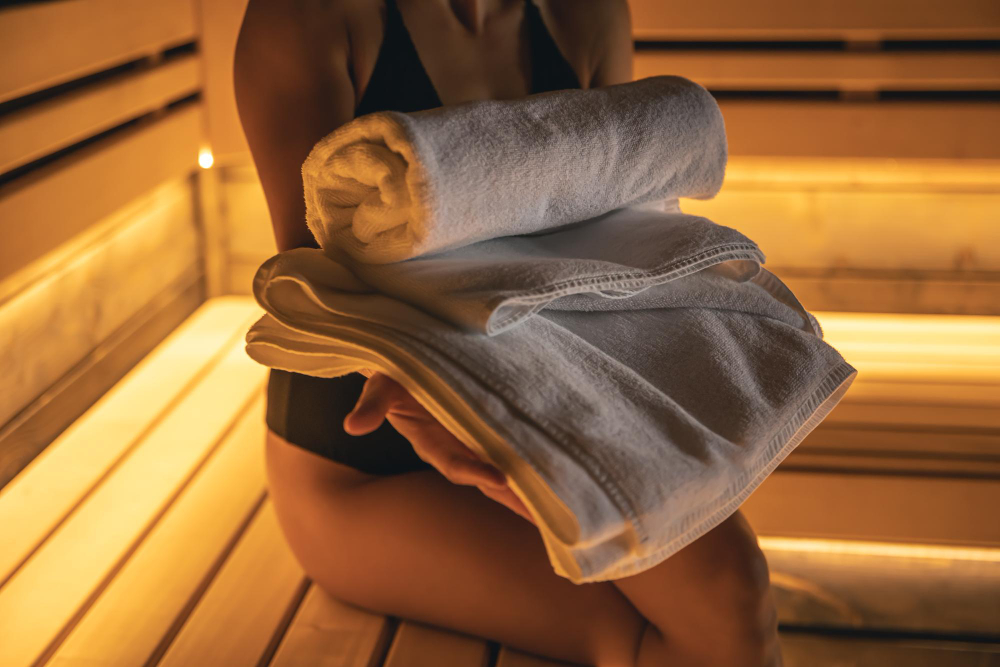
A sauna blanket is a portable, wrap-around device that uses infrared heat to warm your body from the outside in. Rather than sitting in a heated cabin, you lie down and zip or wrap yourself inside the blanket, which heats up to deliver a sauna-like experience in your own home — on your bed, sofa, or floor.
Most sauna blankets use far-infrared (FIR) technology — the same type of infrared heat used in dedicated infrared sauna cabins. The blanket’s inner lining is embedded with infrared heating elements that emit thermal radiation, penetrating into the body’s tissue rather than simply heating the surrounding air.
Sauna blankets have surged in popularity over the last several years, driven largely by social media wellness communities and the appeal of a portable, relatively affordable alternative to a full home sauna installation. Brands like HigherDOSE, SaunaSpace, and Bon Charge have become well known in this space, with sauna blankets now available at a wide range of price points from around $200 to over $800 AUD.
If you’re researching sauna blankets because you’re interested in infrared heat therapy at home, it’s also worth knowing that full home infrared and traditional saunas are more accessible than many people assume. Explore our sauna range and read our guide on how much it costs to build a sauna to compare your options realistically.
Understanding how sauna blankets work requires a basic understanding of infrared heat and how it differs from conventional heat sources.
Conventional heat warms the air around you, which then warms your skin through convection. Infrared heat is fundamentally different — it uses electromagnetic radiation in the infrared spectrum to penetrate directly into body tissue without significantly heating the air in between. This is the same principle by which the sun’s warmth feels pleasant on your skin even on a cold day — the infrared portion of sunlight is what you feel as heat on your body.
Most sauna blankets use far-infrared (FIR) wavelengths — typically in the 8–14 micron range — which are particularly well-matched to the body’s own thermal emission wavelengths. This resonance allows FIR energy to penetrate 4–5 centimetres below the skin surface, directly warming muscle tissue, stimulating circulation, and triggering the body’s thermal stress response from the inside out rather than purely from the surface.
When the body detects rising core temperature — whether from an infrared sauna cabin, a traditional sauna, or a sauna blanket — it activates a cascade of adaptive physiological responses: heart rate increases, blood vessels dilate, sweat glands activate, and the body begins producing heat shock proteins and other adaptive molecules. This is the hormetic stress response that underlies most of sauna’s health benefits.
To understand how infrared heat compares to traditional dry heat in a cabin sauna, read our detailed guide on infrared vs traditional saunas — which covers the physiological differences, relative benefits, and how to choose between the two approaches.
Yes — sauna blankets are genuinely effective at producing the core physiological responses of infrared heat therapy. They raise core body temperature, induce meaningful sweating, stimulate cardiovascular activity, and trigger many of the same adaptive responses as a dedicated infrared sauna cabin.
That said, “effective” needs context. The degree of effectiveness depends heavily on the quality of the blanket (heating element coverage, temperature range, infrared emission quality), how you use it (session duration, temperature settings, preparation), and what you’re hoping to achieve.
For those committed to regular heat therapy and able to accommodate one, a dedicated home sauna delivers a more complete, consistent, and enjoyable experience. Browse our best home sauna Australia guide and explore our sauna sale Australia page for currently available options at various price points.
This is the question at the heart of most sauna blanket purchasing decisions — and the honest answer is: no, but it’s closer than you might expect for certain use cases.
A dedicated sauna cabin — whether traditional Finnish or infrared — encloses your entire body including your head, creating a complete immersive thermal environment. The cardiovascular and respiratory benefits, the full-body sweat response, the steam and humidity options (in traditional saunas), and the simple comfort of sitting in an open, breathable space all contribute to a more complete and therapeutically potent experience.
The research base for sauna health benefits — including the landmark Finnish studies linking regular sauna use to reduced cardiovascular disease risk and extended lifespan — is built on traditional cabin sauna use, not blanket use. We cannot assume all those benefits transfer fully to a blanket format.
For the core physiological effects of infrared heat therapy — core temperature elevation, sweating, muscle relaxation, circulation improvement, and stress reduction — a quality sauna blanket delivers meaningfully. For someone in a small apartment with no outdoor space, or someone who travels frequently, or someone on a tight budget exploring heat therapy for the first time, a sauna blanket is a practical and legitimate option.
Think of a sauna blanket as roughly equivalent to an infrared sauna cabin for the body-contact heat effects, minus the head and face exposure and the immersive environmental experience. For regular, committed sauna practitioners, a real sauna will always be the superior tool. For occasional use or as a starting point, a blanket is a valid step into heat therapy.
If you’re weighing up a sauna blanket against a real sauna, read our guide on sauna kits for home and explore our affordable saunas Australia reviews to understand what real home saunas are actually available at accessible price points in Australia.
When used correctly and consistently, sauna blankets offer a genuine range of health and wellness benefits.
The deep infrared heat of a sauna blanket penetrates muscle tissue directly, increasing blood flow, reducing inflammation, and relaxing muscle tension. For post-exercise soreness, post-training recovery, and general muscle tightness from sedentary work, regular sauna blanket sessions provide meaningful relief. Read our guide on sauna for muscle recovery for the full science behind this.
Heat therapy reliably lowers cortisol levels and stimulates endorphin and serotonin release. A 30–45 minute sauna blanket session before bed is a powerful wind-down tool — read our article on sauna before bed for guidance on timing.
The vasodilation from infrared heat improves peripheral circulation, supporting skin health, accelerating tissue repair, and contributing to cardiovascular conditioning over time.
The deep sweating induced by a sauna blanket session flushes the pores and promotes skin cell turnover. The improved circulation delivers nutrients to the skin more effectively. Regular users often report improvements in skin tone, texture, and clarity. For more on this, explore our guide on the benefits of sauna for skin.
The core temperature elevation and subsequent cooling after a sauna blanket session mimics the natural temperature drop that accompanies sleep onset, promoting deeper and more restful sleep. This is one of the most consistently reported benefits by regular sauna blanket users.
The most practical benefit of a sauna blanket is that it goes wherever you go. It works in a small apartment, a hotel room, or a spare bedroom — no installation, no dedicated space, no plumbing or electrical work required beyond a standard power point.
Yes — a sauna blanket session does burn calories, and meaningfully so. The physiological work of managing an elevated core temperature requires energy, and that energy comes from caloric expenditure.
Estimates vary depending on session duration, temperature, individual body weight, and metabolic rate. A typical 30–45 minute sauna blanket session is estimated to burn approximately 200–600 kilojoules (roughly 50–150 calories). Higher temperatures, longer sessions, and heavier individuals will burn toward the upper end of this range.
For comparison, a 30-minute brisk walk burns approximately 400–600 kilojoules depending on body weight and pace. So a sauna blanket session burns roughly a fraction of what moderate exercise burns — meaningful but not dramatic as a standalone calorie-burning tool.
Directly, the caloric burn from a sauna blanket is modest. However, the indirect metabolic effects — improved insulin sensitivity, better sleep quality (poor sleep drives overeating and fat storage), and reduced cortisol (elevated cortisol promotes abdominal fat accumulation) — can contribute to better body composition outcomes over time when combined with a healthy lifestyle.
Read our dedicated article on how many calories are burned in a sauna for a detailed breakdown of caloric expenditure in different sauna formats, and explore does sauna help with weight loss for a comprehensive look at the body composition evidence.
This is one of the most heavily marketed claims in the sauna blanket space — and it requires a careful, honest assessment.
The most immediately noticeable “weight loss” from a sauna blanket session is water weight. You will sweat significantly during a session, and the scale will show a lower number immediately afterwards. This is entirely due to fluid loss — it is not fat loss, and it reverses as soon as you rehydrate, which you must do.
Any product or influencer claiming dramatic weight loss from sauna blanket use is referring to this temporary, meaningless water weight fluctuation. This is not genuine fat loss.
That said, regular sauna blanket use can genuinely support a body composition improvement programme — when used as part of a broader healthy lifestyle. The mechanisms include modest direct caloric expenditure, improved metabolic health and insulin sensitivity, cortisol reduction (which reduces stress-driven fat storage), better sleep quality, and improved recovery that supports more consistent training. None of these effects will produce meaningful fat loss on their own — but they support a programme that does.
If you’re buying a sauna blanket specifically to lose weight, manage your expectations carefully. As a recovery and wellness tool used alongside appropriate diet and exercise, it contributes meaningfully. As a standalone weight loss solution, it does not deliver the dramatic results that marketing often implies.
For most healthy adults, sauna blankets are safe when used as directed. However, there are specific situations and populations for whom caution or avoidance is warranted.
Quality sauna blankets from reputable manufacturers include safety features such as automatic shut-off after a set time, temperature controls, and materials tested for off-gassing and EMF (electromagnetic field) emissions. The main practical safety concerns are dehydration, overheating, and appropriate use by vulnerable populations.
A sauna blanket session causes significant sweating — fluid losses of 0.5–1 litre per session are realistic. Entering a session dehydrated or failing to rehydrate adequately afterwards can cause headaches, dizziness, muscle cramping, and in severe cases, dangerous electrolyte imbalances. Always hydrate thoroughly before and after every session.
Unlike a sauna cabin where you can simply stand up and walk out, a sauna blanket requires you to unzip and extricate yourself — which takes slightly longer. If you feel unwell, overheated, or dizzy during a session, unzip the blanket and cool down immediately. Never fall asleep in a sauna blanket.
Some consumers express concern about electromagnetic field (EMF) emissions from infrared sauna blankets. Quality blankets from reputable manufacturers are tested to comply with safety standards. If EMF is a specific concern, look for products with documented low-EMF specifications and third-party testing certifications.
Most infrared sauna blankets have a temperature range of approximately 25°C to 80°C, with the majority of users finding their optimal experience in the 45–65°C range. The specific temperature range varies by model and brand — premium blankets tend to offer finer temperature control and more consistent heat distribution across the full surface area.
Traditional Finnish saunas operate at 80–100°C ambient air temperature. However, because the sauna blanket delivers infrared heat directly to body tissue rather than heating the surrounding air, the effective thermal stimulus to the body at 50–65°C in a blanket is broadly comparable to a higher ambient temperature in a traditional sauna. This is why infrared saunas — and blankets — achieve meaningful physiological effects at lower air temperatures than traditional saunas.
New users should start at the lower end of the temperature range — around 35–45°C — for their first few sessions to allow the body to adapt to the heat stimulus. Experienced users typically settle in the 55–70°C range for a full therapeutic session. Always listen to your body and lower the temperature or exit immediately if you feel unwell.
Session duration recommendations for sauna blankets vary by experience level, health status, and the specific goals of your session.
For first-time or early users, 15–20 minutes is the recommended maximum. This allows your body to adapt to the heat stimulus without the dehydration and cardiovascular burden of a longer session. Pay close attention to how you feel and exit earlier if you experience dizziness, nausea, or significant discomfort.
Once you’ve established a comfortable tolerance — typically after 5–10 sessions — 25–35 minutes provides a more thorough therapeutic experience. This duration is sufficient to achieve the majority of the benefits associated with infrared heat therapy including meaningful sweating, muscle relaxation, and stress hormone reduction.
Experienced users who are well-acclimatised and consistently hydrated can safely use a sauna blanket for up to 45 minutes. Beyond 45 minutes, the incremental benefit is diminishing while dehydration and cardiovascular burden continue to accumulate. There is no benefit to pushing beyond this duration.
Never fall asleep in a sauna blanket. The inability to self-regulate and exit when uncomfortable creates a genuine overheating risk. If relaxation is your goal and drowsiness is likely, set a timer and ensure you will be roused before the session overruns.
The optimal frequency of sauna blanket use depends on your goals, health status, and how your body responds to regular heat exposure.
For general health maintenance, stress reduction, sleep improvement, and skin health, 3–4 sessions per week is a well-supported frequency. This is sufficient to maintain the adaptive benefits of regular heat exposure — including improvements in cardiovascular health markers, inflammation reduction, and sleep quality — without the diminishing returns or dehydration risk of daily use.
For athletes using a sauna blanket as a recovery tool, using it after each training session — which may be 3–6 times per week depending on your programme — is appropriate. The post-exercise session takes advantage of the body’s already-elevated temperature and metabolic state to amplify recovery benefits.
Yes — daily use is safe for most healthy adults when sessions are kept to moderate temperature and duration and hydration is maintained. However, daily use is not necessarily better than 4–5 times per week. The body needs some recovery time between heat stress sessions to fully realise the adaptive benefits. For most people, 4–5 sessions per week represents the practical optimum.
For meaningful health benefits, research on infrared sauna therapy suggests a minimum of 2–3 sessions per week is needed to observe consistent outcomes. Using a sauna blanket once a week will provide some benefit but is unlikely to produce the sustained improvements in cardiovascular health, inflammation, and wellbeing associated with more regular heat therapy practice.
Unlike a traditional sauna where you typically wear a towel or nothing, a sauna blanket requires you to wear clothing — both for hygiene reasons and to protect your skin from direct contact with the heating elements.
Getting the most from a sauna blanket session requires some basic preparation and a consistent approach. Here’s a step-by-step guide.
The Bon Charge sauna blanket is one of the most popular models in Australia. Follow the same principles above — pre-heat to your target temperature (the Bon Charge typically heats in 10–15 minutes), wear cotton clothing, keep sessions to 30–45 minutes, and always hydrate before and after. The Bon Charge includes a controller with preset temperature zones — start at the lower settings for your first few sessions and increase gradually as you acclimatise.
The best time to use a sauna blanket depends on your primary goal for the session.
For most people, an evening session 60–90 minutes before bed is the ideal time. The heat raises your core temperature, and the subsequent cooling as your body returns to normal mirrors the temperature drop that naturally accompanies sleep onset — promoting deeper, more restful sleep. This is the most commonly recommended timing for sauna blanket use and aligns with the research on sauna and sleep quality covered in our guide on sauna before bed.
Using a sauna blanket in the 30–60 minutes after a workout — once you’ve cooled down and rehydrated initially — takes advantage of the post-exercise state when your body is already in repair mode. The heat amplifies the circulatory flushing of metabolic waste products and the delivery of nutrients to damaged muscle tissue.
A morning sauna blanket session — following the approach outlined in our ways to use your sauna in the morning guide — can be an energising start to the day, boosting circulation, stimulating cortisol (which is naturally higher in the morning and supports energy), and setting a positive physiological tone for the hours ahead. Keep morning sessions shorter and at moderate temperature to avoid starting the day over-depleted.
Given the significant sweating that occurs during every session, keeping your sauna blanket clean is essential for hygiene, longevity, and the integrity of the heating elements. The cleaning approach differs from a traditional sauna because the blanket contains embedded electronics that must never be submerged in water or machine washed.
Many sauna blanket users place a cotton sheet or dedicated blanket liner inside the blanket before each session. This absorbs most of the sweat directly and can be removed and machine-washed after each use, dramatically reducing the frequency of blanket cleaning needed and extending the life of the blanket itself. If your blanket didn’t come with a liner, a simple cotton sheet cut to size works perfectly.
Whether a sauna blanket is worth it depends entirely on your circumstances, expectations, and how you plan to use it.
Before deciding, read our guide on how much it costs to build a sauna and explore our popular sauna models with quick shipping options — you may find that a real home sauna is more accessible than you thought.
If you’re seriously committed to the health benefits of regular heat therapy — and the evidence increasingly suggests you should be — a dedicated home sauna remains the gold standard for several important reasons.
A sauna cabin encloses your entire body including your head and face. This enables full respiratory benefits — the warm, moist air soothes airways, opens sinuses, and delivers heat therapy to the facial skin and scalp. A blanket leaves your head outside and provides none of these upper-body and respiratory effects.
Traditional saunas reach 80–100°C — a thermal stimulus that cannot be replicated by a sauna blanket capped at 70–80°C. The higher temperatures of traditional saunas produce stronger cardiovascular conditioning effects, more potent heat shock protein responses, and greater growth hormone release — the mechanisms underlying some of the most impressive longevity and performance data in sauna research.
A well-built sauna cabin from quality materials lasts 15–25 years with proper maintenance. Most sauna blankets have a practical lifespan of 2–5 years with regular use. The long-term cost per session of a quality home sauna often compares favourably with blankets when considered over a 10-year horizon.
The psychological and experiential dimensions of a real sauna — the atmosphere, the wood, the steam, the ability to move freely, the social potential — contribute meaningfully to its wellbeing benefits. The sauna is a sanctuary. A blanket on the floor of your bedroom, however effective physiologically, is a different experience entirely.
Explore our full range of home saunas including round barrel saunas, indoor saunas, and outdoor sauna collections. Read about how to finance a home sauna purchase to make a real sauna more accessible, and check our sauna packages with warranty and customer support for complete home solutions.
For people without space or budget for a full home sauna, yes — quality sauna blankets deliver genuine infrared heat therapy benefits including muscle recovery, relaxation, improved sleep, and skin health. They are not as effective as a dedicated sauna cabin, particularly for cardiovascular conditioning and full-body immersive heat therapy, but they are a valid and practical entry point to regular heat therapy practice.
Yes — for most healthy adults when used as directed. Key safety considerations are adequate hydration before and after sessions, staying within recommended temperature and duration limits, never falling asleep in the blanket, and avoiding use if pregnant, if you have cardiovascular conditions, or if you’re on medications that affect thermoregulation. Always follow the manufacturer’s guidelines and consult your doctor if you have any health conditions.
A typical 30–45 minute sauna blanket session burns approximately 50–150 calories (200–600 kilojoules) depending on session temperature, duration, and individual metabolism. This is meaningful but modest — comparable to a light walk rather than vigorous exercise. The immediate weight loss seen on the scale after a session is primarily water weight from sweating, which reverses upon rehydration.
Beginners should start with 15–20 minutes, building up to 30–45 minutes as they acclimatise over several sessions. Never exceed 45 minutes in a single session. Never fall asleep in the blanket. Exit immediately if you experience dizziness, nausea, or significant discomfort.
For general wellness benefits, 3–4 sessions per week is optimal. Daily use is safe for most healthy adults but not necessarily more beneficial than 4–5 sessions per week. A minimum of 2–3 sessions per week is needed to observe consistent health improvements from regular heat therapy practice.
Wear lightweight, breathable cotton long-sleeve top, full-length pants, and socks. Natural fibres like cotton or bamboo are ideal. Avoid bare skin contact with the inner surface, tight synthetic clothing, and metal jewellery. Some users place a cotton liner sheet inside the blanket to absorb sweat and simplify cleaning.
Never machine wash or submerge a sauna blanket — the electronics will be destroyed. After each session, wipe the inner surface with a damp cloth with mild soap solution and allow to air dry completely. Weekly, use diluted isopropyl alcohol to wipe down both surfaces. Using a washable cotton liner inside the blanket dramatically reduces cleaning frequency and extends blanket life.
No — but it’s closer than you might expect for certain benefits. A sauna blanket delivers effective infrared heat therapy to the body with genuine muscle recovery, relaxation, and circulation benefits. However, it does not enclose the head, cannot reach the temperatures of a traditional sauna, lacks the respiratory and atmospheric benefits of a real cabin, and has a shorter lifespan. For committed regular heat therapy practitioners, a real home sauna remains significantly superior.



Join the Shym list for 3% off selected saunas and hot tubs, plus our sale news.
Not valid on sale items. Unsubscribe any time.
Your 3% code is on its way to your inbox. Can't see it soon? Check your promotions folder.
Keep browsing