



Does a sauna burn calories? Yes, but not many. Your heart works harder to cool you down, so you burn a little more than you would sitting on the couch. In one study of young, overweight men at 90°C, each 10-minute round burned an estimated 73 to 131 calories (kcal). Most of the weight you lose in a sauna is water, and it comes back as soon as you drink.
Below we explain where the numbers come from, why they vary so much, how a sauna compares with exercise, and how to stay safe and hydrated.
Key Takeaways
- A small calorie boost: a sauna raises your heart rate a bit like very light exercise.
- Mostly water weight: the drop on the scales after a sauna is sweat, not fat.
- A helper, not a plan: a sauna can sit alongside exercise and good food, not replace them.
The Science Behind Calories and Weight Loss: Do Saunas Burn Calories?
Overview of How Our Bodies Burn Calories
Your body burns energy all day just to stay alive: to keep your heart beating, your organs working and your temperature steady. This is your basal metabolic rate (BMR). Moving, exercising and digesting food add to it. To lose fat, you need to burn more energy than you eat over time.
So, Does Using a Sauna Burn Calories?
Yes, a little. In the heat, your heart beats faster to move warm blood to your skin, and your body works to sweat and cool down. That extra work burns some energy, a bit like a slow walk. It is not enough to be a weight-loss method on its own.
So, how many calories does 10 minutes of sauna burn?
The best-known measurement comes from a 2019 study of 45 young, sedentary, overweight men. They sat through four 10-minute rounds in a dry sauna at about 90°C, with 5-minute breaks. The estimated energy use per round was:
- Round 1: about 73 kcal
- Round 2: about 94 kcal
- Round 3: about 115 kcal
- Round 4: about 131 kcal
Each round burned more than the last, as the men's bodies heated up. Keep in mind this was one group of heavier young men in a very hot sauna. Lighter people, and anyone in a cooler sauna, will usually burn less.
Sauna Should Not Replace Routine Exercise and a Healthy Lifestyle
A sauna can be a pleasant part of a healthy routine, and many people use it to relax and recover after exercise. But it does not build muscle or fitness, and the calories it burns are small next to a walk, a ride or a gym session. Think of it as a bonus, not the plan.
How Does a Sauna Burn Calories? How Do They Make You Lose Weight?

1. A Higher Heart Rate
The heat raises your heart rate, much like very light exercise. That is where the extra calories come from.
2. Losing Water Weight
You sweat a lot in a sauna, and it is common to lose around half a kilo to a kilo of fluid in a session. That is why the scales drop afterwards. It is water, not fat, and it comes back when you drink, as it should.
Does Sitting in a Sauna Burn Fat?
Not in any meaningful way. The quick drop on the scales is water. Using a sauna to "sweat off" weight before an event is not a safe or lasting way to lose weight, and getting dehydrated can make you feel unwell.
The Facts: How Many Calories Are Burned in a Sauna?
Why the Numbers Vary: Key Factors Influencing Calories Burned in a Sauna
Online calculators give rough estimates at best. How much you burn depends on:
- You: your body weight, age, fitness and how well you handle heat.
- The sauna: its type and temperature, and how much steam there is.
- The session: how long you stay in, and how many rounds you do.
Calories Burned Sitting in a Sauna: Regular vs. Infrared Sauna

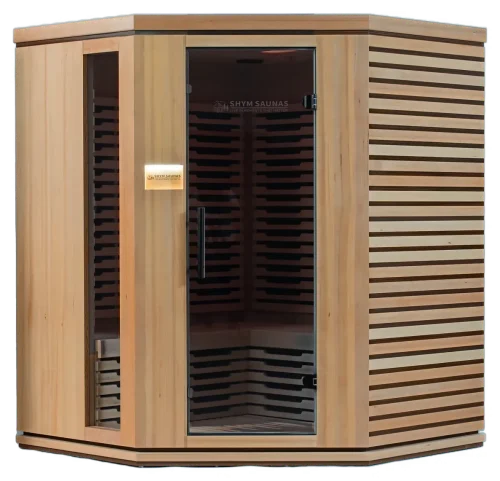
A traditional sauna heats the air to around 70 to 90°C. An infrared sauna runs cooler, around 45 to 60°C, and warms your body more directly with infrared panels.
You may see claims that infrared saunas burn several times more calories. There is no good research behind those claims. Very few studies have measured calories in an infrared sauna, so any number you see for infrared is a guess. The honest answer: both burn a modest amount, and the best one is the one you enjoy and use.
How Many Calories Are Burned in a Regular Sauna (a.k.a. Traditional Sauna)?
Using the 2019 study above as a guide, three 10-minute rounds at 90°C added up to roughly 280 kcal for young, overweight men. For most people, and in a cooler sauna, expect less. Another dry sauna study looked at how quickly people lose water in the heat, which again shows that the fast drop on the scales is fluid, not fat.
Calories Burned in Infrared Saunas: What We Can Say, Honestly
Not much yet. Good studies that measure calories in an infrared sauna are lacking, so figures online are estimates, not lab results. Any short-term weight loss is water, and it returns once you rehydrate.
Safety Considerations and Best Practices: Avoiding Dehydration from Sauna

- Before: drink a glass or two of water.
- After: drink about 500 ml to 1 litre, depending on how much you sweated. After long or repeated sessions, a snack or an electrolyte drink helps replace the salt you lose.
- Never: use a sauna after alcohol, or to dehydrate yourself on purpose to "make weight".
Helpful Tips: Getting the Most From Your Sauna
- Pair it with movement: a sauna after a walk, a swim or a workout feels great and fits a healthy routine.
- Watch the food, not the sweat: lasting weight loss comes from eating a little less than you burn, over time.
- Stay safe: if you have a health condition or are pregnant, talk to your doctor before using a sauna.
Related: How Long To Wait To Eat After Sauna?
How Long Should You Stay in a Sauna to Burn Calories?
Staying in longer does not make a sauna a fat burner, and it raises the risk of overheating. Most guidance suggests 15 to 20 minutes at most per round, less for beginners. Get out if you feel dizzy, unwell or too hot. See how long should you stay in a sauna.
Sauna Session Benefits Beyond Calorie Burning
Weight loss is not the best reason to use a sauna. These are better ones:
- Relaxation: many people find a sauna one of the best ways to unwind and sleep well.
- Heart health: long-running Finnish studies link regular sauna use with better heart health. They show a link, not proof.
- Recovery: many people find a sauna eases stiff, sore muscles after exercise.
Sauna vs Exercise: Which Burns More?
Exercise, by a long way, and it brings far more benefits. A sauna gives a mild boost; exercise builds fitness and muscle and keeps burning energy afterwards.
How Many Calories Do Common Exercises Burn?
- Brisk walking, 30 minutes: about 120 to 180 kcal, depending on your weight and pace.
- Cycling or jogging, 30 minutes: often 200 to 300 kcal or more.
Why Exercise Should Lead, Sauna Should Supplement
- Muscle and strength: exercise builds them; a sauna does not.
- Fitness: exercise trains your heart and lungs over time.
- The afterburn: some exercise keeps your calorie burn up afterwards. A sauna does not.
In Summary, is Sauna Good for Weight Loss?
Not on its own. A sauna burns a modest number of calories, and the quick drop on the scales is water. Use it for what it does best: relaxing, recovering and feeling good, alongside regular movement and good food. If that sounds like your kind of habit, browse our traditional saunas and infrared saunas.
FAQs
Does a sauna burn calories?
Yes, a modest amount, mostly from your heart working harder to cool you down.
How many calories do you burn in a sauna?
In one study, young overweight men at 90°C burned an estimated 73 to 131 kcal per 10-minute round. Most people will burn less, especially in a cooler sauna.
How many calories do you burn in a 30-minute sauna?
Very roughly, up to about 280 kcal for a heavier person in a very hot sauna, based on the study above. For most people it will be less.
Does an infrared sauna burn more calories than a traditional one?
There is no good evidence that it does. Claims of several times more calories are not backed by research.
How much weight can you lose in a sauna in 30 minutes?
Often around half a kilo to a kilo, but it is water. It comes back as soon as you drink.
Is a sauna good for burning fat?
No. It can be part of a healthy routine, but fat loss comes from diet and exercise.
How does sauna calorie burn compare to exercise?
It is much lower than walking, cycling or running, and it does not build fitness or muscle.
Are there any risks associated with using a sauna?
Yes: dehydration and overheating if you stay in too long or skip water. Keep rounds to 15 to 20 minutes at most, drink water, avoid alcohol, and talk to your doctor first if you have a health condition.