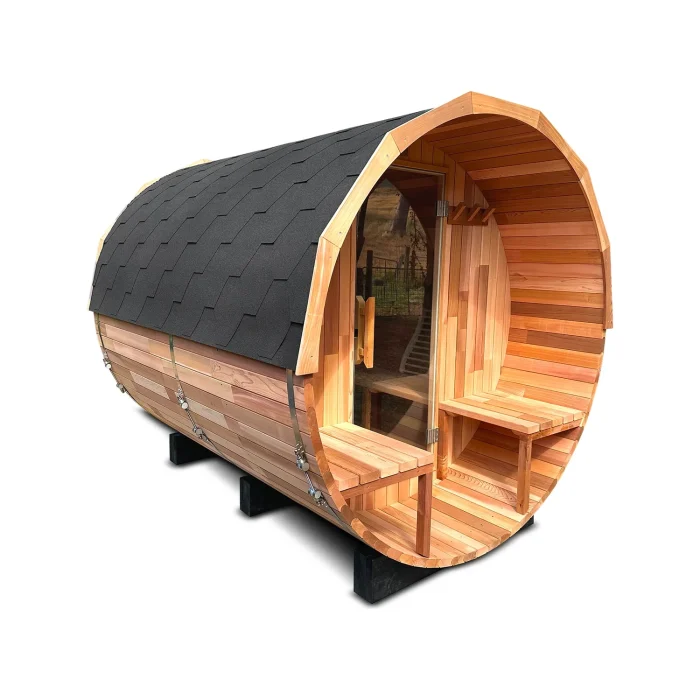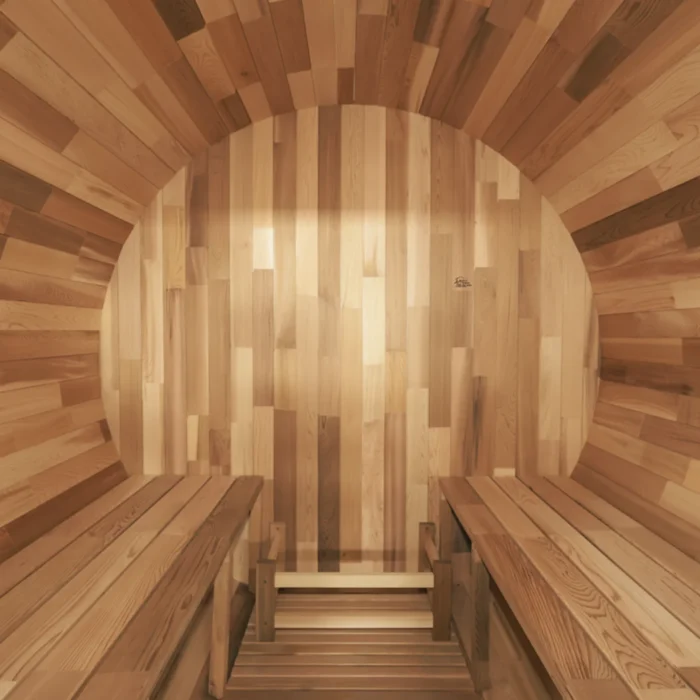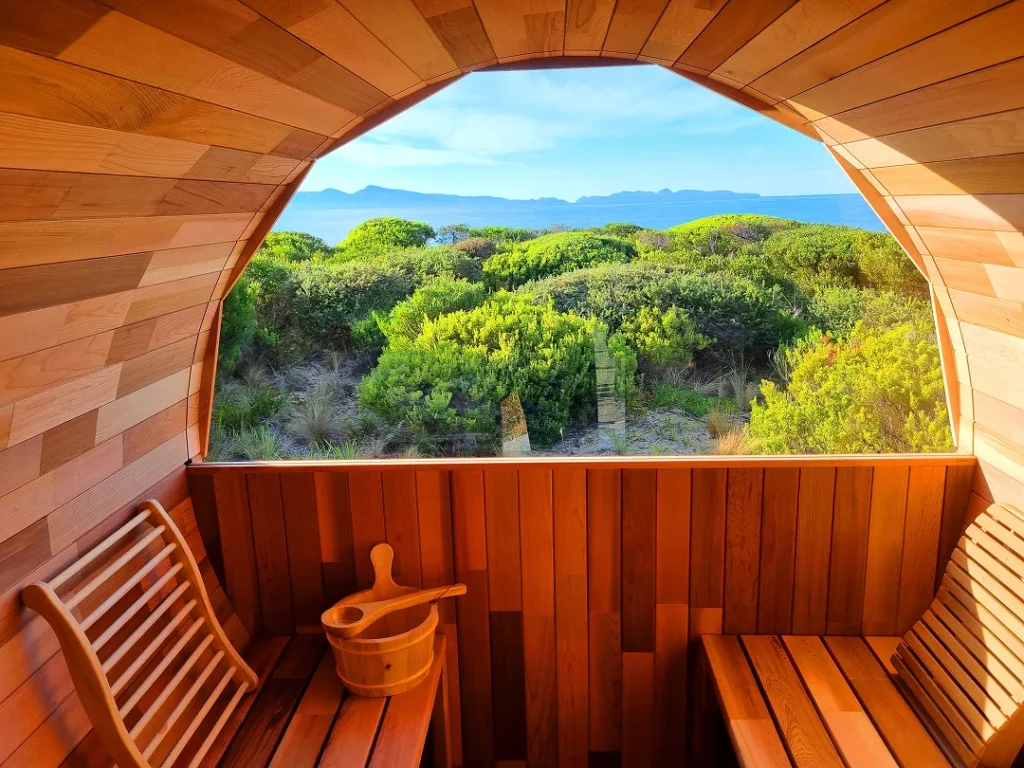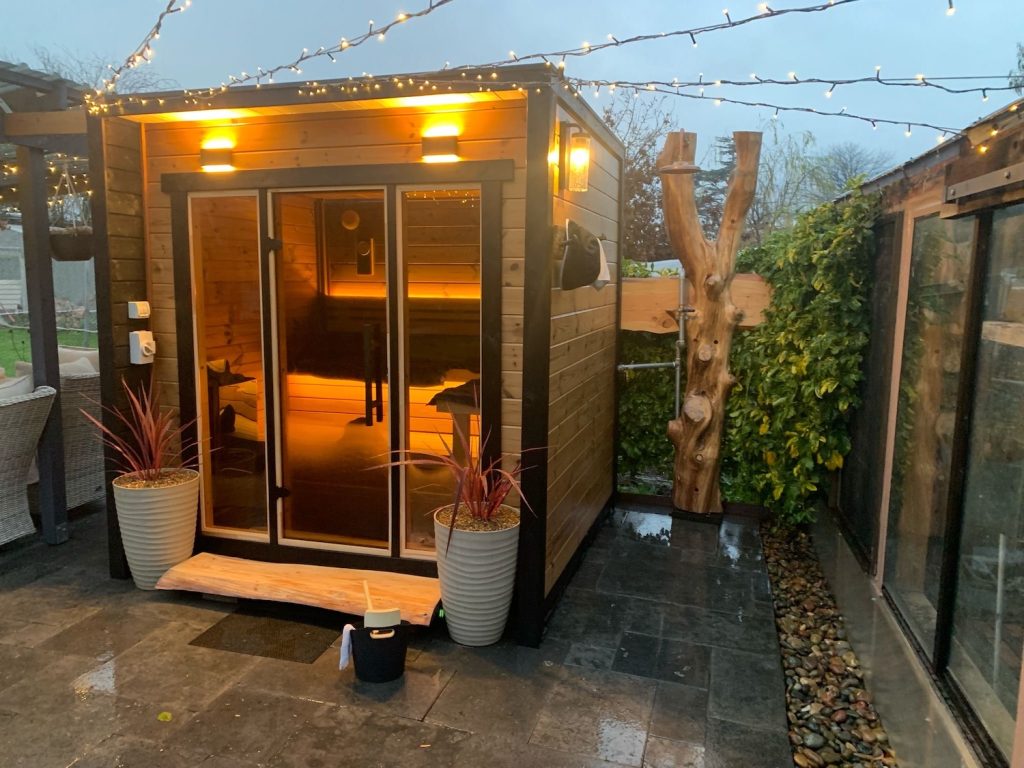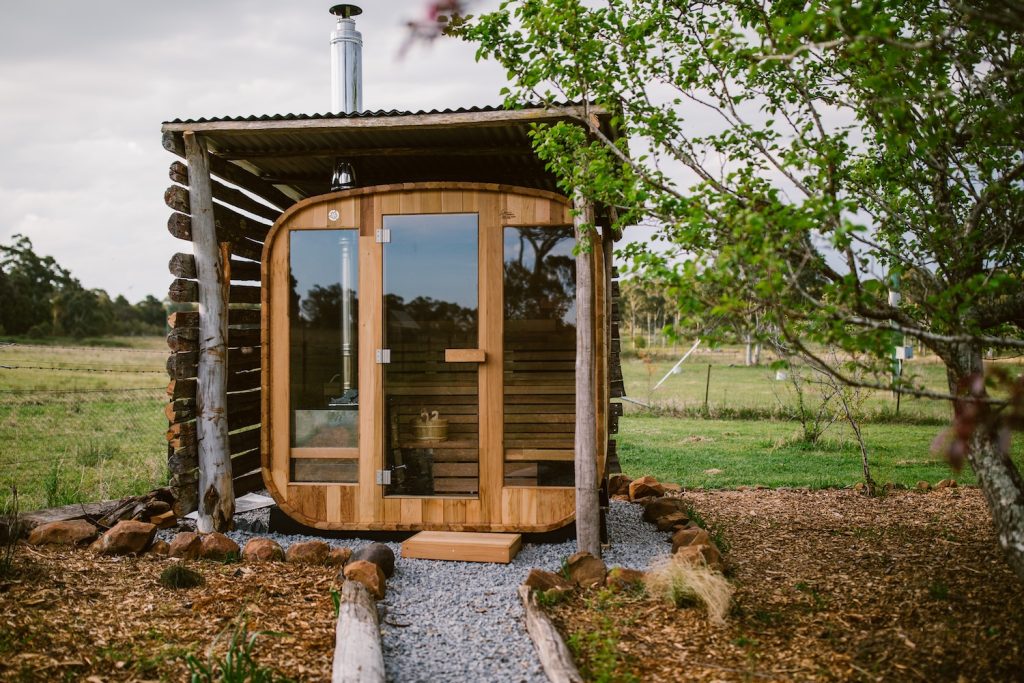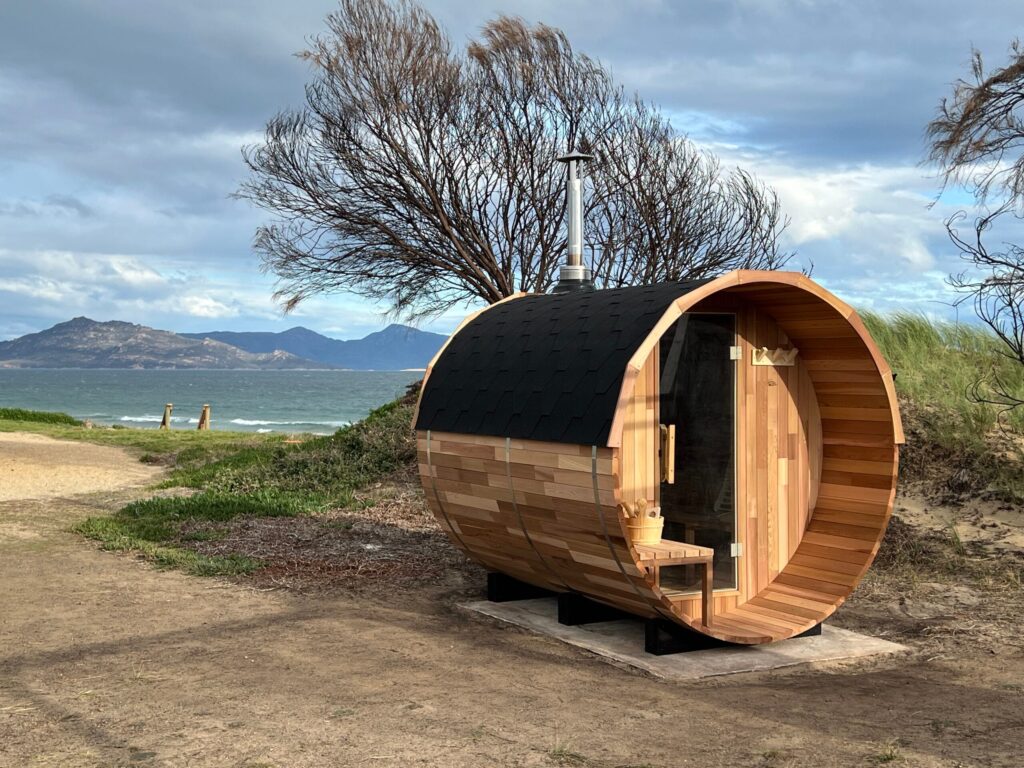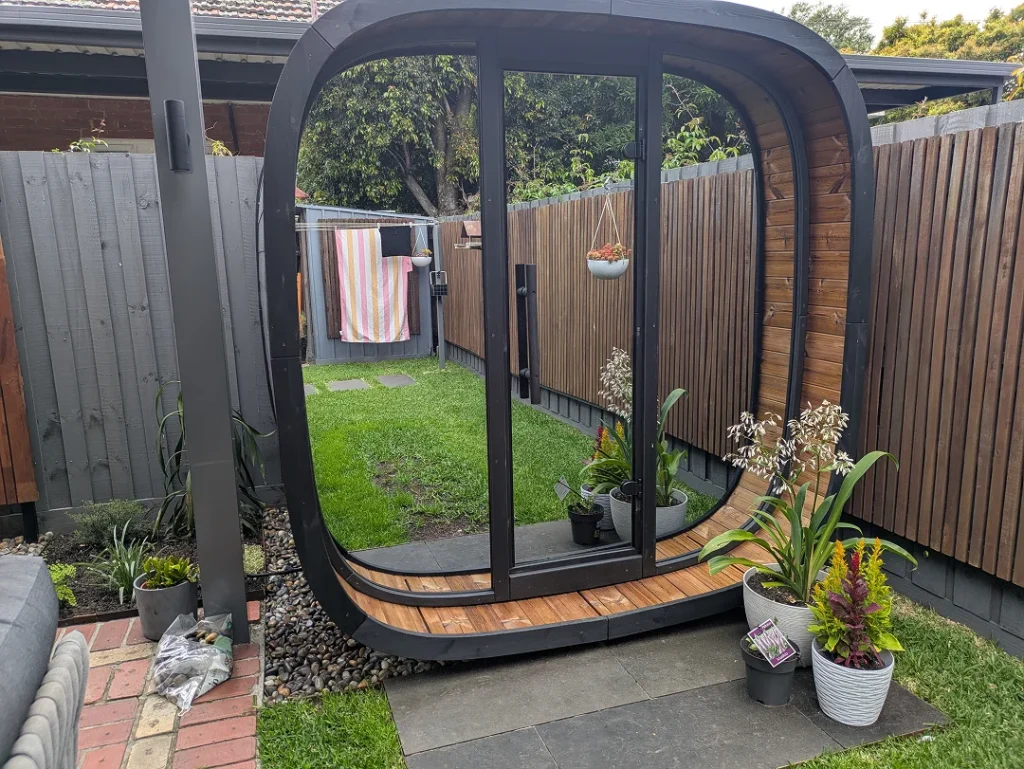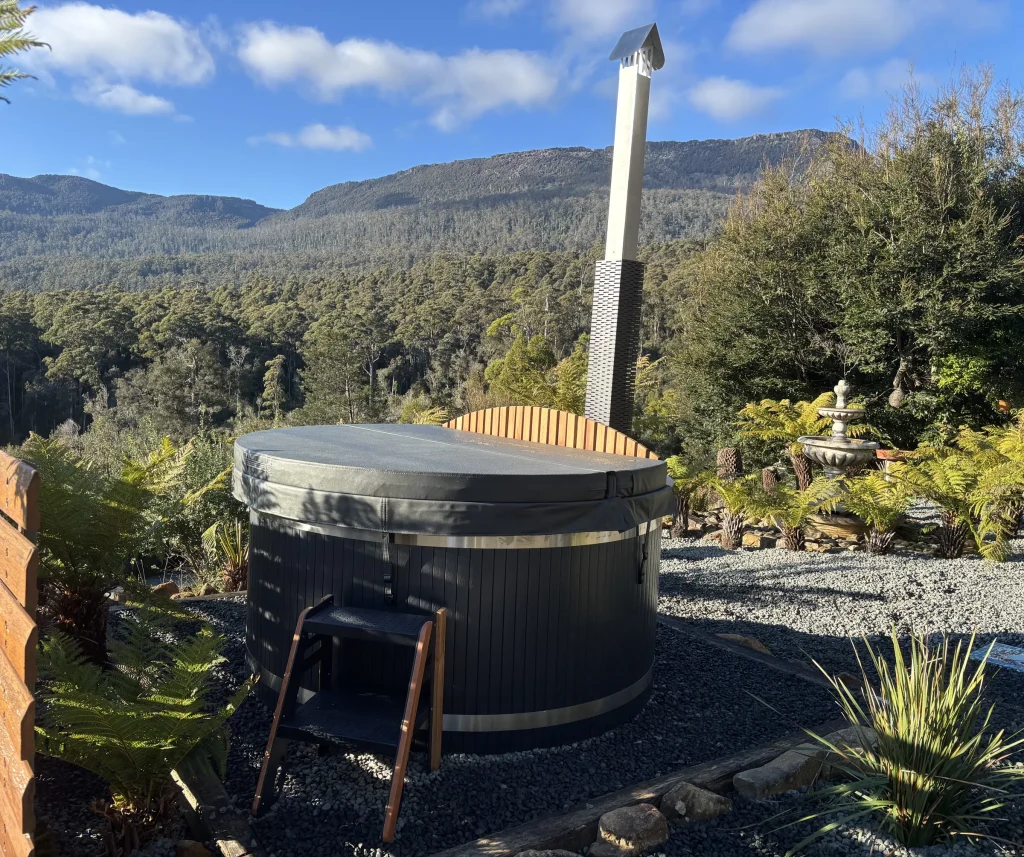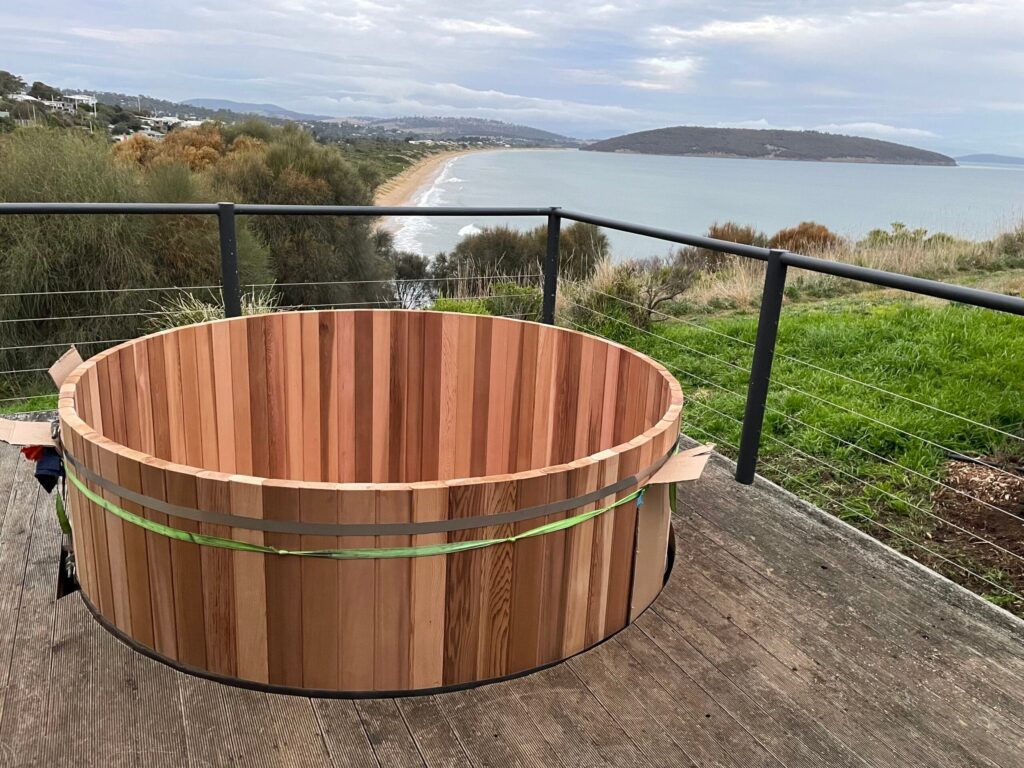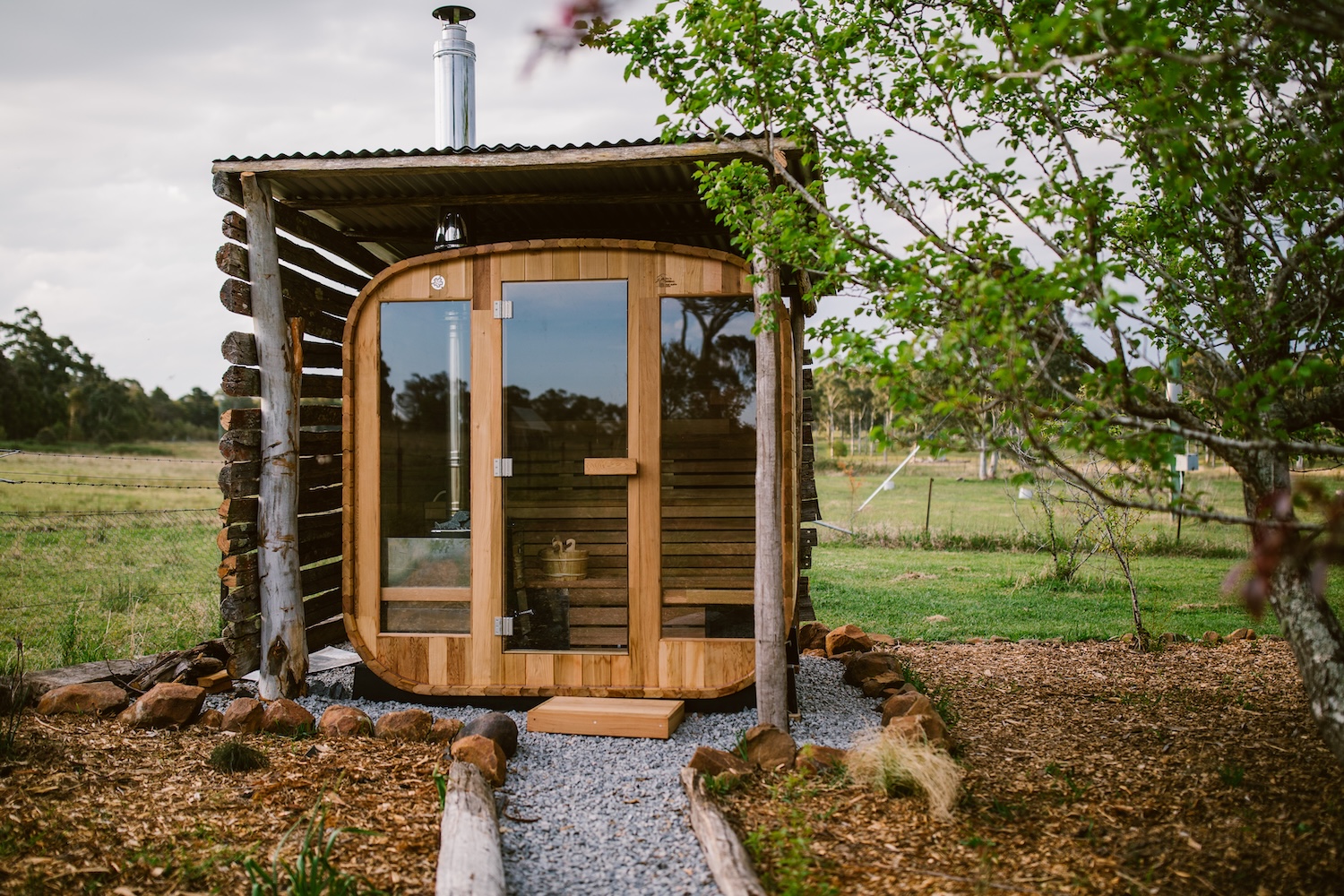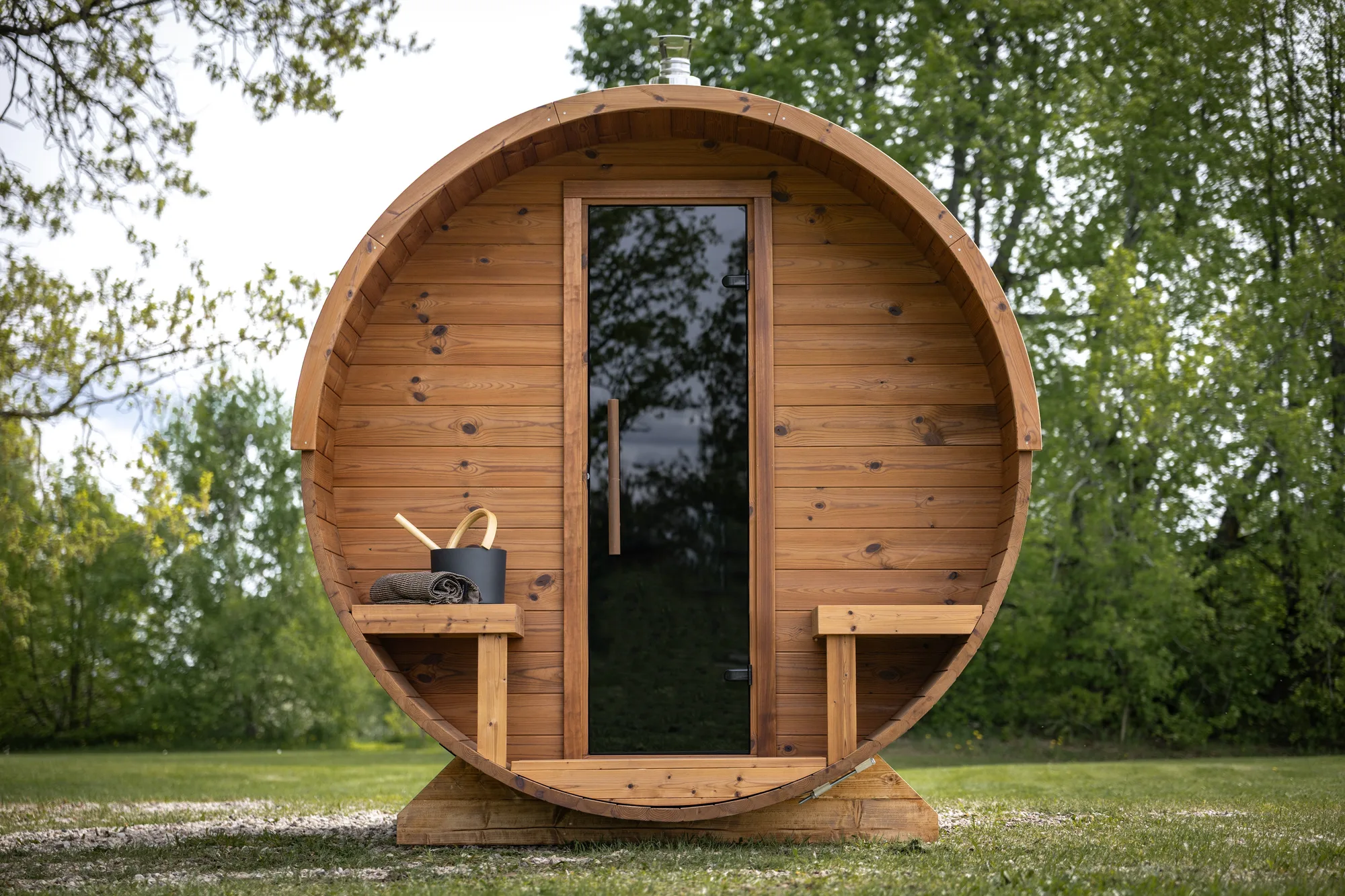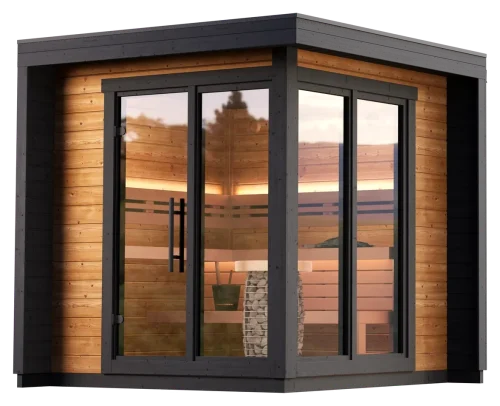
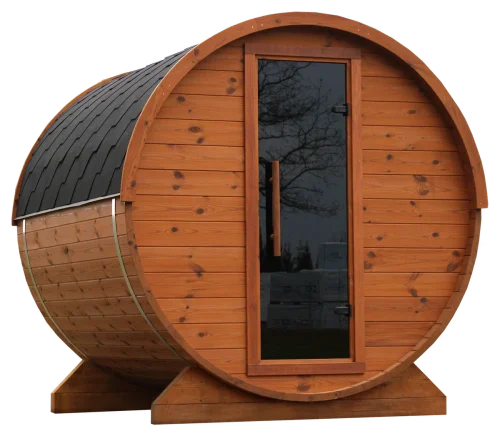
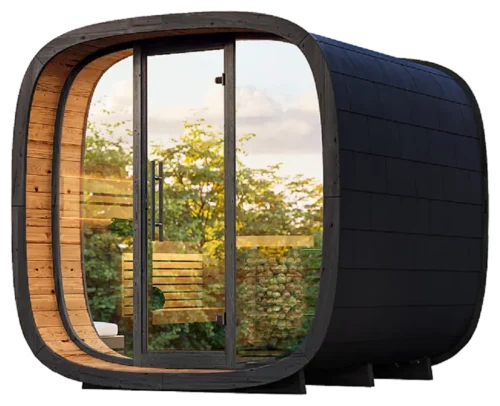
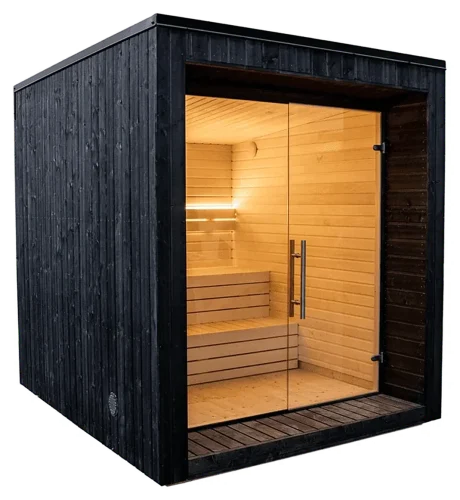
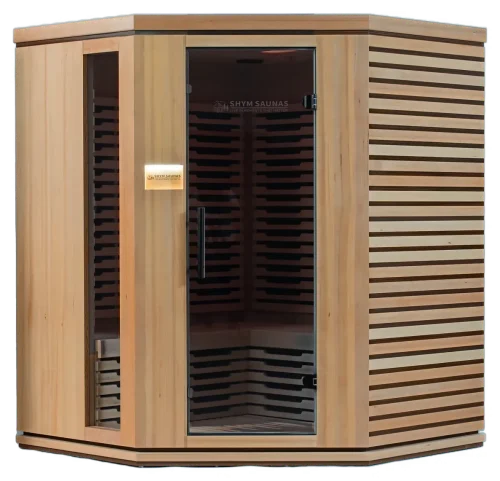
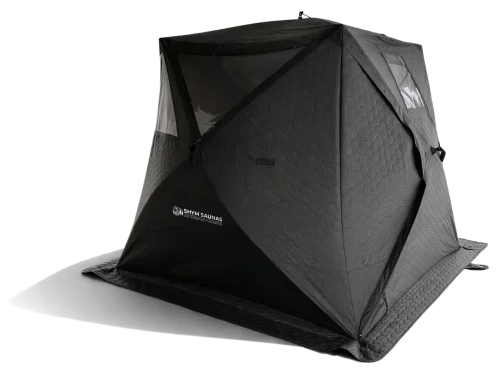
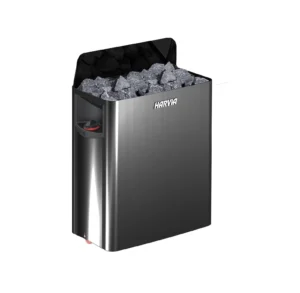






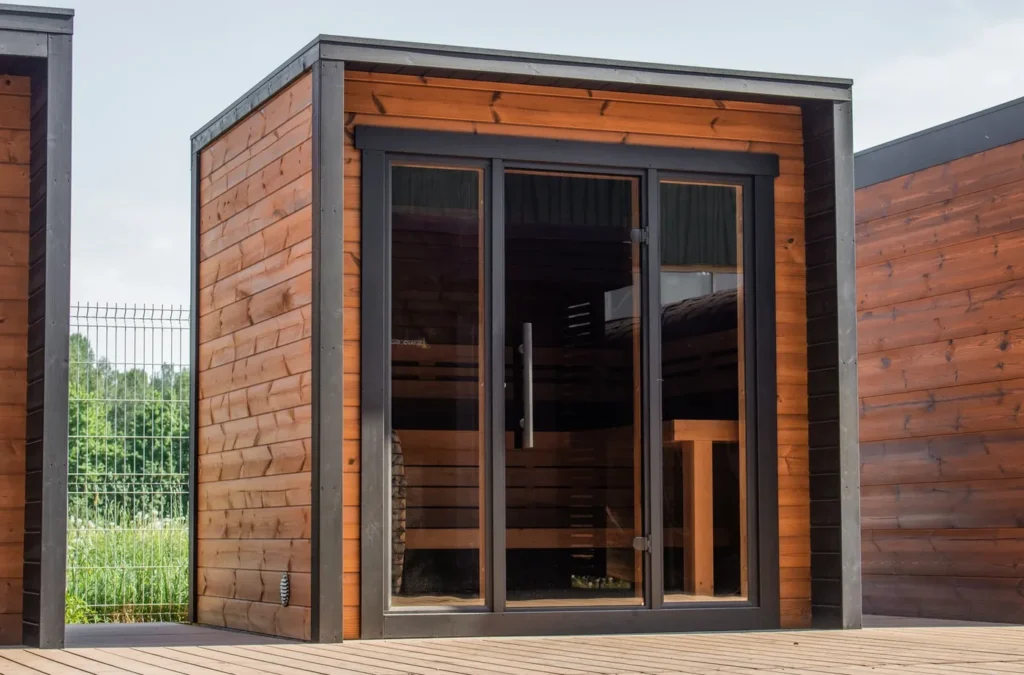

An outdoor sauna may be suitable for a deck, patio or purpose-built platform, but the answer depends on the sauna model, its support arrangement and the structure beneath it. The deck must safely carry the sauna itself, the heater and stones where applicable, occupants, and any other relevant loads. It must also provide stable, level support at the points specified by the manufacturer.
Quick Answer: Can You Put an Outdoor Sauna on a Deck?
Yes, an outdoor sauna can sometimes be installed on a deck, but only if the deck is structurally suitable for the sauna’s full installed and occupied load and provides the support the specific model requires. Do not assume a deck is strong enough because it feels solid or has supported outdoor furniture. Ask for the sauna’s assembled weight and support layout, then have a qualified building professional assess the deck where needed. A firm, level, well-drained ground-level base may be a simpler alternative.
Shym Saunas’ FAQ lists a suitable deck or platform as one possible foundation when it can support the sauna’s weight and is level and sturdy. It also identifies a concrete pad, crushed stone or gravel, and stable pavers or patio blocks as possible ground-level options. The right choice depends on the site and model, not appearance alone.
The key distinction is between a ground-level platform and an elevated deck or balcony. An elevated structure needs particular care because a sauna adds a concentrated permanent load to a structure that may have been designed for people and ordinary outdoor furniture rather than a heavy cabin.
1. Start with the Sauna’s Actual Weight and Support Points
Before assessing the deck or asking a builder to prepare a base, obtain the details for the exact sauna model you plan to install. A product’s overall dimensions do not tell you how its weight is transferred to the ground.
- Assembled sauna weight, rather than shipping or packaged weight.
- Heater and stone weight, where these are not included in the published sauna weight.
- Expected occupant load and any additional equipment that will sit on the deck.
- The locations and dimensions of feet, cradles, runners or other support points.
- The manufacturer’s requirements for a level surface, ventilation, drainage and clearances.
For example, Shym Saunas lists its Western Red Cedar Barrel Sauna with Front Porch (4 Person) at approximately 450 kg, with three wooden or carbon fibre cradles. This illustrates why support layout matters as well as total weight. It is not a loading specification for every Shym model, and it does not include every possible additional load.
Do not calculate deck suitability from the sauna’s weight alone. A structural professional needs to consider how the load reaches the joists, beams, posts, connections and foundations, as well as the people using the deck at the same time.
2. Can an Existing Timber Deck Support a Sauna?
Possibly, but an existing deck should be assessed before the sauna is ordered or delivered. Decking boards are only the walking surface. The structure underneath determines whether the additional load can be supported safely.
A qualified builder or structural engineer may need to check:
- Joist and bearer sizes, spacing, spans and condition.
- Post sizes, footings, connections and how the deck is attached to the house, if applicable.
- Whether the sauna’s support points align with suitable structural members or need a designed load-spreading solution.
- Signs of movement, rot, corrosion, loose connections, cracking or water damage.
- The combined loading from the sauna, occupants, other furniture and normal deck use.
Do not place a sauna on a deck that has not been assessed simply because it feels sturdy underfoot. Government building guidance warns that decks and balconies can be at risk when heavy items create loads they were not designed to carry. If the structure is elevated, attached to a dwelling or showing deterioration, seek professional advice before proceeding.
3. Which Base Is Best for an Outdoor Sauna?
For a ground-level installation, several base types may work when properly designed and prepared. Confirm the requirements for your exact model before construction, because a base suitable for one sauna may not suit another.
| Base option | Potential advantages | What to check |
|---|---|---|
| Concrete pad | Firm, durable support when correctly designed and installed. | Ground conditions, dimensions, reinforcement and thickness must be specified for the site and sauna. Allow for drainage and access. |
| Compacted crushed stone or gravel | Can drain well and may suit some ground-level sites. | Needs proper preparation, containment and compaction. Loose or settling material may not provide reliable support. |
| Pavers or patio blocks | Can be practical for some installations and allow drainage through joints. | Must sit on a stable, level, properly prepared base and support the sauna at required points. Pavers laid on loose sand may shift. |
| Timber deck or platform | Can integrate the sauna into an existing outdoor living area. | Must be structurally designed or verified for the load, support layout, moisture exposure and long-term condition. |
Avoid choosing a base solely by copying a generic online dimension or slab thickness. Soil conditions, sauna footprint, support positions, local requirements and construction type all matter. Use the manufacturer’s installation guidance and ask the relevant professional to specify the base where engineering is required.
4. Level, Drainage and Moisture Management
A suitable base should be stable, level within the sauna manufacturer’s tolerance and designed so water does not collect beneath or around the structure. An uneven or settling base can place stress on the cabin and may contribute to door-alignment issues or gaps between components.
- Choose a location that does not routinely collect stormwater or runoff.
- Direct roof and surface water away from the sauna base and nearby building foundations.
- Avoid leaving timber supports in persistent contact with wet ground.
- Consider local rainfall, coastal exposure, salt air and the condition of existing deck fixings.
- Keep drainage paths clear after installation and inspect the area periodically.
Drainage details should not undermine the base or direct water onto neighbouring properties. If the site has poor drainage, sloping ground, retaining walls or significant excavation, seek suitable landscaping or building advice before preparing the installation area. Once the sauna is in place, our outdoor sauna maintenance guide covers the regular checks for the roof, base and drainage.
5. Allow for Access, Assembly and Maintenance
A sauna may fit within a measured space but still be difficult to install or maintain there. Many Shym Saunas models are supplied in kit form and require assembly, so plan for components to reach the site and for the assembly team to work safely.
- Measure the route from the delivery point to the final location, including gates, steps, narrow paths and changes in level.
- Allow room for the door to open fully and for people to enter and exit safely.
- Check the model’s assembly instructions for required working space and any access for tools or lifting equipment.
- Leave practical access for cleaning, timber care, heater servicing and inspection.
- Keep the sauna clear of branches, overhanging vegetation and stored items that may obstruct access or retain moisture.
Do not assume one clearance measurement applies to every model. Use the instructions for the sauna and heater selected, and confirm any required separation from walls, fences, vegetation or other structures.
6. Plan Electrical Supply and Heater Clearances
If you choose an electric heater, involve a licensed electrician early, ideally before finalising the location. The electrician can confirm the selected heater’s supply requirements, cable route, isolation and protection arrangements, and whether the existing household supply is suitable. Do not assume an outdoor power point is sufficient for a traditional electric sauna heater.
Follow both the sauna and heater manufacturers’ instructions for installation and safety clearances. If you are considering a wood-fired heater, confirm the model-specific requirements for the flue, heat protection, nearby combustible materials and any local approval conditions before building the surrounding deck or platform.
For more detail, see Shym Saunas’ Complete Guide to Sauna Electrical Installation in Australia. This guide is a starting point, not a substitute for advice on your exact heater and property.
7. Check Council, Building and Insurance Requirements
Requirements can vary by state, territory, local council, site conditions and the proposed structure. A sauna may be treated differently depending on its size, placement, heater, proximity to boundaries or other buildings, and whether new decking, a roof or other building work is involved.
- Ask your local council or building certifier whether planning or building approval applies.
- If modifying or constructing a deck, confirm the design and permit requirements before work begins.
- Check applicable requirements for wood-fired heaters, flues, fire separation and bushfire-prone areas.
- If the property is strata-managed, rented or subject to other covenants, check the relevant permissions.
- Contact your insurer if the installation involves structural changes or may affect cover.
Do not rely on a general online article to determine whether approval is or is not required for a particular property. Obtain advice for your location and proposed installation.
A Practical Pre-Installation Checklist
- I have selected the exact sauna model and reviewed its installation manual.
- I have confirmed the assembled weight, heater and stone weight, and support-point layout.
- The base or deck has been checked for the loads it will need to carry.
- The base is stable, level and suitable for the site conditions.
- Water can drain away and will not remain trapped beneath or around the sauna.
- There is enough room for delivery, assembly, door opening and future maintenance.
- Electrical supply or wood-fired heater requirements have been reviewed with the relevant professional.
- I have checked council, building, strata and insurance requirements where applicable.
- I have confirmed the final installation location and required clearances with Shym Saunas and the installer.
Common Mistakes to Avoid
- Assuming an existing deck can carry the sauna because it supports several people.
- Using packaged weight instead of assembled and installed load information.
- Ignoring the load at individual cradles, feet or runners.
- Installing on uneven, loose or poorly drained ground.
- Building the base before checking the exact model’s footprint and support layout.
- Leaving too little space for assembly, door swing, electrical work or maintenance.
- Assuming all saunas and heaters share the same clearances or approval requirements.
Frequently Asked Questions
Can I put an outdoor sauna on a timber deck?
Potentially, if the deck is structurally suitable for the sauna’s full installed and occupied load and the model’s support requirements. Have an existing deck assessed before ordering or installing, especially if it is elevated or attached to the house.
Is a concrete slab always necessary for an outdoor sauna?
No. Depending on the model and site, a properly prepared concrete pad, compacted gravel, stable pavers or a structurally suitable deck may be options. Follow the manufacturer’s instructions and confirm the base is stable, level and well drained.
How thick should a concrete slab be for a sauna?
There is no single thickness that is correct for every sauna and site. The required design depends on ground conditions, the sauna’s weight and support layout, and local requirements. Ask a qualified professional to specify the base where needed.
How much weight does an outdoor sauna add to a deck?
It varies by model. Include the assembled cabin, heater, stones, occupants and additional equipment. Ask the supplier for the exact model’s load information and support layout rather than estimating from dimensions or packaged weight.
Can I put a sauna on pavers?
Pavers may be suitable when installed on a properly prepared, stable base and arranged to support the sauna at required points. Pavers laid on loose or settling material can move, so confirm preparation with the installer or relevant professional.
Does an outdoor sauna base need drainage?
Yes, the site should be planned so water does not pool beneath or around the sauna. The base must remain stable while directing water away appropriately. Follow product instructions and get site-specific advice where drainage is difficult.
How much space should I leave around an outdoor sauna?
Clearance requirements vary by sauna model, heater type and local conditions. Check the specific assembly and heater manuals for separation, ventilation, door swing and working-space requirements rather than applying a universal measurement.
Do I need council approval for an outdoor sauna in Australia?
It depends on your location, the structure, heater and proposed building work. Contact your local council or building certifier to check what applies to your property.
Can I install an electric sauna heater myself?
Electrical connections must be handled by a suitably licensed electrician in accordance with applicable Australian requirements. Ask the electrician to confirm the supply and installation needs for the exact heater.
What should I do before ordering a sauna for my deck?
Choose the model, obtain its assembled weight and support-point information, have the deck assessed if needed, check clearances and access, plan heater requirements, and confirm applicable approvals before committing.
Can Shym Saunas help me work out the right installation option?
Shym Saunas provides product information and support for choosing a sauna. Share your preferred model, site photographs, access details and questions about the base or deck so the team can advise on next steps. Structural assessments and regulated trade work should be handled by qualified professionals.
Where can I find Shym Saunas’ installation and buying information?
Start with the Shym Saunas FAQ, the sauna buying guide and the electrical installation guide. For advice about a particular product or site, contact the team directly.
Final Thoughts
An outdoor sauna can be a great addition to a backyard deck or patio, but the installation should start with the structure and site, not just the available footprint. Confirm the exact sauna’s weight and support layout, check the deck or prepare a suitable ground-level base, manage drainage, allow for access and clearances, and plan heater installation and any approvals.
Exploring your options? Browse the Shym Saunas outdoor sauna range and review the sauna buying guide.
Planning a sauna for your deck or backyard? Get your wellness space quote and the team can help with the right model for your site.