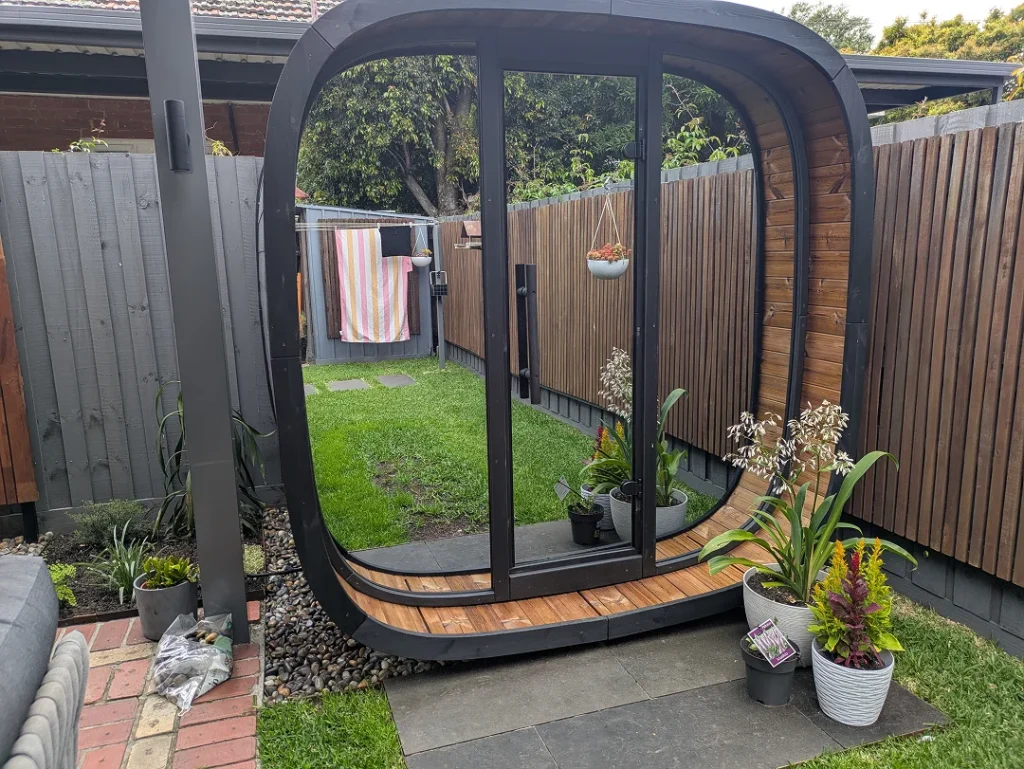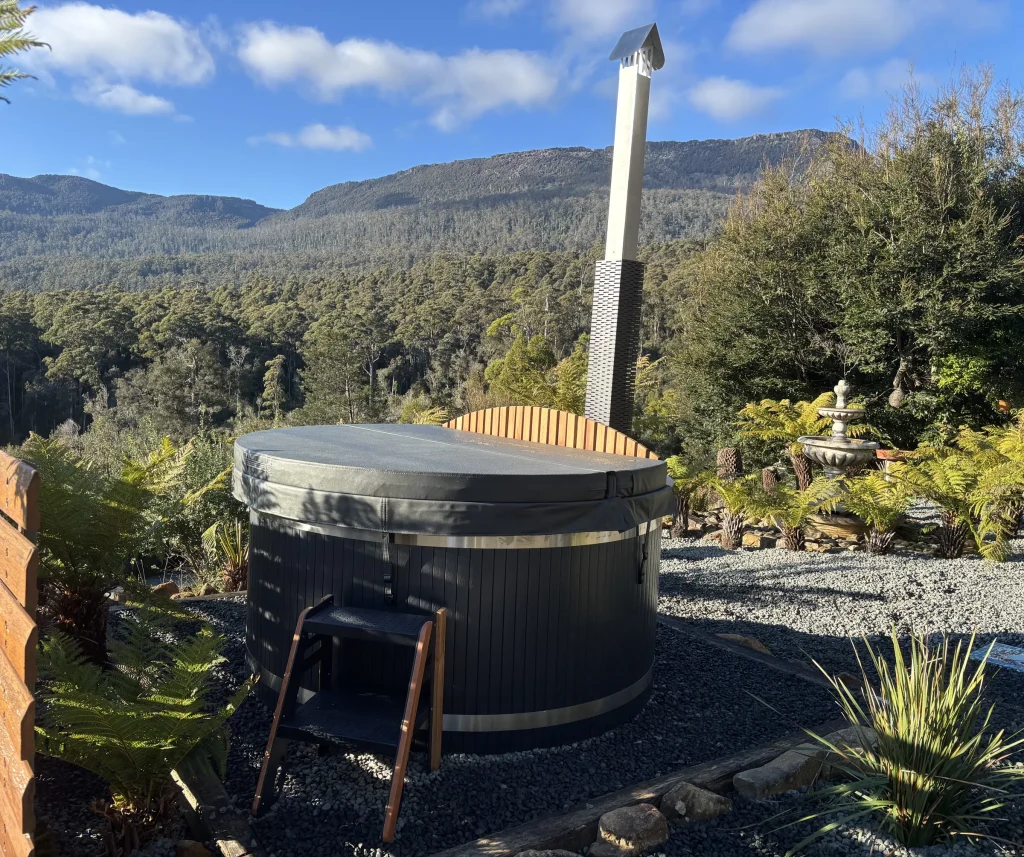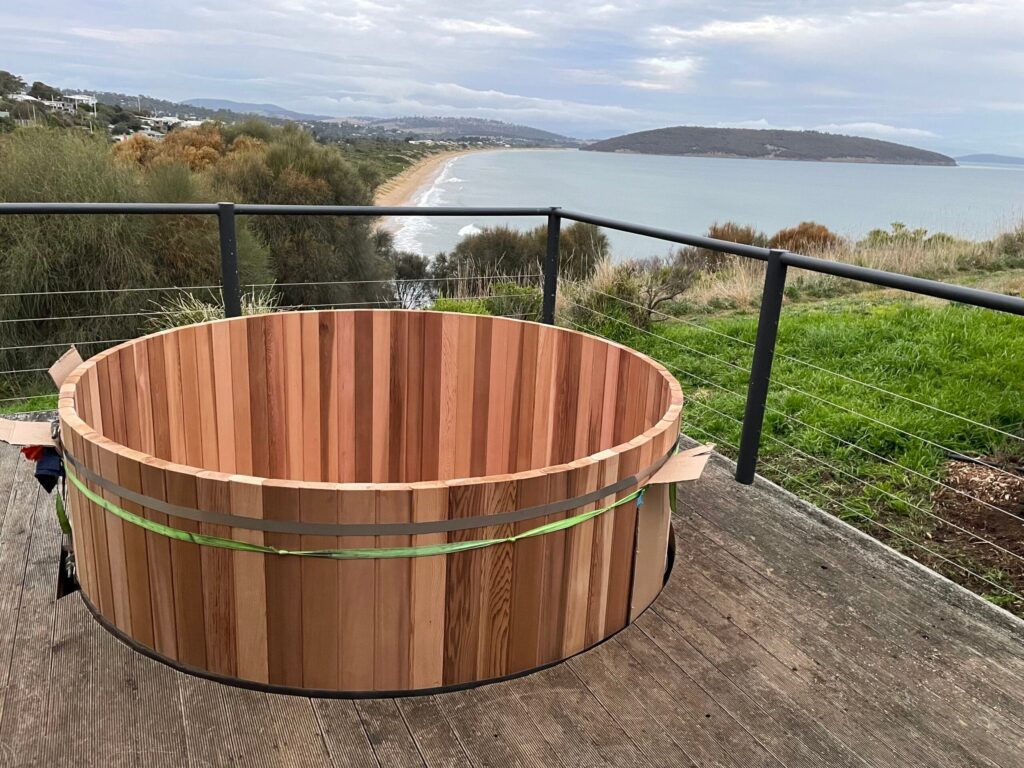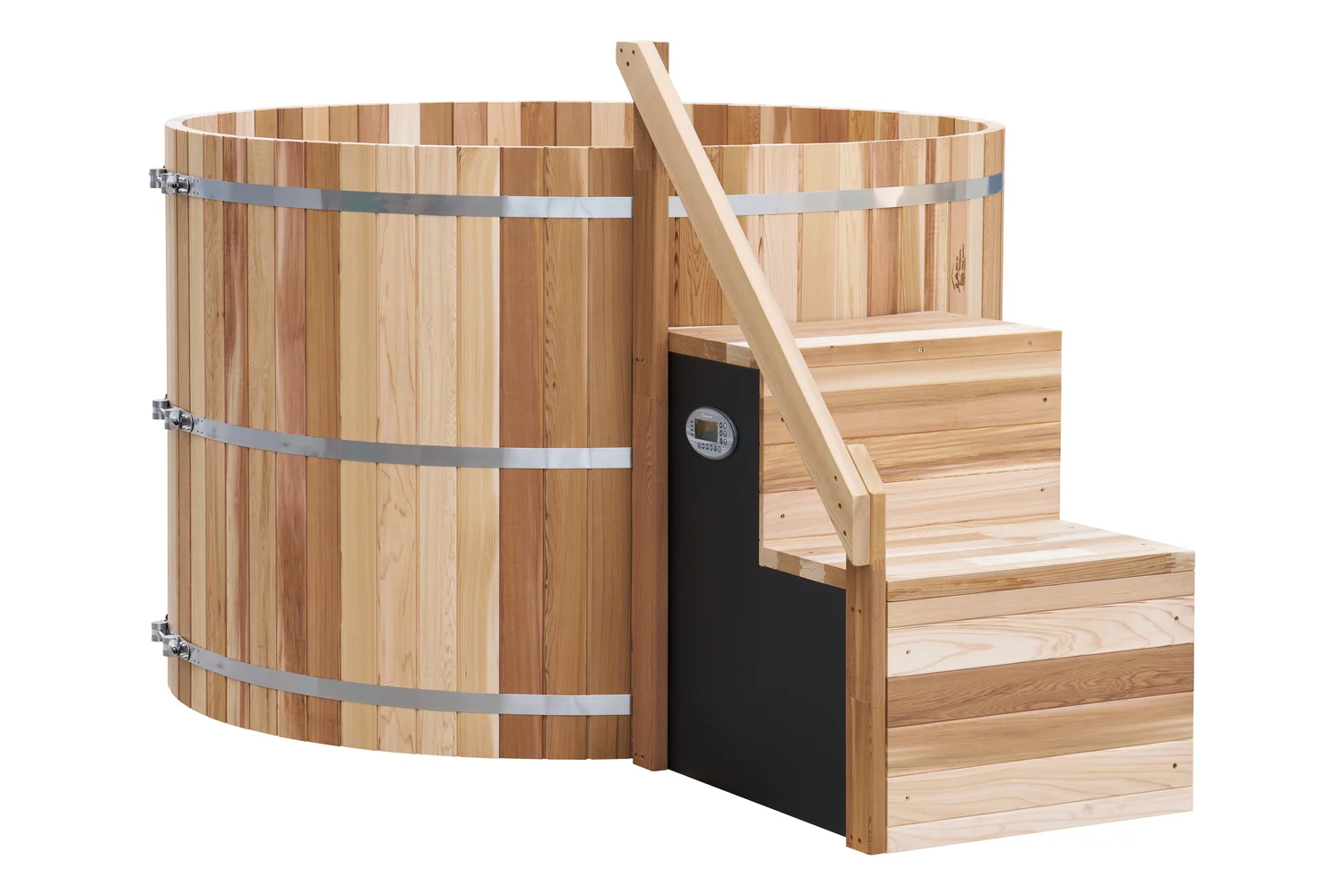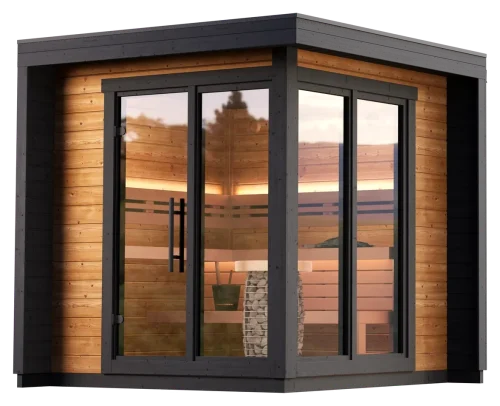
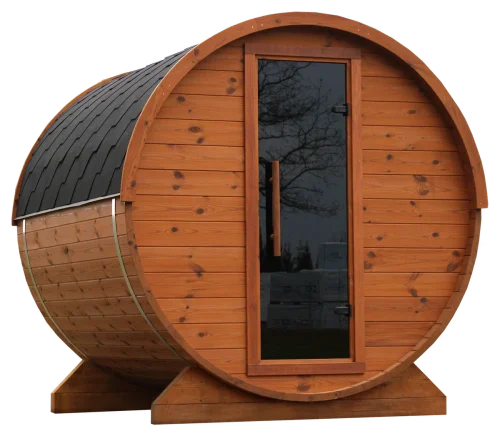
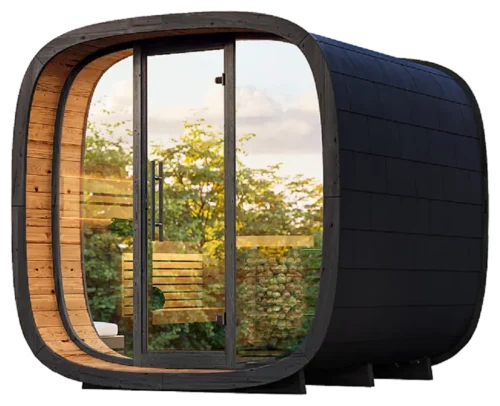

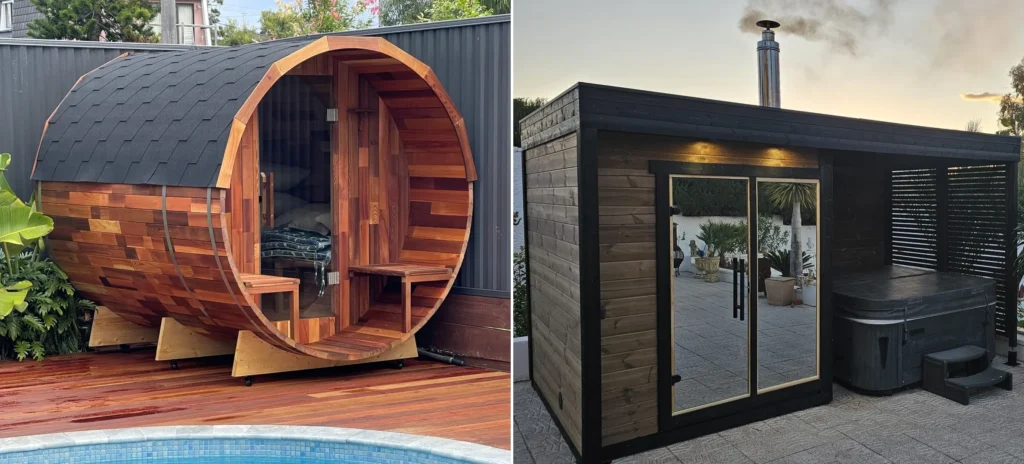

Choosing between a barrel sauna and a cabin-style sauna comes down to how you want to use the space, how many people will use it, and what will work best in your backyard. Both can provide a traditional hot-rock sauna experience when paired with a suitable heater. The main differences are their shape, internal layout, footprint, construction and the way they fit into your outdoor setting.
At Shym Saunas, our range includes round barrel saunas, square barrel designs and cabin-style log saunas. This guide explains how the designs compare so you can narrow down the right option for your home.
Quick answer: What is the difference between a barrel and cabin sauna?
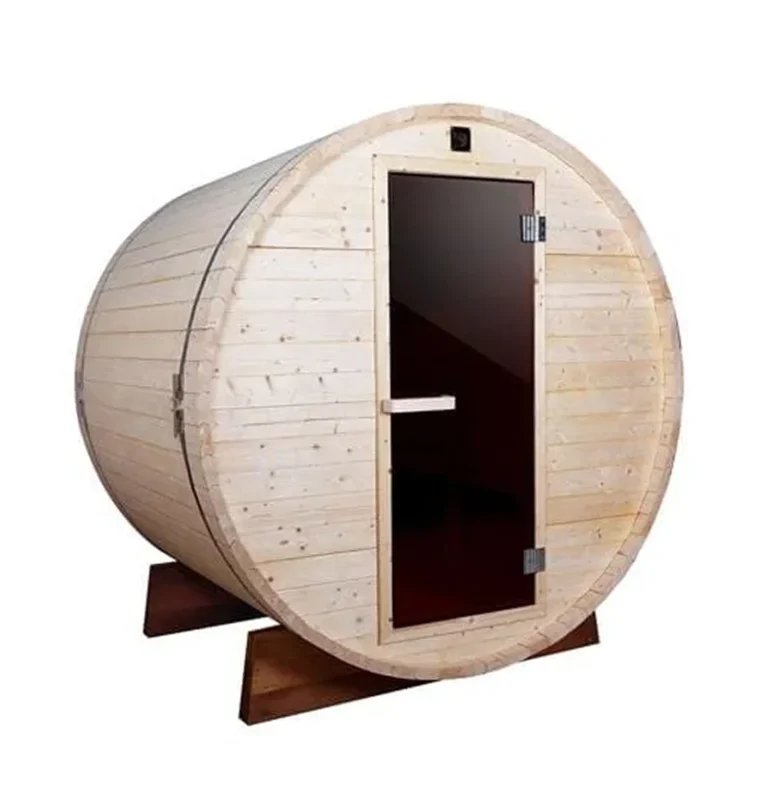
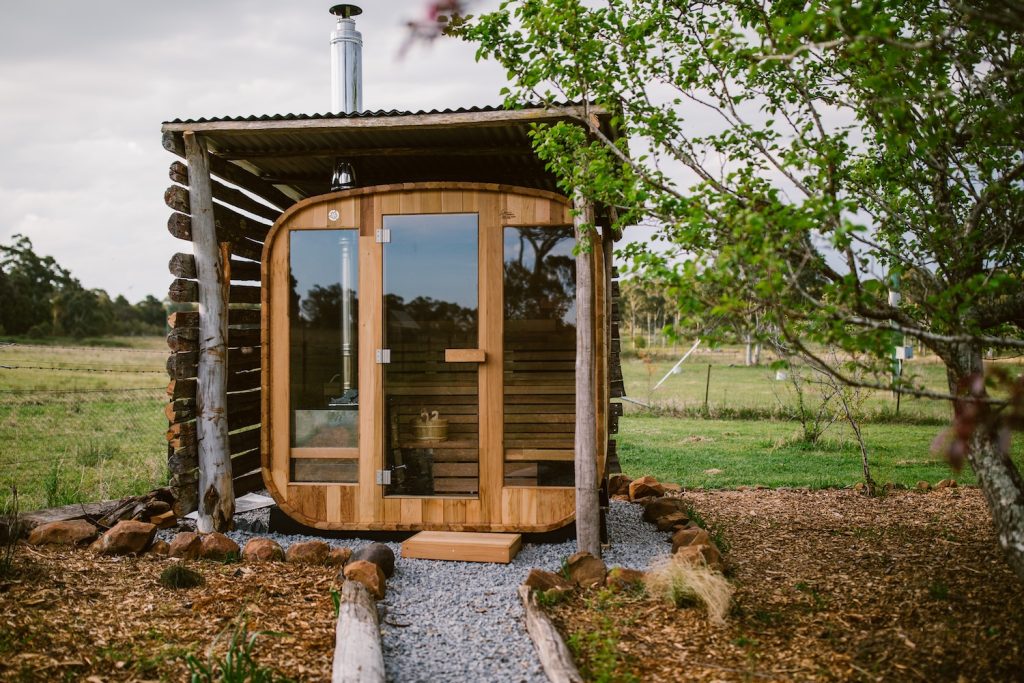
A barrel sauna has a curved, cylindrical body made from timber staves. Its rounded profile gives it a distinctive appearance and a compact external shape. A cabin-style sauna has a more upright, rectangular structure, usually with straight walls and a conventional room-like interior. This can make it easier to plan benches, windows, changing areas or additional space, depending on the model.
Choose a barrel sauna if you prefer a curved design and a dedicated sauna space. Consider a cabin-style sauna if you want a conventional room layout, a different bench arrangement or additional space on selected models. Compare the actual dimensions and usable bench area before deciding.
1. What is a barrel sauna?
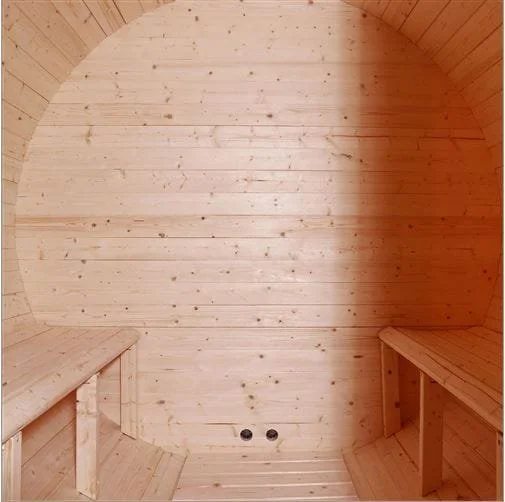
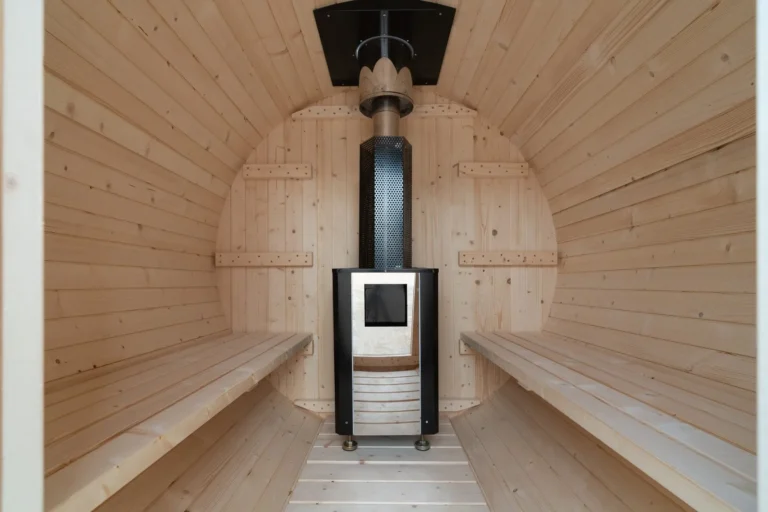
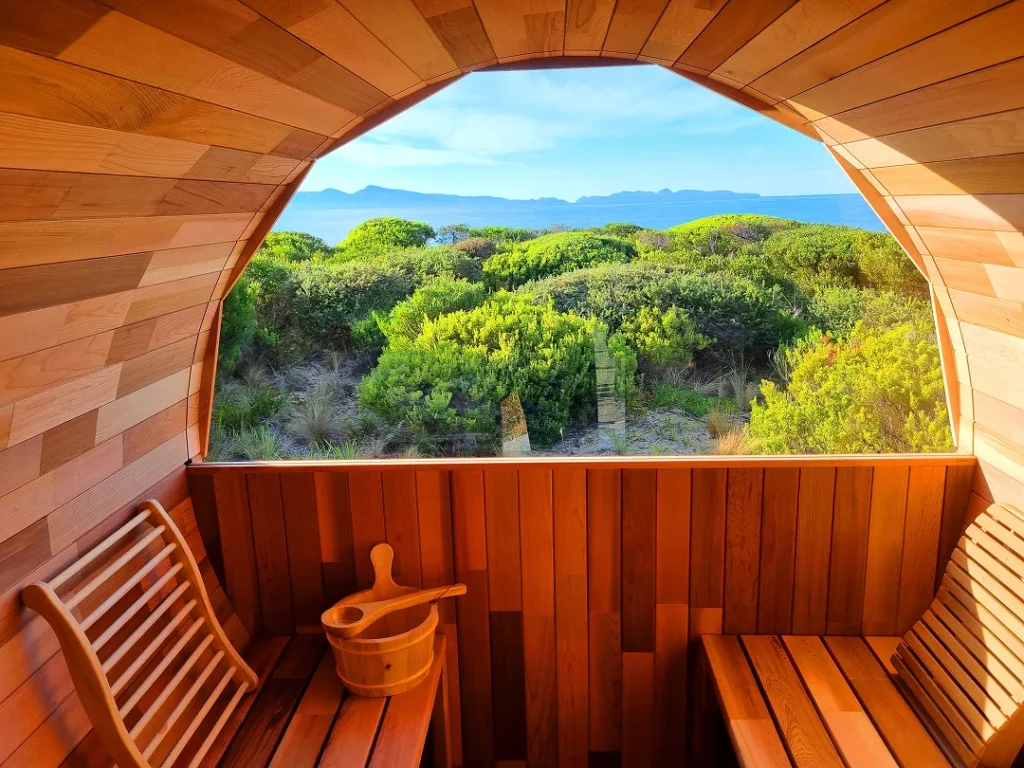
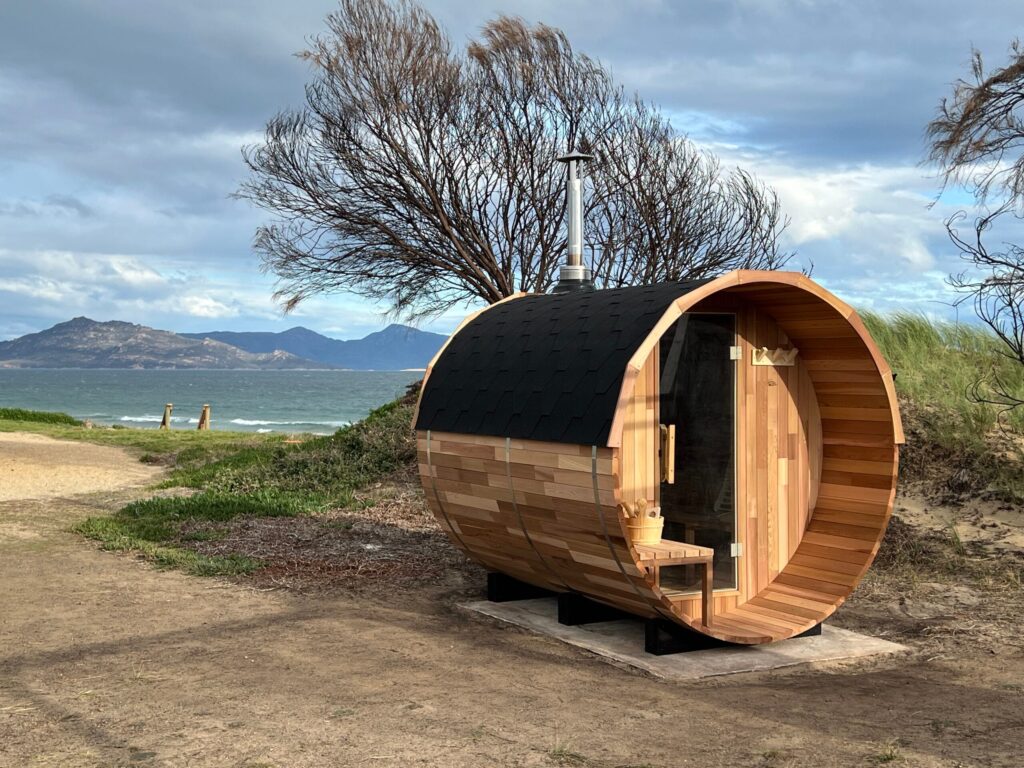
A barrel sauna is built from curved timber staves assembled into a cylindrical shape. Front and rear panels close the ends, while support cradles and metal bands hold the structure together. Many models have a glass door, built-in ventilation and opposing benches along the sides.
The rounded exterior is the feature most people notice first. It creates a recognisable outdoor-sauna profile and can suit gardens, decks and outdoor entertaining areas.
Shym Saunas offers barrel options in different timbers and sizes. Our White Spruce Barrel Sauna, for example, is listed for 2 to 4 people and is available in 1.5 m or 1.8 m lengths, with a 2 m diameter. Its product listing specifies approximately 38.5 mm thick spruce staves, a glass door and a partially pre-assembled DIY kit. Check the current product page for exact inclusions and configuration.
Explore our Round Barrel Sauna range and Panoramic Glass Round Barrel Saunas.
2. What is a cabin-style sauna?
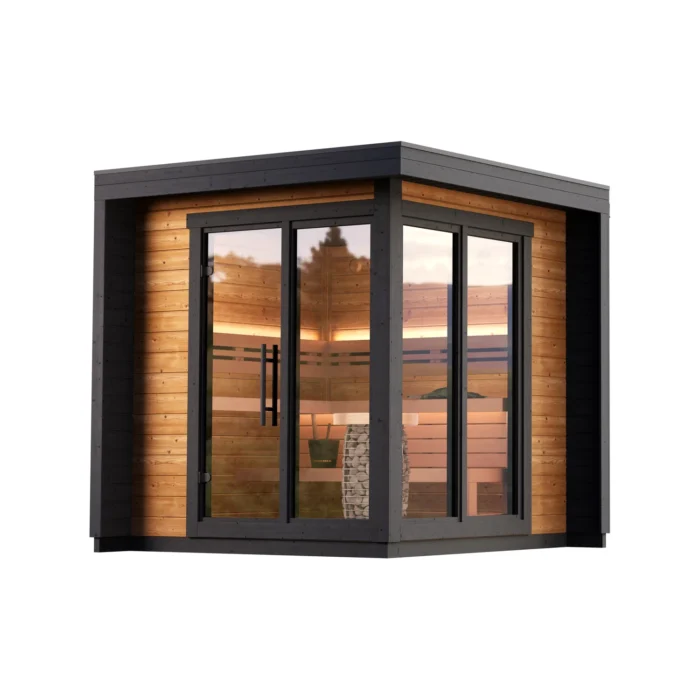
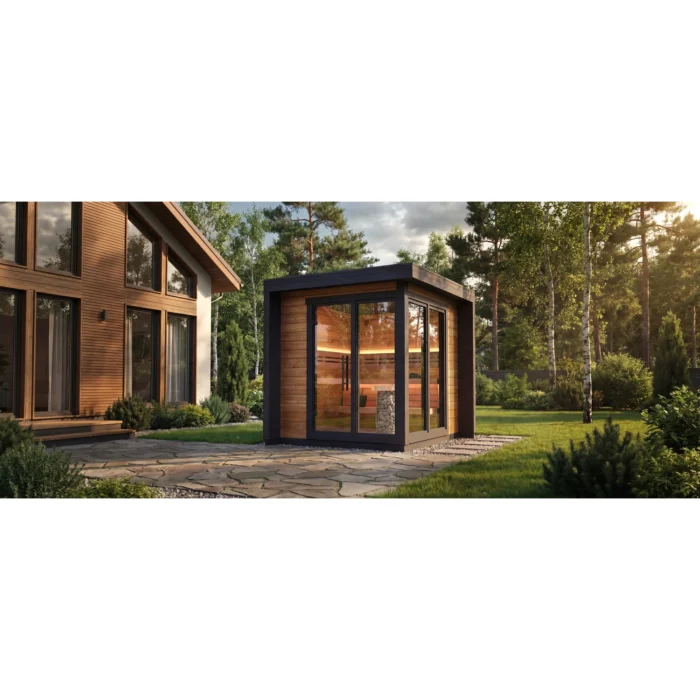
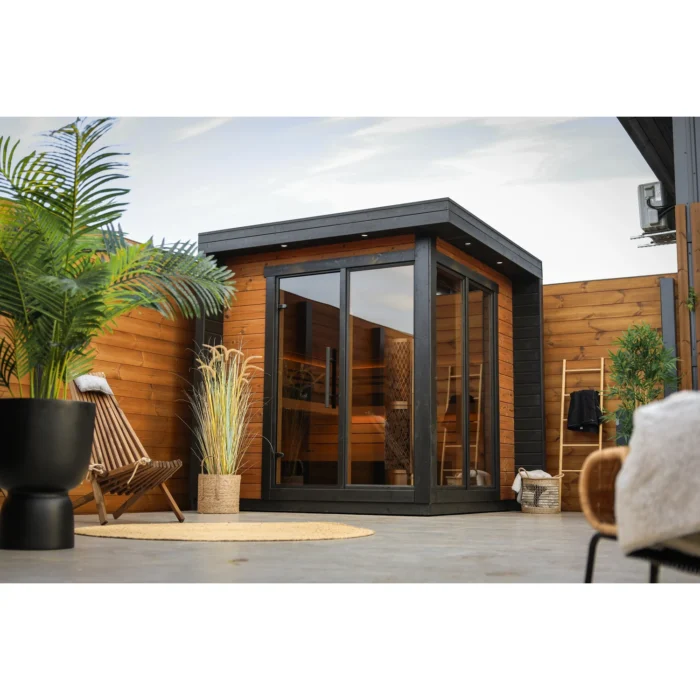
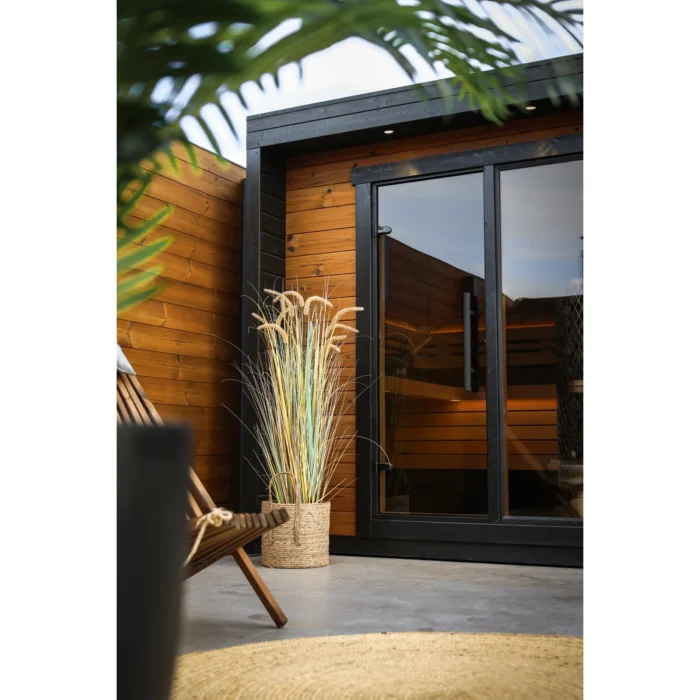
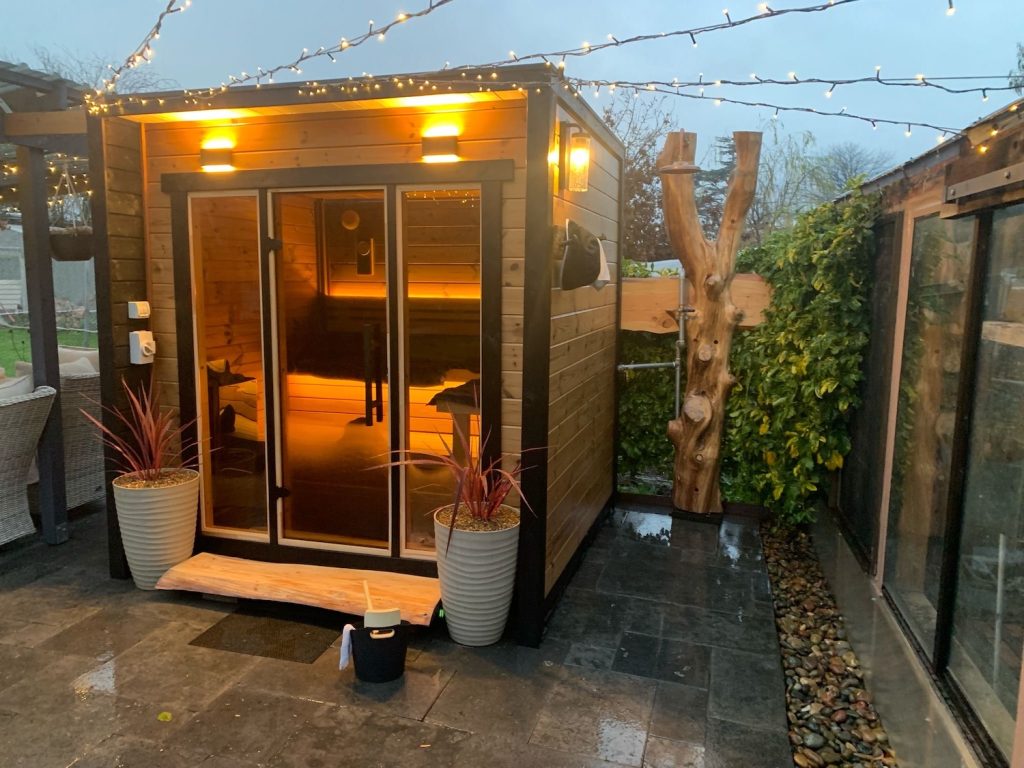
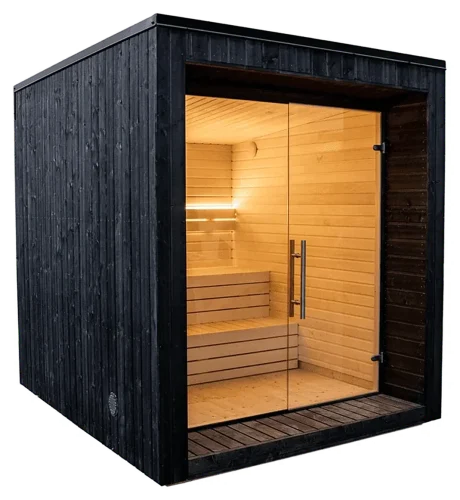
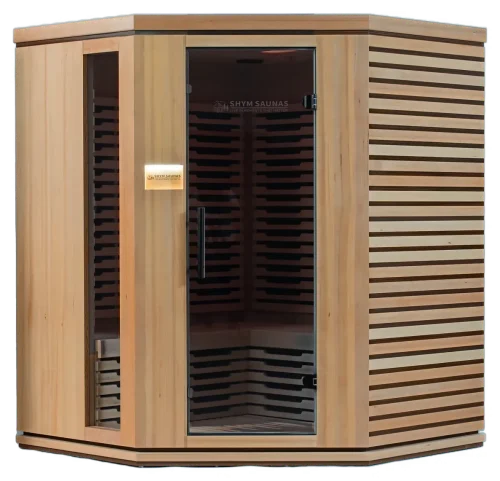
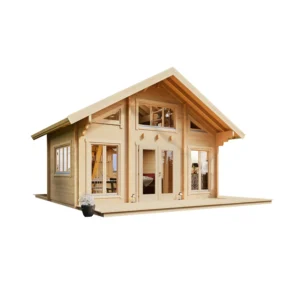
A cabin-style sauna uses a more conventional rectangular or square structure. Its walls are generally straight, and the interior feels more like a small room than a curved enclosure. This layout can make it easier to create longer bench runs, split-level seating and larger window arrangements. On some larger models, it can also accommodate a separate changing or relaxation area.
The term "cabin sauna" can describe different products. A compact log sauna kit is different from a large sauna summer house with multiple rooms or a loft. For a fair comparison, look at the sauna room itself, not simply the overall footprint of a summer-house building.
One example from our range is the Leil® PATIO S. It is listed for 4 to 8 people and uses 40 mm thermo-treated Nordic spruce log boards, split-level alder benches, double-glazed windows and an insulated roof with an EPDM cover. It is compatible with suitable electric or firewood heaters. Confirm the assembled dimensions from the current product specification before planning your site.
Explore the Leil® Patio Series Log Saunas for cabin-style outdoor sauna options.
3. Barrel vs cabin sauna: key differences
| Feature | Barrel sauna | Cabin-style sauna |
|---|---|---|
| Overall shape | Curved, cylindrical body | Rectangular or square structure |
| Interior layout | Often opposing side benches | Often straight or split-level benches |
| Footprint | Compare length and diameter | Clear rectangular footprint; varies by model |
| Capacity | From compact models to larger options | From compact units to larger multi-person designs |
| Windows and doors | Often front glass door; panoramic options on selected models | Can offer larger windows or multiple glazed panels |
| Extra space | Usually focused on the sauna room; porch options on selected models | Some designs include changing rooms, terraces or other rooms |
| Visual style | Distinctive curved timber form | Traditional garden-room or Scandinavian cabin appearance |
4. Which design uses space more effectively?
Neither shape is automatically more space-efficient. A barrel sauna has a curved external profile, and its footprint is usually described by its length and diameter. A cabin-style sauna has straight external walls, which can make it easier to position against a boundary or align with an existing deck or paved area, subject to required clearances.
The more important measurement is usable internal space. Check bench length and depth, internal height, door swing, heater position and room to enter and exit comfortably. If a model includes a porch, changing room or terrace, separate those dimensions from the heated sauna room.
Measure the full installation area and allow for delivery and assembly access. Consider gates, steps, overhead obstructions, drainage and the base required for the selected model.
5. Capacity and comfort
A product's stated capacity is a useful starting point, but it does not tell the whole story. Two saunas listed for the same number of people can feel different depending on bench length, bench depth, internal height and whether users can sit comfortably.
Barrel saunas commonly use opposing benches along the curved sides. This can work well for sitting opposite one another, while the available room to recline depends on the model's length and bench dimensions.
Cabin-style models often use straight or split-level benches. The Leil® PATIO S, for example, is listed for 4 to 8 people and has split-level alder benches with a stated bench length of 189.5 cm. Check the actual internal layout rather than choosing by capacity alone.
Think about how many people will usually use the sauna at once. A model suited to two or three regular users may be more practical than buying a much larger sauna for occasional gatherings.
6. Materials and construction
Timber type, thickness, joinery and weather protection all matter. Shym Saunas' barrel range includes options such as white spruce, Western red cedar, carbonised spruce and ThermoWood, depending on the model. Our cabin-style log sauna range includes thermo-treated Nordic spruce options.
The White Spruce Barrel Sauna listing specifies spruce staves approximately 38.5 mm thick. The Leil® PATIO S listing specifies 40 mm thermo-treated Nordic spruce log boards, double-glazed windows and an insulated roof. These are examples from two products, not universal specifications for every barrel or cabin sauna.
When comparing models, look for clear information about timber species, board or stave thickness, roof construction, glazing, floor design, ventilation and hardware. Ask what is included in the kit and what needs to be purchased separately.
For outdoor use in Australia, consider the exposure at your property. A sheltered courtyard, a coastal site and an open backyard can place different demands on exterior timber and roof components. Follow the care instructions supplied for the specific sauna.
7. Heating options
The shape of the sauna does not determine whether it should use an electric or wood-fired heater. Compatibility depends on the model, heater output, room volume and manufacturer's installation requirements.
Some Shym Saunas barrel and cabin-style models support either electric or firewood heaters. The Leil® PATIO S listing, for example, specifies compatibility with both. The heater must still be correctly sized for the sauna and installed with the required clearances and safety provisions.
An electric heater may suit households that want convenient operation and have the right electrical supply available. A wood-fired heater may appeal to buyers who prefer a wood-burning setup and have suitable space for the heater and flue. Electrical work must be completed by a suitably licensed electrician. Wood-fired installations need careful attention to flue routing, combustible clearances and local requirements.
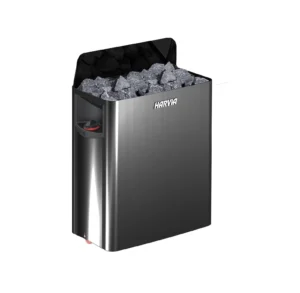
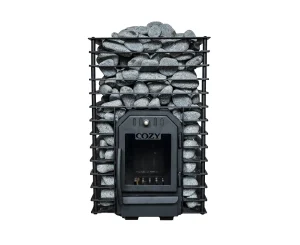
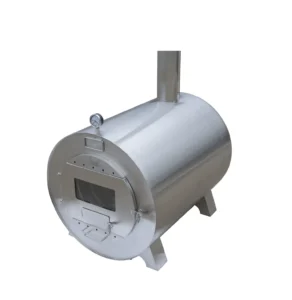
Compare our electric sauna heaters and firewood sauna heaters for your chosen model.
8. Installation and site preparation
Both barrel and cabin-style saunas need a suitable, stable base. Depending on the model and site, this may be a concrete pad, compacted gravel, pavers or a suitable deck or platform. The correct choice depends on the sauna's weight, support points, ground conditions, drainage and manufacturer instructions.
Barrel saunas are commonly supported on purpose-built cradles. Make sure the base is level and supports the points specified by the manufacturer. Cabin-style saunas may have a framed floor or a different support arrangement, so do not assume the same base detail applies to every model.
Plan delivery access before ordering. Some kits arrive partially pre-assembled, while larger log sauna kits can involve more components and longer assembly times. Check package dimensions, unloading arrangements, assembly requirements and whether professional assistance is available or required.
Read our guide to putting an outdoor sauna on a deck, which also compares concrete, gravel and paver bases, and our sauna electrical requirements before preparing your site.
9. Maintenance in Australian conditions
Both designs need routine care. Keep the exterior clean, check the roof and drainage, allow the sauna to dry after use and inspect timber surfaces for signs of wear. The exact maintenance routine depends on the timber, finish, exposure and manufacturer's instructions.
Barrel saunas have curved external staves and bands that should be checked during routine inspection. Cabin-style saunas have conventional wall and roof junctions, windows and potentially larger exterior surfaces. Neither design is maintenance-free.
Use only care products suitable for the relevant sauna surface. Interior treatments must be appropriate for sauna interiors and the temperatures involved. Exterior products should be compatible with the timber and applied according to their label. Our Outdoor Sauna Maintenance Australia guide explains the regular checks and care steps.
10. Which sauna should you choose?
A barrel sauna may suit you if you:
- Prefer the curved, traditional barrel appearance.
- Want a dedicated sauna room without additional rooms.
- Like an opposing-bench layout.
- Are comparing compact 2 to 4 person models as well as larger barrel options.
- Want to explore timber choices such as spruce, cedar or ThermoWood.
A cabin-style sauna may suit you if you:
- Prefer a rectangular, room-like interior.
- Want straight or split-level bench arrangements.
- Need a larger window arrangement or a more open internal feel.
- Are considering a model with a changing room, porch or additional space.
- Want the look of a timber garden cabin as part of your outdoor setting.
If you are unsure, compare two or three specific models side by side. Start with the number of regular users, available site dimensions, preferred timber, heater type and total project budget. Our team can help you check model details and plan the next steps.
11. Frequently asked questions
Is a barrel sauna better than a cabin sauna?
Neither is automatically better. A barrel sauna suits buyers who prefer a curved design and a dedicated sauna room. A cabin-style sauna can offer a conventional rectangular layout and, on some models, additional space. Compare dimensions, bench layout and features.
Do barrel saunas heat up faster than cabin saunas?
Heating time depends on internal volume, insulation, heater output, starting temperature and outdoor conditions. Shape alone is not enough to predict which model will heat faster.
Which sauna takes up less space?
It depends on the model. Compare full external dimensions and usable internal bench area, then allow for access, clearances and maintenance space.
Are barrel saunas suitable for Australian backyards?
A suitable barrel sauna can be installed in an Australian backyard if the site, base, drainage, weather exposure and heater installation are planned for the specific model.
Can a cabin-style sauna be used outdoors?
Yes. Shym Saunas offers outdoor log sauna models such as the Leil® Patio Series. Check each product's construction, roof, floor and installation requirements.
Which design is more comfortable for lying down?
Comfort depends on bench length and depth and the internal dimensions. Check usable bench measurements rather than relying only on stated capacity.
Can I choose an electric or wood-fired heater?
Some models support both options, but compatibility varies. Confirm permitted heater types and required output for the exact sauna before purchasing.
Do barrel and cabin saunas need a concrete base?
Not always. Depending on the model and site, a suitable base may be concrete, compacted gravel, pavers or a properly designed deck or platform. Follow manufacturer requirements and account for weight and support points.
Are barrel saunas easier to assemble?
Assembly requirements vary. Some barrel kits are partially pre-assembled, while larger log sauna kits may require more assembly time. Check the product listing and manual.
How do I maintain an outdoor timber sauna?
Keep it clean and dry, inspect the roof and exterior timber, maintain drainage and use compatible care products according to the manufacturer's instructions. See our outdoor sauna maintenance guide.
Find the right sauna for your home
At Shym Saunas, we offer round barrel saunas, square barrel designs and cabin-style log saunas for Australian homes. Browse the ranges, compare dimensions and features, or contact our team if you would like help choosing a model for your space.
Explore our full sauna range or contact Shym Saunas to discuss your project.