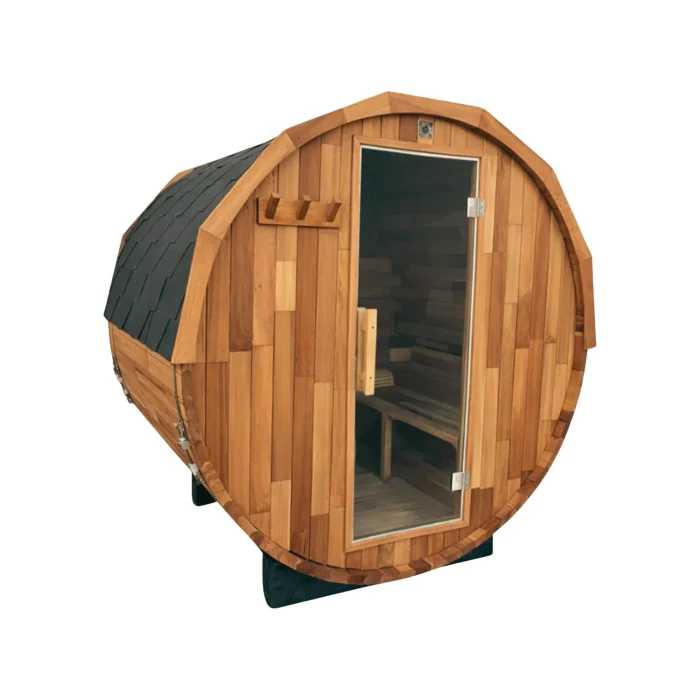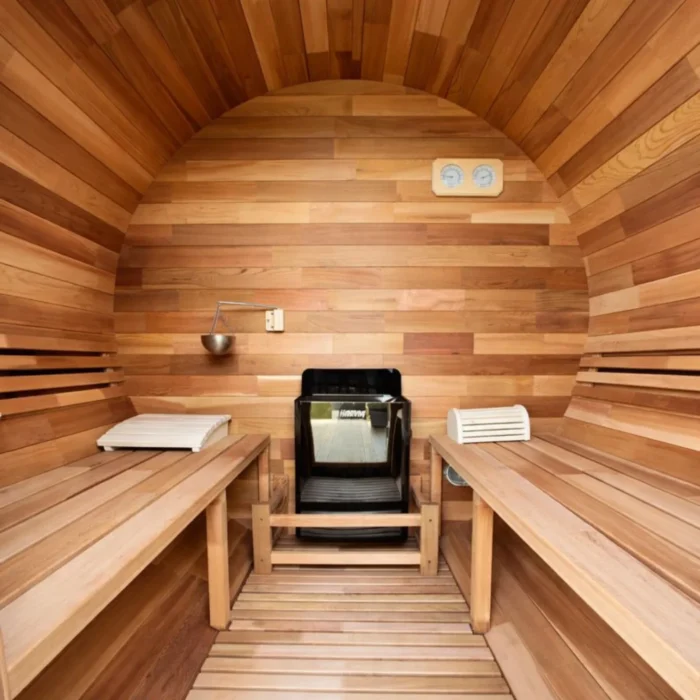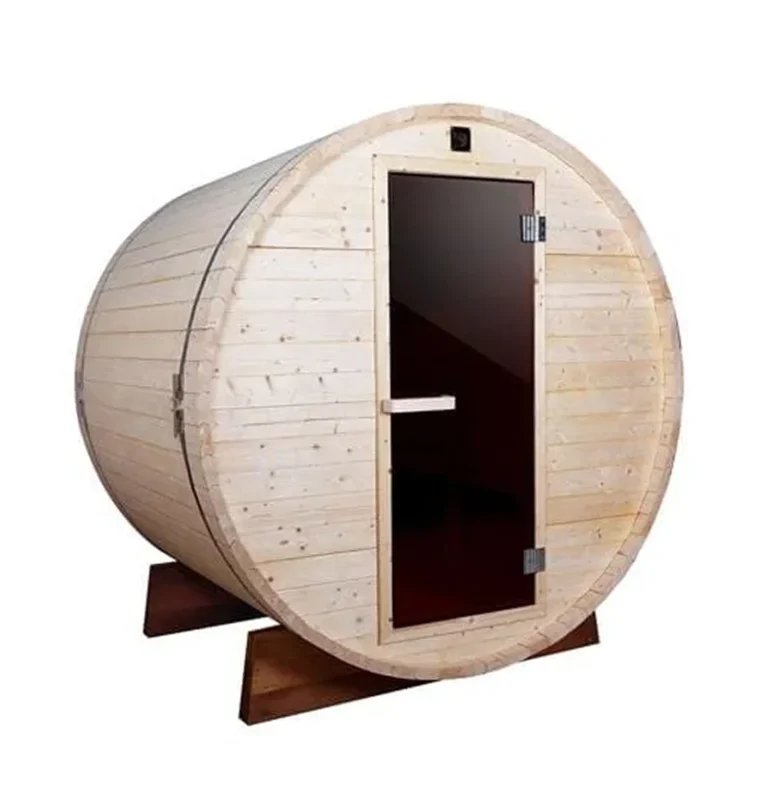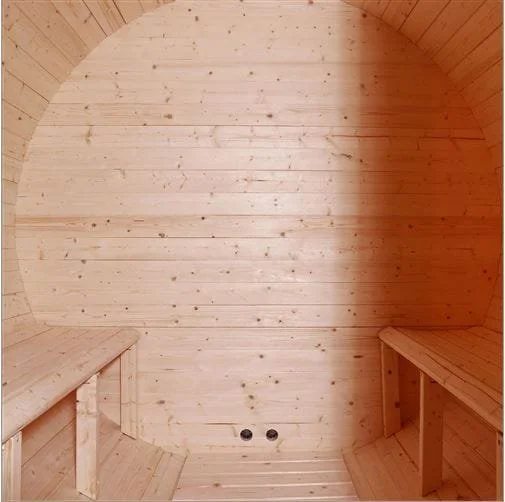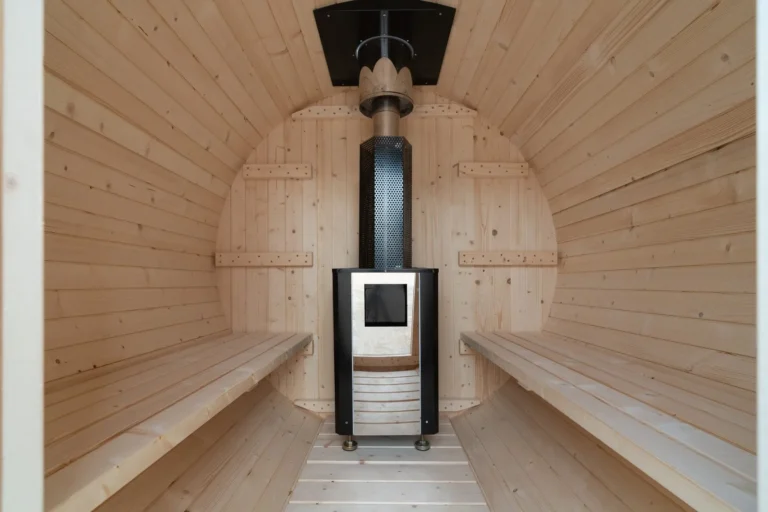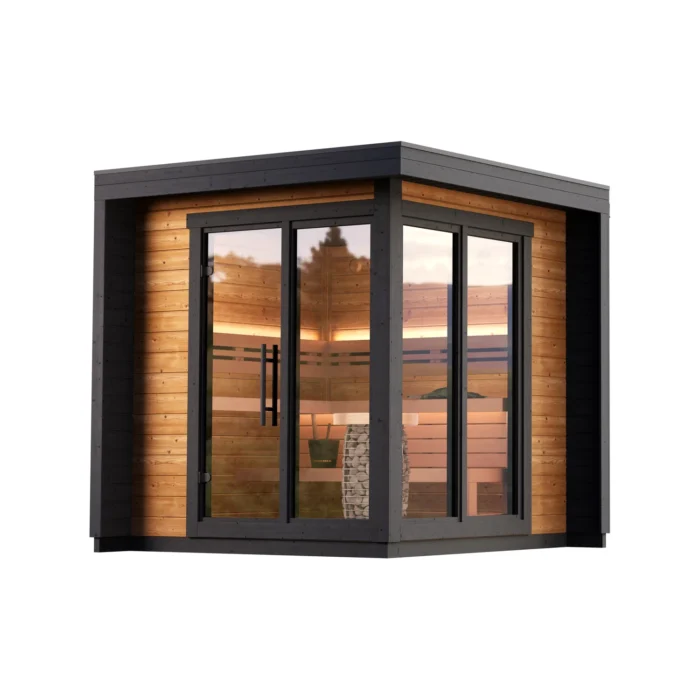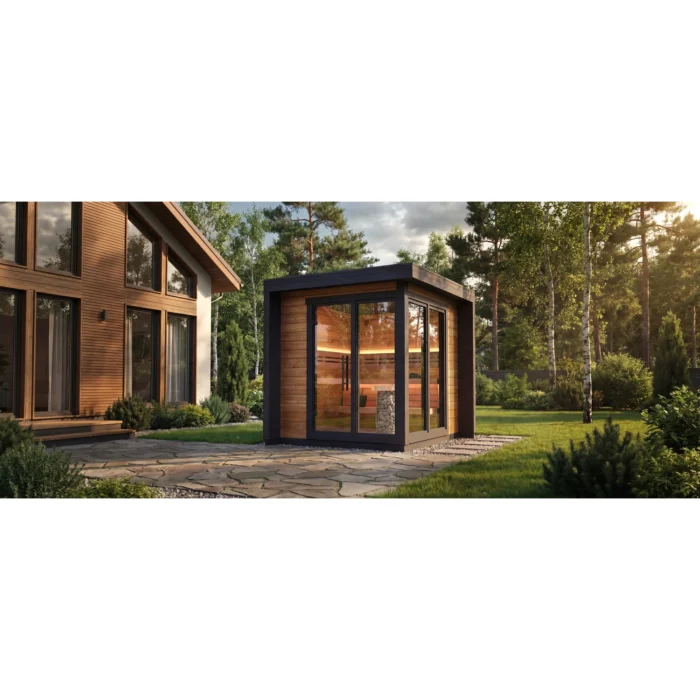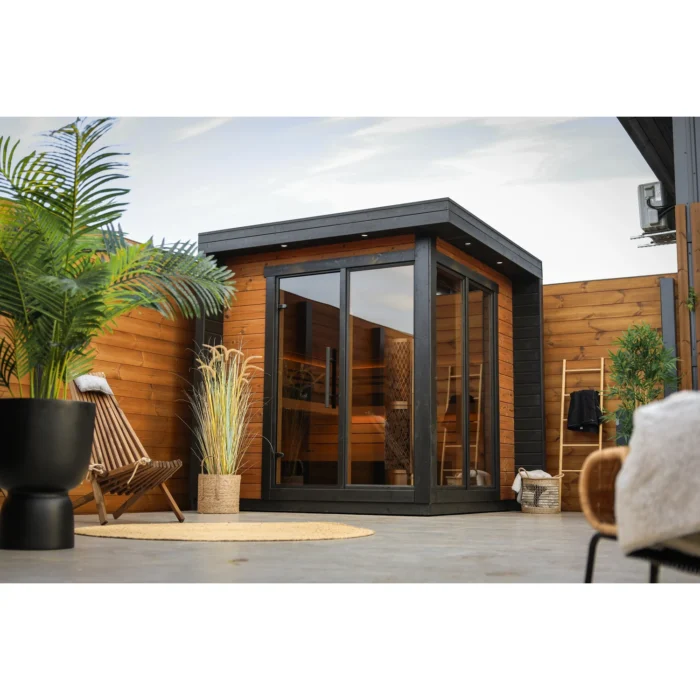





One of the most useful questions to ask before buying a home sauna is how much it will add to your electricity bill. The answer depends on the type of sauna, heater size, warm-up time, session length, how often you use it and the electricity rate on your plan.
As a practical estimate, a traditional electric sauna session may use around 7 to 9 kWh for a typical two-hour heat-up-and-use cycle in a well-insulated family sauna with a correctly sized 6 kW heater. At an illustrative electricity rate of 30 cents per kWh, that is about $2.10 to $2.70 per session. A smaller infrared sauna may use less electricity, but its actual consumption depends on its rated power and operating cycle.
These are estimates, not a guaranteed bill amount. Use your own electricity tariff and the method below to calculate a more accurate figure for your home.
Quick Answer: How Much Does It Cost to Run a Sauna?
To estimate the running cost of an electric sauna, multiply the electricity it uses in kilowatt-hours (kWh) by your electricity usage rate. For example, 8 kWh × $0.30/kWh = $2.40. Traditional electric saunas typically use more power during warm-up and temperature maintenance, while infrared models generally have lower rated power and shorter warm-up requirements. Your model, insulation, temperature setting and usage pattern determine the real cost.
Key Takeaways
- The cost per session depends on energy used (kWh), not just the heater’s kW rating.
- A 6 kW heater does not necessarily draw 6 kW continuously for the entire session. The thermostat cycles as the sauna reaches and maintains temperature.
- For a sample calculation, 7 to 9 kWh at 30 cents/kWh costs about $2.10 to $2.70 per session.
- Infrared saunas often have lower rated power, but compare actual model specifications rather than relying on a blanket claim.
- Your electricity tariff, time-of-use period, insulation, glass area, outside temperature and session length can change the result.
- Wood-fired saunas have different running costs. Firewood and maintenance matter, while electricity may still be needed for lighting or controls.
1. What Determines a Sauna’s Running Cost?
- Heater power (kW): The rating shows the heater’s power when operating at full capacity. It is not the same as total energy consumed over a session.
- Operating time: Include warm-up time and the period when the sauna remains on during use.
- Thermostat cycling: After reaching the target temperature, an electric heater generally switches on and off to maintain it. It may not operate at full rated power continuously.
- Insulation and construction: Insulation, timber construction, door seals, glass surfaces and ventilation affect how quickly heat is lost. Our sauna insulation guide covers this in more detail.
- Outdoor conditions: Cold, wind and exposure may increase the energy needed to reach and maintain temperature.
- Electricity tariff: Usage rates vary by retailer, state, plan and time of day. Time-of-use plans can make the same session cost more at peak times and less off-peak.
2. How to Calculate Sauna Electricity Costs
Energy used (kWh) × electricity rate ($/kWh) = session cost
For example, if a sauna uses 8 kWh and your electricity usage rate is $0.30 per kWh, then 8 kWh × $0.30 = $2.40 per session.
Check the usage charge on your electricity bill, not just the daily supply charge. The daily supply charge generally applies regardless of whether you use your sauna, so it should not usually be counted as a sauna-specific cost.
Electricity rates vary across Australia. The Australian Energy Regulator’s Default Market Offer for 2026 to 2027 is a reference for standing offers in applicable regions, not the price every household pays. Use your own plan rate or compare plans through the Australian Government’s Energy Made Easy service.
| Electricity rate | 7 kWh session | 9 kWh session | 12 kWh session |
|---|---|---|---|
| $0.25/kWh | $1.75 | $2.25 | $3.00 |
| $0.30/kWh | $2.10 | $2.70 | $3.60 |
| $0.40/kWh | $2.80 | $3.60 | $4.80 |
Illustrative costs only. Energy-use figures are examples, not a guarantee for every sauna.
3. Example: Traditional Electric Sauna Running Costs
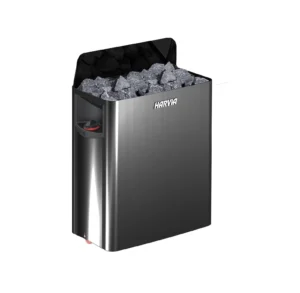
Harvia explains that a typical, well-insulated family sauna with a correctly sized 6 kW heater may use approximately 7 to 9 kWh across a two-hour cycle: about an hour to heat up, followed by another hour of use. The heater draws full power during much of the warm-up, then cycles to maintain temperature.
| Estimated energy use | At $0.25/kWh | At $0.30/kWh | At $0.40/kWh |
|---|---|---|---|
| 7 kWh | $1.75 | $2.10 | $2.80 |
| 8 kWh | $2.00 | $2.40 | $3.20 |
| 9 kWh | $2.25 | $2.70 | $3.60 |
A larger sauna or one with greater heat loss may use more energy. Harvia gives an example of a larger 8 kW heater consuming around 9 to 13 kWh over a similar two-hour cycle, depending on the sauna and conditions. At 30 cents/kWh, that is approximately $2.70 to $3.90.
For Shym Saunas customers, start by checking the heater and sauna pairing. Browse our electric sauna heaters, or read the sauna heater buying guide.
4. Example: Infrared Sauna Running Costs
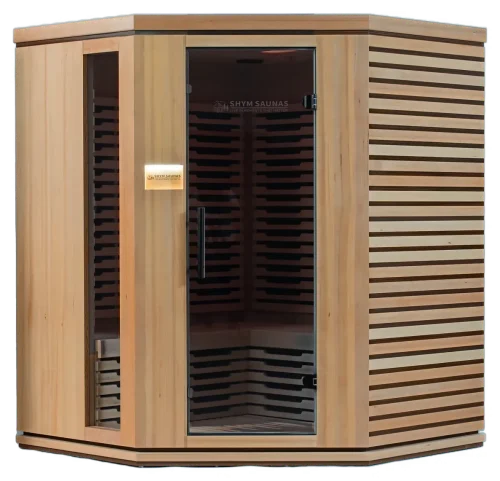
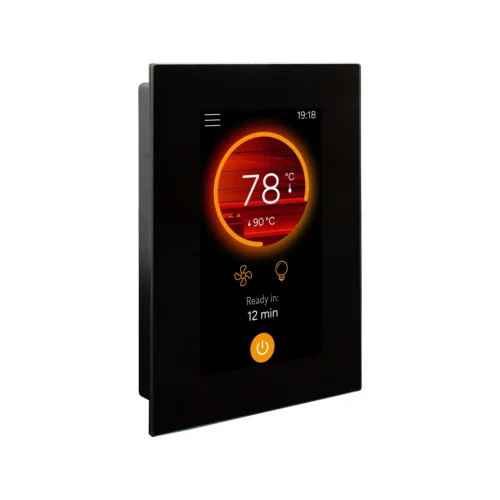
Infrared saunas generally use lower-power heating panels and operate at lower cabin temperatures than traditional electric saunas. Shym Saunas’ Aura infrared range is designed for indoor use, and its cabins are rated from 1,700 W (1-person) to 2,800 W (4-person).
For a simple upper-bound illustration, if the Aura 1-person cabin drew its full rated 1.7 kW for one hour, it would use 1.7 kWh. At 30 cents/kWh, that would cost about 51 cents. Over 45 minutes at the same continuous draw, it would use about 1.3 kWh, or about 38 cents. The 4-person cabin at its full 2.8 kW would use up to 2.8 kWh in an hour, or about 84 cents.
This is a calculation based on assumed continuous draw, not a measured consumption claim for every Aura model. Actual usage depends on the exact model, warm-up time, controls and how the heaters operate. Check current product specifications before using a number for budgeting.
Compare options in the Aura Infrared Sauna Collection. For the differences in heat experience and setup, read our Traditional vs Infrared Sauna guide.
5. What Could a Sauna Cost Per Month?
Multiply the estimated cost per session by sessions per week, and then by approximately 4.33 weeks per month.
| Use pattern | Approx. sessions per month | At $2.40 per session | At $3.30 per session |
|---|---|---|---|
| 2 sessions per week | 9 | $21.60 | $29.70 |
| 3 sessions per week | 13 | $31.20 | $42.90 |
| 5 sessions per week | 22 | $52.80 | $72.60 |
| Daily use | 30 | $72.00 | $99.00 |
These examples assume a consistent per-session cost and exclude installation, maintenance, firewood and other ownership expenses. Your actual month may differ as session length, outside temperature and tariffs vary.
For a more accurate estimate, track usage over several sessions using smart-meter data or a suitable electrician-approved monitoring method. Do not connect a high-power sauna heater to an unsuitable plug-in energy meter.
6. Traditional vs Infrared vs Wood-Fired Running Costs
| Sauna type | Main running-cost factors | How to estimate it |
|---|---|---|
| Traditional electric | Heater power, warm-up, thermostat cycling, insulation and tariff | Estimate kWh per session, then multiply by your usage rate. |
| Infrared electric | Panel power, warm-up, session length and tariff | Use rated input and actual operating time as a starting estimate. Measured consumption is better. |
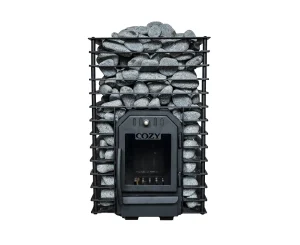
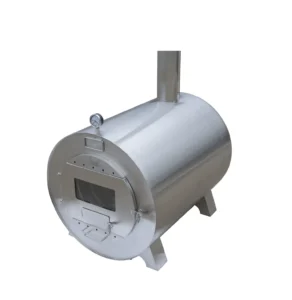
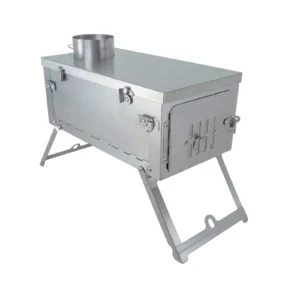
| Wood-fired | Firewood quantity and price, kindling, flue care and cleaning. Some accessories may use electricity. | Estimate wood used per session and multiply by your local firewood cost. |
Wood-fired heating can suit buyers who value the traditional fire experience or want an option for some off-grid settings, but it is not automatically cheaper. Costs depend on local firewood prices, dry-wood availability, the heater and how the sauna is used. See our firewood sauna heaters.
7. What Makes a Sauna Cheaper or More Expensive to Run?
- Correct sizing: Choose a heater designed for the sauna’s volume and construction. Follow the manufacturer’s sizing guidance.
- Insulation and heat loss: A well-built, well-sealed sauna with suitable insulation can reduce the energy needed to maintain temperature. Large glass areas and uninsulated surfaces can increase heat demand.
- Session length: Preheating and keeping the heater on longer generally increases energy use. Follow the manufacturer’s operating instructions.
- Temperature setting: Higher target temperatures can increase heating demand. Stay within the recommended operating range.
- Timing: If you have a time-of-use plan, check peak and off-peak periods. Using a lower-rate period may reduce the energy charge.
- Maintenance: Keep ventilation clear and follow maintenance instructions. Fix damaged seals or faults instead of compensating by running the heater longer.
8. How to Reduce Running Costs Without Compromising the Experience
- Choose a sauna and heater combination that matches the room volume and construction.
- Use the recommended warm-up and temperature settings rather than heating longer than needed.
- Close the door promptly during use and follow the manufacturer’s ventilation instructions.
- Check your electricity plan’s usage rates and time-of-use windows.
- Use timers or control features only as directed by the manufacturer.
- Maintain the sauna and heater according to the product instructions.
- Estimate costs using your own usage rate and real operating data rather than generic averages.
Do not reduce ventilation, bypass controls or alter electrical components to save energy. Electrical work and any required circuit changes should be handled by a licensed electrician.
9. What About Installation and Other Ownership Costs?
Electricity is only one part of the total cost of owning a sauna. Depending on the sauna and site, budget for the initial purchase, delivery, base preparation, electrical work, installation, ongoing timber care and the eventual replacement of components. For purchase prices across sauna types, see our sauna cost guide.
Traditional electric heaters may require dedicated electrical work. Before ordering, read our Sauna Electrical Installation Guide for Australia and have a licensed electrician confirm what your property needs. Requirements vary by heater model and installation.
For product selection, size, construction and other purchase considerations, use the Home Sauna Buying Guide. To see how a sauna adds to a household power bill, read Home Sauna Electric Bill.
10. Frequently Asked Questions
How much does it cost to run a sauna per session in Australia?
It depends on energy use and your electricity rate. As an illustration, 7 to 9 kWh at 30 cents/kWh costs about $2.10 to $2.70. Check your tariff and model to estimate your own cost.
Are saunas expensive to run?
Not usually. A traditional electric sauna that uses 7 to 9 kWh per session costs about $2.10 to $2.70 at 30 cents/kWh, and infrared cabins often use less. Your tariff, the sauna’s size and how often you use it decide the real figure.
How much electricity does a traditional sauna use?
According to Harvia, a well-insulated family sauna with a correctly sized 6 kW heater may use around 7 to 9 kWh over a two-hour heat-up-and-use cycle. Larger saunas and different conditions can use more.
Is an infrared sauna cheaper to run than a traditional sauna?
Infrared models often have lower rated power and shorter warm-up requirements, so use may be lower. Compare actual specifications, session length and consumption.
Does a 6 kW sauna heater use 6 kWh every hour?
Only if it draws its full 6 kW continuously for that hour. In practice, thermostat-controlled heaters usually cycle after reaching the target temperature.
How much does it cost to run a sauna every day?
Multiply your estimated session cost by your number of sessions. A $2.40 session used daily for 30 days would cost about $72 in energy.
Does an outdoor sauna cost more to run?
It can, particularly if cold, wind, heat loss, glass area or construction mean the heater must work harder. Insulation and correct heater sizing affect consumption.
Are wood-fired saunas cheaper to run?
Not necessarily. Costs depend on firewood price and quantity, how the sauna is operated, and ongoing flue and heater maintenance.
Can I use solar power to run a sauna?
Potentially, depending on your solar system, available generation, the sauna’s electrical requirements and when you use it. Confirm compatibility with a licensed electrician.
Does the electricity supply charge count as a sauna running cost?
The daily supply charge usually applies regardless of sauna use. To estimate the additional cost of a session, start with the usage charge per kWh.
How can I calculate my own sauna running cost?
Multiply the energy used in kWh by your electricity usage rate. Use manufacturer information as an estimate and refine it with suitable monitoring or metering data.
11. Final Thoughts: Estimate the Cost for Your Home
A home sauna’s running cost is easier to estimate than many buyers expect. Start with the energy used per session, multiply it by your electricity rate, and adjust for how often you plan to use the sauna. The most useful comparison is based on real model specifications, your local tariff and the way you expect to use the sauna.
If you are comparing sauna options, explore the Shym Saunas range and review the Traditional vs Infrared Sauna guide before deciding which type suits your home.
Ready to choose a sauna? Contact Shym Saunas to discuss your space, preferred sauna type and heater options suited to your installation.